The First Civilizations
Trends that began to emerge after the Agricultural Revolution led to the first civilizations, large societies with cities and a powerful state. Most were in river valleys, places with fresh water and fertile land.
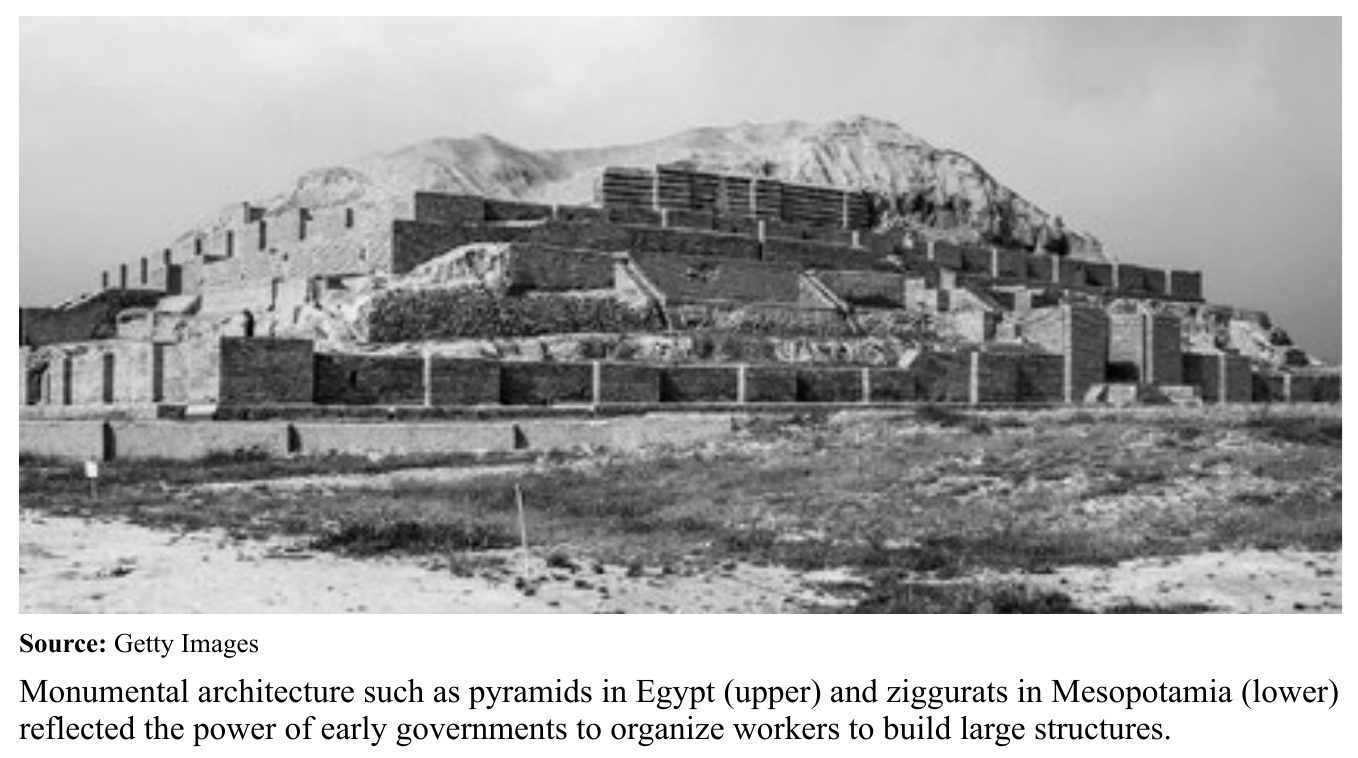
Mesopotamia The world’s first civilization was in Mesopotamia, a region around the Tigris and Euphrates rivers in what is today Iraq. Several cultures emerged in this region, many based on city-states. A city-state is an independent state made up of a city and its surrounding territory. All city- states were highly patriarchal, built monumental architecture such as religious temples called ziggurats, and engaged in long-distance trade. The people were polytheistic, believing in many gods.
Sumer was a city-state along the southernmost region of ancient Mesopotamia. As taxes and trade became more complex, the Sumerians invented cuneiform, the first written language in history. They used cuneiform to record the first written laws.
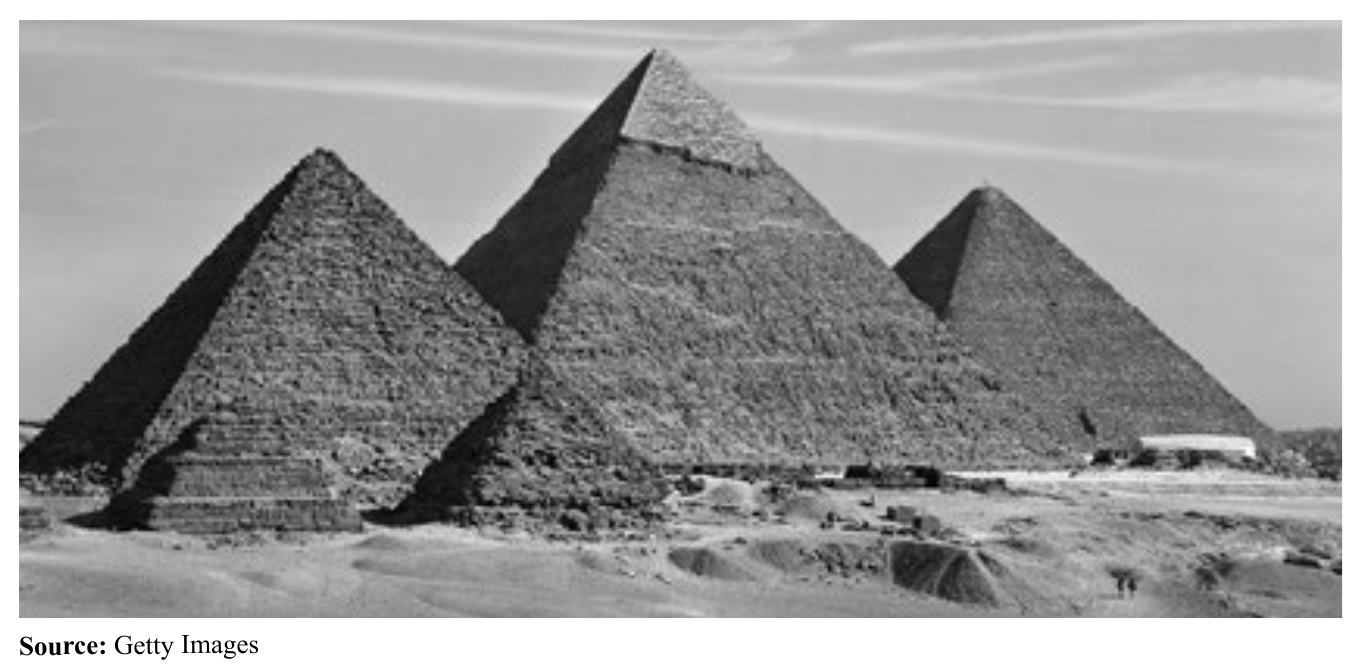
Egypt In the Nile River valley, Egypt prospered. Though it shared many traits with Mesopotamia, Egypt was highly centralized under one ruler, called a pharaoh. The Egyptians developed their own writing system (hieroglyphics) and a complex system of mathematics. They built monumental architecture (pyramids) that demonstrated the pharaoh’s power. Egyptian women were allowed to own property, and they were recognized as legally equal to men in court. These rights gave women a higher social standing than their counterparts in other patriarchal civilizations.
Indus Archaeological remains show
the sophistication of ancient civilizations along the Indus River in South Asia. Cities such as Harappa and Mohenjo-Daro engaged in long-distance trade with Mesopotamia, practiced polytheism, developed technology such as indoor plumbing, and planned the layout of urban areas. However, no one has deciphered their language, so less is known about them than about other early civilizations.
China Along the Huang He River in northern China, a highly patriarchal and centralized system developed. One of its distinctive features was the special honor that its people gave to their ancestors.
Non-River Valley Civilizations Two early civilizations in the Americas did not develop in river valleys. The Olmec in Mesoamerica and the Chavin in the Andes were complex societies that participated in extensive trade.