The Green Revolution
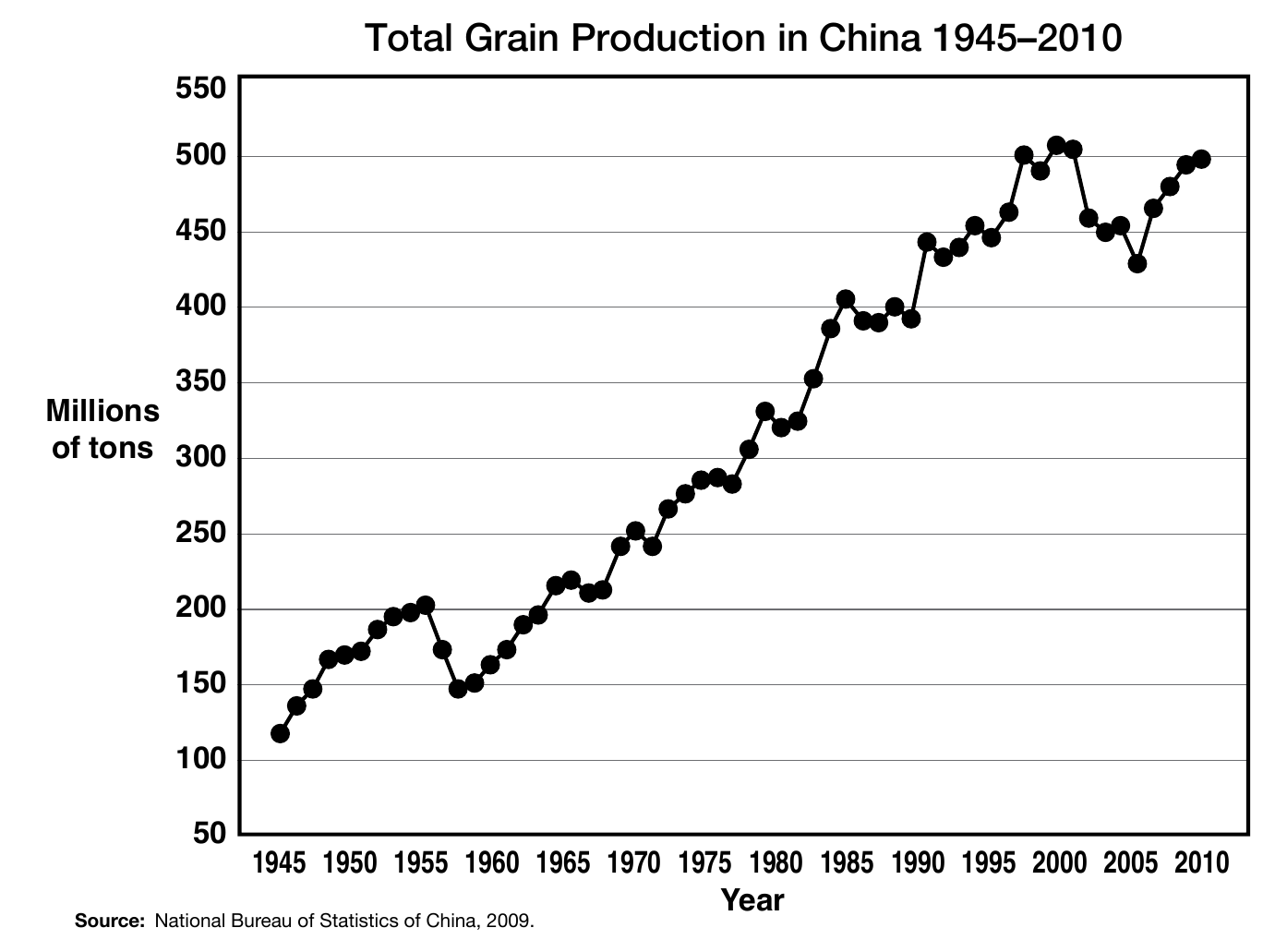
In the mid-20th century, the Green Revolution emerged as a possible long- term response to hunger. Scientists developed new varieties of wheat, rice, and other grains that had higher yields and greater resistance to pests, diseases, and drought. The new varieties were first developed by crossbreeding— breeding two varieties of a plant to create a hybrid. More recently, scientists have used genetic engineering—manipulating a cell or organism to change its basic characteristics. Farmers also used more irrigation, fertilizers, and pesticides. In Brazil and elsewhere, people burned down forests and plowed the land for agriculture. Acreage devoted to crops, especially grains, increased dramatically worldwide.
The Green Revolution solutions were not free of problems. Many small farmers could not afford the new fertilizers or pesticides. For this reason, they were often unable to compete with large landowners. Many small farmers were forced to sell their land, increasing the holdings of large landowners even more. Also, since some of the techniques developed in the Green Revolution involved the use of mechanized equipment, fewer jobs were available for farm laborers. Finally, the heavy applications of chemicals damaged the soil and the environment.
Genetic engineering created its own set of concerns as well. Some argued that a genetic modification designed to give a plant resistance to insects might inadvertently cause a decline in the population of pollinating insects, such as bees. Another problem was the loss of old seed varieties as new genetically engineered plants were adopted.