Spread of Industrialization
After Britain industrialized, Belgium, and then France and Germany followed. Like Britain, these countries possessed capital, natural resources, and water transportation. The United States, Japan, and Russia also transformed as industrialization spread.
France and Germany Despite some favorable factors for industrialization, France had sparsely populated urban centers, which limited the amount of labor available for factories. Also, the French Revolution (1789–1799) and subsequent wars involving France and its neighbors consumed both the attention and the capital of France’s elites. These factors delayed the Industrial Revolution in France.
Germany was politically fragmented into numerous small states, which delayed its industrialization. However, once Germany unified in 1871, it quickly became a leading producer of steel and coal.
The United States The United States began its industrial revolution in the 19th century. By 1900, the United States was a leading industrial force in the world. Human capital (the workforce) was a key factor in U.S. success. Political upheaval and widespread poverty brought a large number of immigrants to the United States from Europe and East Asia. These immigrants, as well as migrants from rural areas in the United States, provided the labor force to work in the factories.
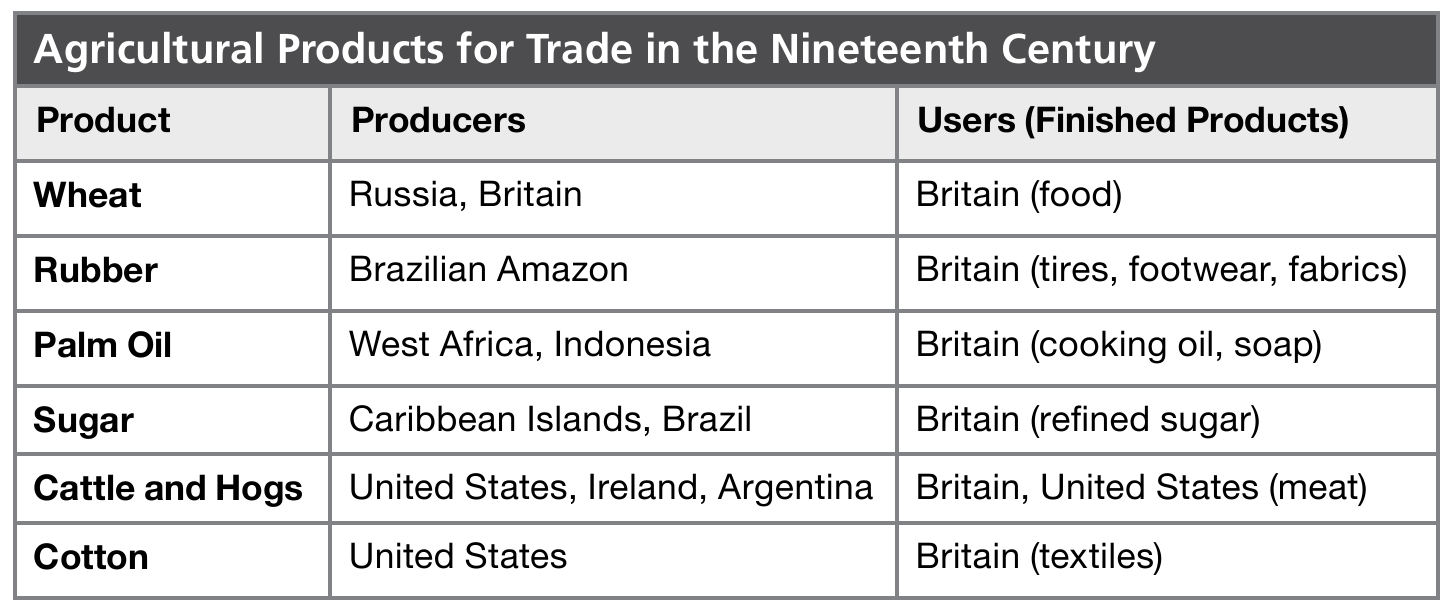
Russia Russia also began to industrialize, focusing particularly on railroads and exports. By 1900, Russia had more than 36,000 miles of railroad connecting its commercial and industrial areas. The Trans-Siberian Railroad stretched from Moscow to the Pacific Ocean, allowing Russia to trade easily with countries in East Asia, such as China and Japan. The Russian coal, iron, and steel industries developed with the railroad, mostly in the 1890s. By 1900, Russia had become the fourth largest producer of steel in the world. However, the economy remained overwhelmingly agricultural until after the Communists seized power in 1917.
Japan The first country in Asia to industrialize was the one that had the least contact with Europe since the 17th century: Japan. In the mid-19th century, Japan went through a process of defensive modernization. That is, it consciously adapted technology and institutions developed in Europe and the United States in order protect its traditional culture. By learning from the West, Japan built up its military and economic strength so it could maintain its own domestic traditions. In the last four decades of the 19th century, Japan emerged as a leading world power. For more details on Japan, see Topic 5.6.