Topic 7 AP Exam Practice
Multiple-Choice Questions
Questions 1 to 3 refer to the image below.
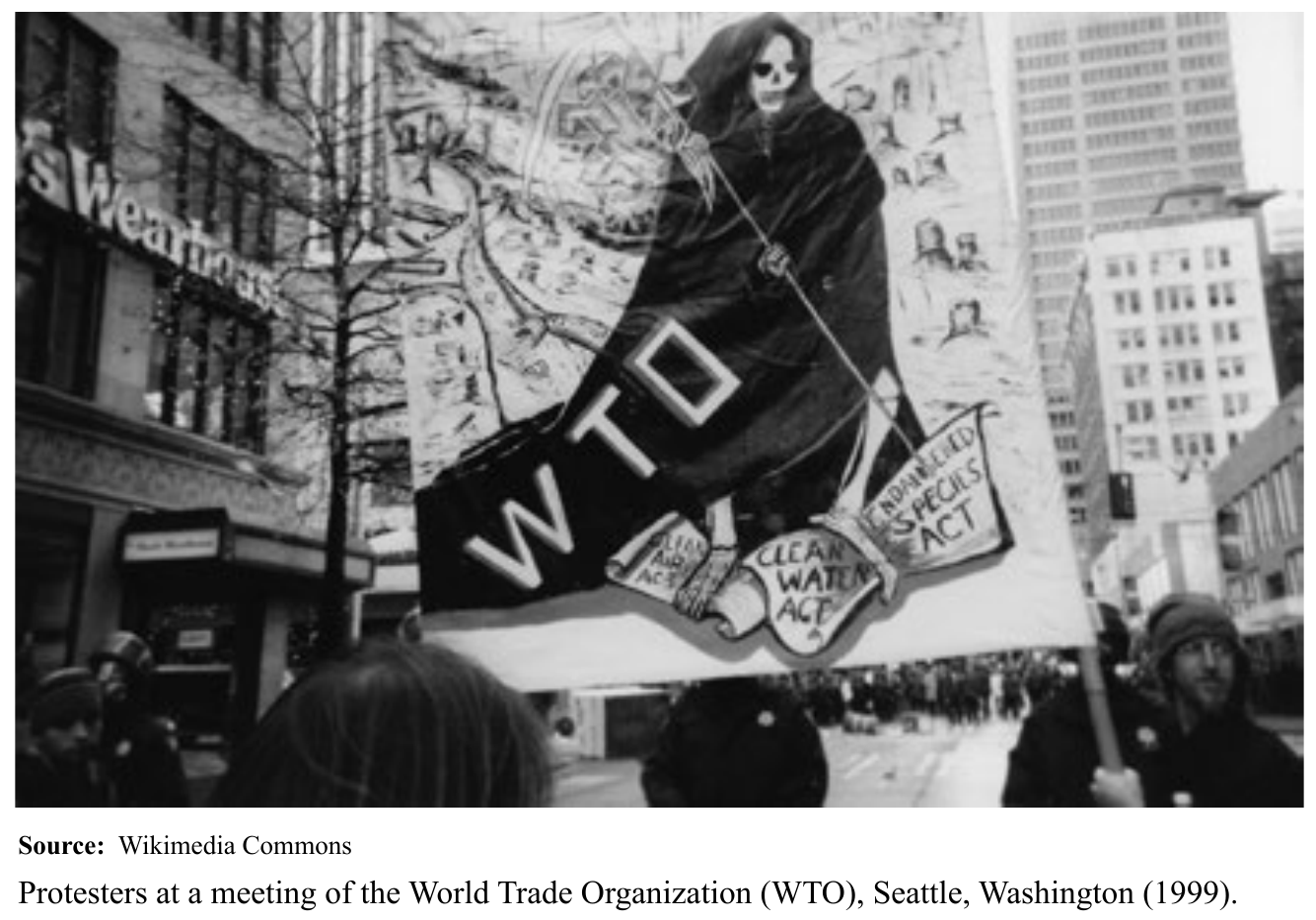
1. Which of the following 20th-century developments contributed most directly to the reaction shown in the photograph?
- (A) Unprecedented population growth
- (B) Rising economic and cultural globalization
- (C) Increasing risk of nuclear war
- (D) The emergence of fascism
2. The protesters shown in the picture focused on World Trade Organization policies they said led to
- (A) greater decentralization of political power
- (B) higher levels of immigration into developed countries
- (C) weaker environmental protections
- (D) lower agricultural production in developing countries
3. A historian would most likely use the photograph as evidence of which of the following trends in the late 20th century?
- (A) Increasing public concern about human impact on the environment
- (B) The declining influence of unions and the labor movement
- (C) The global dominance of American media and popular culture
- (D) Growing acceptance of free-market policies SHORT-ANSWER QUESTION 1. Use the passage below to answer all parts of the question that follows. “Critique of, and resistance to, the spread of consumer culture is as old as the emergence of consumer culture in the 18th century. Systematic critique of the institutional bases of consumer culture have been offered by social theorists that highlight the alienating dehumanizing effects of materialism, while others have commented on the envy, possessiveness, and non-generosity . . . consumer culture sometimes entails. . . . Religious, environmentalist, nationalist, and anti-corporate critiques have emerged with considerable vigor. Many of these forms of resistance appear to be motivated by a global sense of anxiety about the risk to life and happiness provoked by the globalization of consumer culture itself. In one global study of global brands, the authors found ‘Thirteen percent of consumers are skeptical that transnational companies deliver higher quality goods. They dislike brands that preach American values and don’t trust global companies to behave responsibly. Their brand preferences indicate that they try to avoid doing business with transnational firms.’” Jagdish Sheth and Naresh Maholtra, “Global Consumer Culture” in Encyclopedia of International Marketing (A) Identify ONE thinker from the 18th and 19th centuries who might have views consumer culture as described in the passage. (B) Explain ONE reason some consumers avoid transnational firms, according to the authors. (C) Explain ONE way in which globalization increased despite growing resistance in the late 20th century. 2. Answer all parts of the question that follows. (A) Explain ONE example of a state government that resisted globalization after 1900. (B) Explain ONE social reason for resistance to globalization after 1990. (C) Explain ONE reason for resistance to global financial institutions after 1990.