Economic Motives for Imperialism
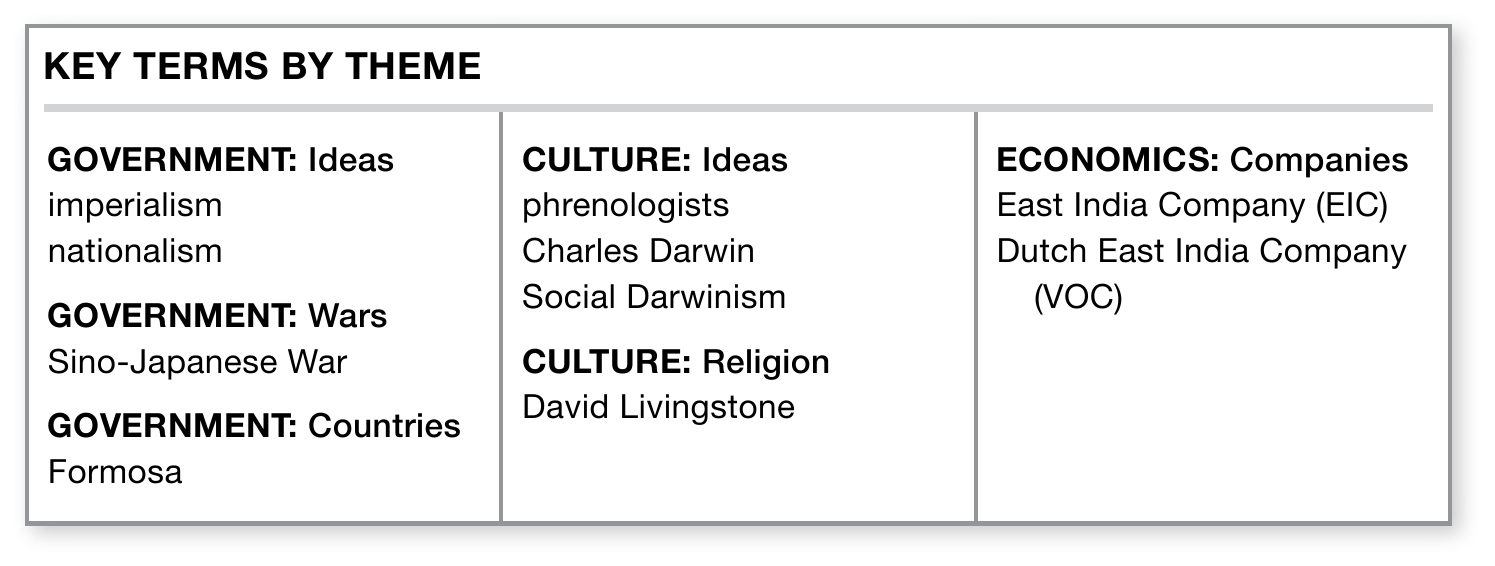
Some people believe the ideological motivations were more accurately justifications for pursuing economic motives. Seeking ways to maximize profits, companies chartered by the British, French, and Dutch governments signed commercial treaties with local rulers in India, East Africa, and the East Indies. These treaties gave the Europeans the right to establish trading posts and forts to protect their interests. Originally, these companies formed primarily for the spice trade. Many companies had quasi-governmental powers, raising armies and conquering territory to form colonies.
As the Industrial Revolution transformed European economies, the desire for the sources for raw materials and markets for manufactured goods provided by colonies enticed imperial powers to increase their expansion. Imperial powers often competed with one another over the best potential resources, markets, and trade as demands for low-wage labor, access to markets, and control of natural resources increased.
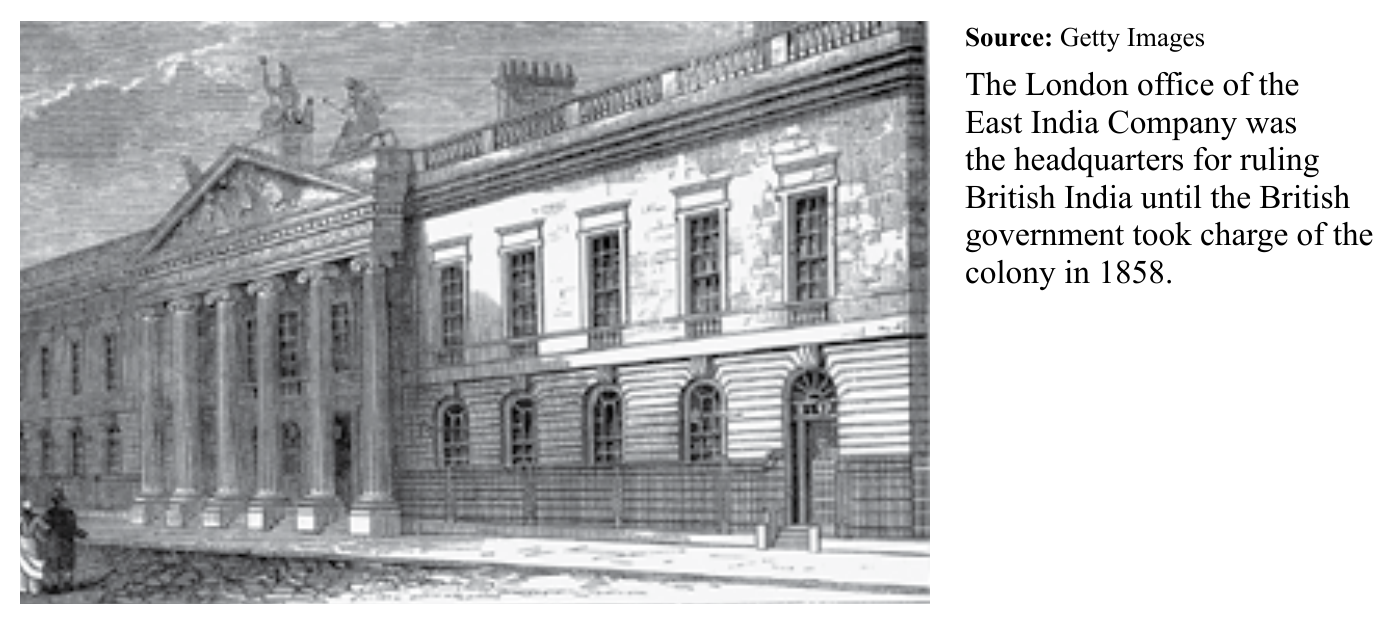
East India Company The English monarch granted the East India Company (EIC) a royal charter in 1600 giving it a monopoly on England’s trade with India. After driving the Portuguese out of India, the company traded primarily in cotton and silk, indigo, and spices.
Eventually, the EIC expanded its activities from the Persian Gulf to East Asia. By the beginning of the 18th century, it had become the major agent of British imperialism in India, and after 1834 it became the British government’s managing agency in India. Starting in 1620, the EIC engaged in the slave trade, and during the 19th century it illegally exported opium to China in exchange for tea. The East India Company is often referred to as the English East India Company or, after 1707, the British East India Company to distinguish it from the Dutch East India Company.
Dutch East India Company In 1602 the Dutch government gave the Dutch East India Company (Vereenigde Oost-Indische Compagnie, or VOC) a monopoly on trade between the Cape of Good Hope at the southern tip of Africa and the Straits of Magellan at the southern tip of South America. The VOC concentrated on the islands around Java, replacing the Portuguese who had controlled the region. Corruption and debt led the government to take control of the company’s possessions in 1799, creating the Dutch East Indies (today’s Indonesia).
The “New Imperialism” After the Industrial Revolution and the Napoleonic Wars, Britain was the leading economic power throughout the first half of the 19th century and already had a sizable colonial empire. Its colonies provided raw materials such as cotton, wool, jute, vegetable oils, and rubber for its factories, as well as foodstuffs such as wheat, tea, coffee, cocoa, meat, and butter for its growing cities. Its colonies—especially settler colonies such as Australia, New Zealand, and South Africa—also provided markets for British manufactured goods.
As the Second Industrial Revolution progressed, other nations began to challenge Britain’s economic lead. They looked to Asia, Africa, and the Pacific to expand their markets, provide raw materials for their factories, and food for their growing urban populations.