Effects of Global Conflict in the 20th Century
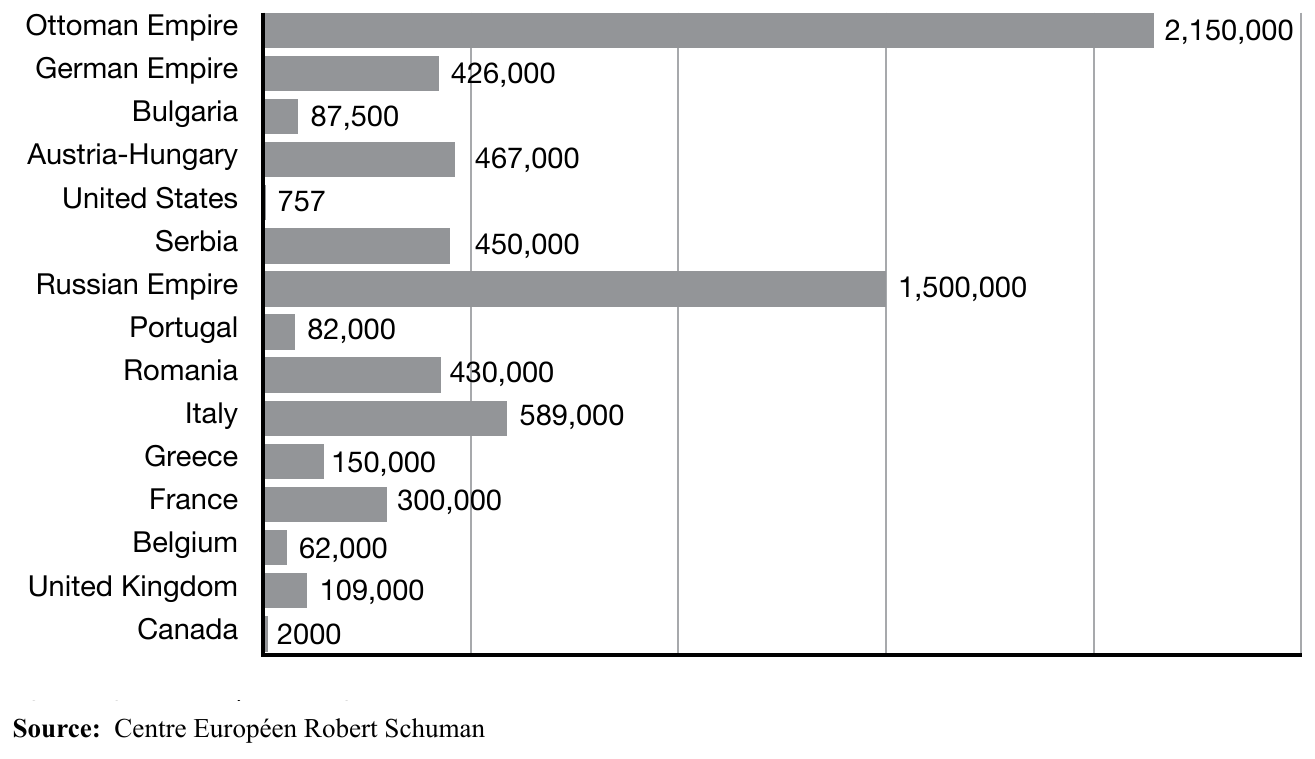
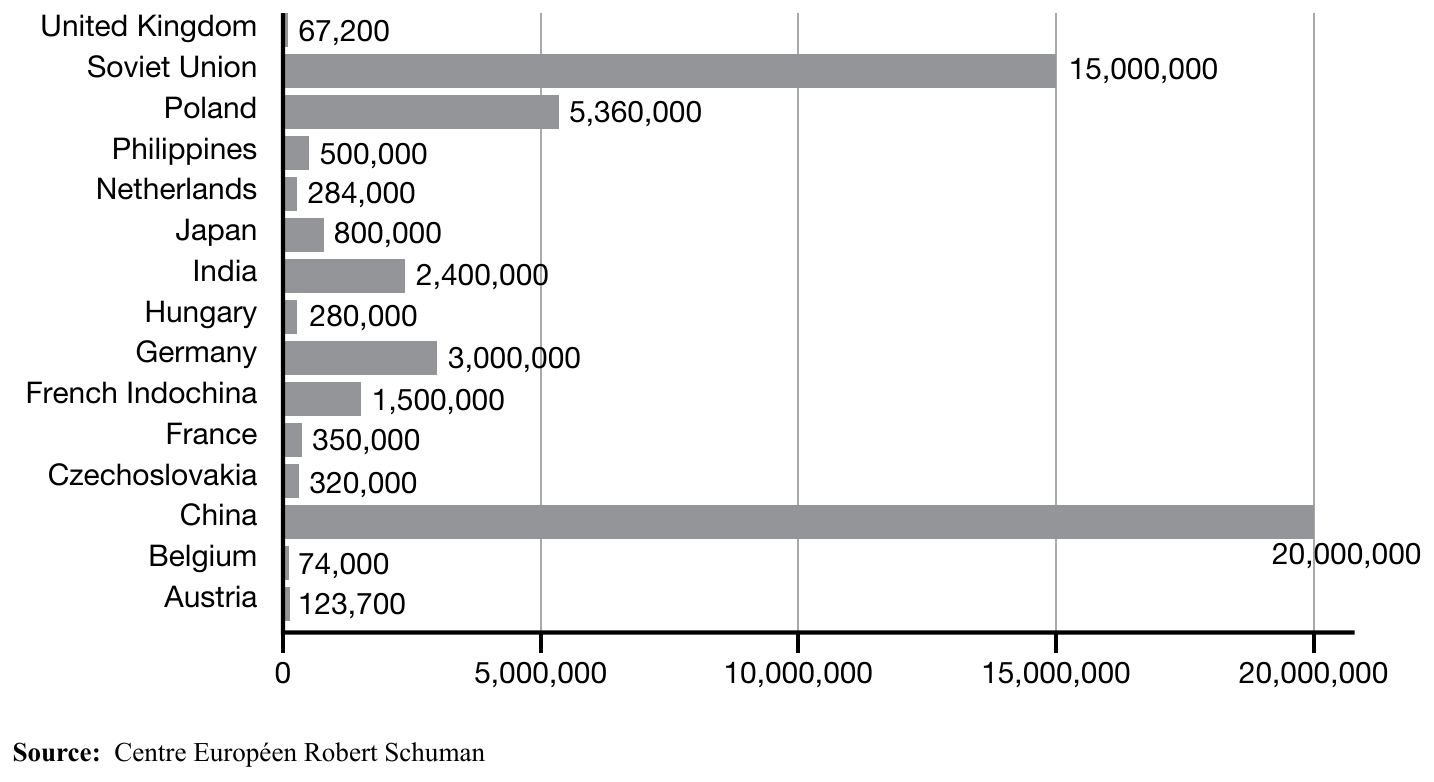
Rapid advances in science and technology led to a better understanding of the natural world and brought about advances in many areas, including communication, transportation, industry, agriculture, and medicine. States also improved their war-making capabilities. As a result, one of the most significant effects of the global conflicts of the 20th century was the immense loss of life as warfare became deadlier to both combatants and civilians alike. Large-scale aerial bombing that targeted populated areas, deadly policies that targeted specific minority groups such as European Jews, and the use of new military technology such as the atomic bomb all meant that global conflict would cause unprecedented deaths among the civilian population. In addition, mass starvation and crimes against humanity were also responsible for millions of civilian deaths during the 20th century.
Civilian Deaths in the First World War
Civilian Deaths in the Second World War
Global conflict in the 20th century also brought about notable political changes in the world. In the beginning of the century, the Mexican Revolution took place because many Mexicans wanted political and economic reforms. Populist movements formed and, eventually, Mexico created a new constitution with more political and economic rights for the majority of Mexicans. However, true democratic institutions in Mexico emerged and evolved slowly. As a result of World War I, regime change occurred in both the Ottoman Empire and the Russian Empire. In addition to the effect of the First World War, ineffective or corrupt leadership was also instrumental in bringing about the political revolutions that toppled the monarchies of these states. While the Ottoman government was replaced by a Western-style democracy, the Russian Revolution instituted a totalitarian government headed by the Communist Party.
Resentment of the Treaty of Versailles, the peace agreement that ended World War I, also helped to bring about totalitarian regimes in Germany and Italy. These fascist governments appealed to people’s nationalism and desire to restore the country’s glory and standing in the world, leading their nations toward war.
World War I weakened the colonial powers, and after the war, U.S. President Woodrow Wilson advocated for the self-determination of people to choose their government or nation-state. This was seen as a sign that colonies had the right to demand independence. Many people in the colonies also felt that their support of or active participation in the war meant that they were owed some form of self-government. When those in power did not meet these demands, organized independence movements formed or grew.
The desire for independence continued to grow after World War II, as the colonial powers were further weakened by the war and unable to afford the cost and labor power to rebuild and maintain their empires. Many new states formed during this time. Former colonies that had a small foreign settler population gained their independence relatively peacefully, while colonies that had a sizeable foreign settler population often experienced a more violent process towards independence.
Perhaps the largest independence movement, in terms of the number of people involved, took place in India. Relying on passive resistance and civil disobedience, the people of the British colony of India achieved independence in 1947. However, due to religious and ideological differences, the Indian subcontinent was partitioned into a Muslim-dominated Pakistan (which originally included East Pakistan, now Bangladesh) and a Hindu-dominated India. (See Topic 8.6.) The tensions between Muslims and Hindus living in British India did not disappear with independence. These tensions have led to several military conflicts between the two countries since partition.
Another significant effect of the global conflicts of the 20th century was a repositioning of power in the Western countries—away from Western Europe and to the United States. Because of the participation of the United States in both the First and Second World Wars, as well as the smaller scale of destruction the U.S. experienced compared to Western European countries, the United States became a world power, playing the dominant role in the transatlantic relationship. However, the Soviet Union soon emerged as a second superpower in opposition to the United States.