Political Causes of Global Conflict in the 20th Century
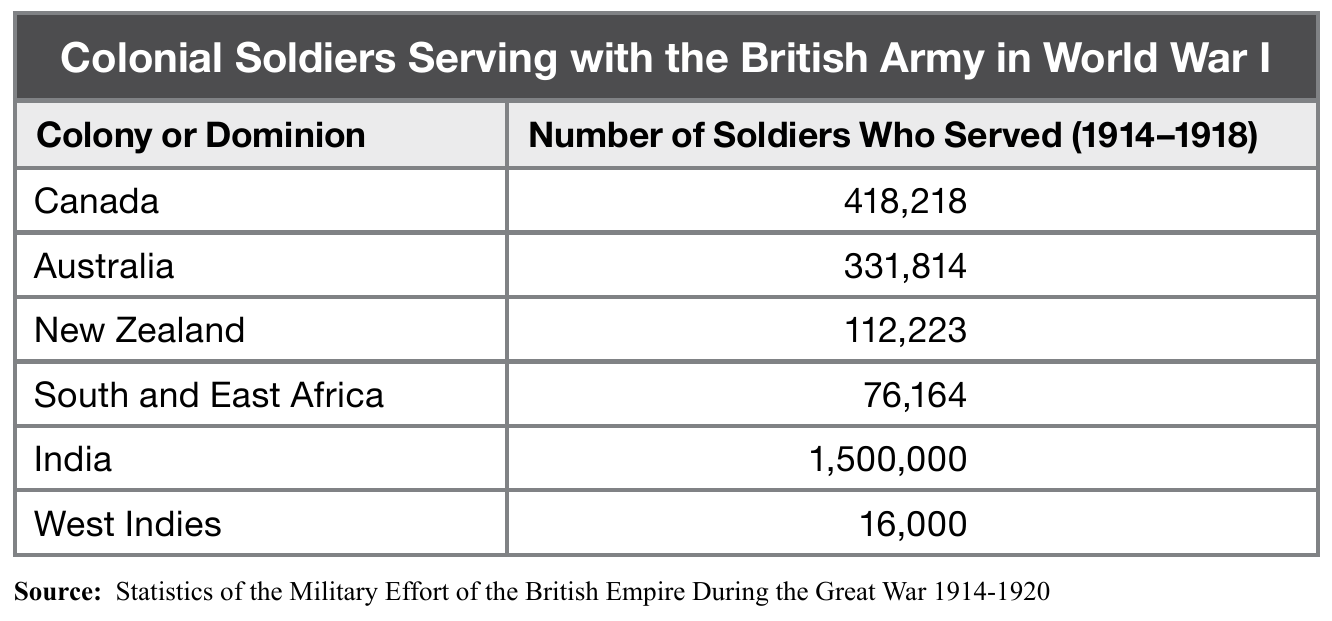
Many historians refer to World War I as the first “total war.” The war was fought on an industrial scale by soldiers from around the world, including soldiers from colonial areas. The combatants discovered more, and deadlier, methods of killing each other. Long-range artillery, poison gas, flamethrowers, and machine guns led to the deaths of millions of soldiers on both sides. The roots of this conflict lie in several main causes. A balance of power in Europe had been established during the 19th century through a constantly shifting system of alliances. However, these alliances proved instrumental in escalating the scope of the war as European nations jumped into the conflict to honor their commitments.
Nationalism was a growing force for political change in Europe. As such, Serbian nationalism was the main spark that created conflict in the Balkans, known as the “powder keg of Europe,” which led to the expansion of the war throughout Europe. An arms race among the great powers of Europe helped to increase the possibility of war as well. Lastly, the imperial rivalry among Western nations, as well as Japan and Russia, helped to increase tensions over commerce and access to resources.
Some of the same issues that brought about World War I also led to World War II. Fascism was nationalism in an extreme form. The fascist governments of Germany and Italy defied international pressure and treaties when they invaded neighboring territories. The alliance of Germany, Italy, and, eventually, Japan was opposed by the Western democracies of Great Britain and France. However, it was the inability of the Western democracies to offer a strong response to Germany’s aggressive militarism that launched Europe and the rest of the world into war. Additionally, Japan’s imperial ambitions in Asia were the main cause for war to break out in the Pacific between Japan and the United States. (Connect: Compare the motivating factors for wars fought in the 20th century with wars fought in the 19th century. See Topic 6.3.)