Genocide and Human Rights
The global community said “never again” to genocide after the horrors of the Holocaust. However, genocides continued to occur.
Bosnia Ethnic conflict drove the genocide in Bosnia. The end of World War I brought with it the creation of several new nations in Eastern Europe, including Yugoslavia. That country was home to Serbians, who were Eastern Orthodox Christians; Croats and Slovenes, who were Catholic; and Muslims in the regions of Bosnia and Kosovo. Marshal Josip Broz Tito led communist Yugoslavia from the end of World War II until his death in 1980. As dictator, Tito tried to suppress separatist tendencies among the peoples of Yugoslavia by keeping Serbia and Croatia, the two largest republics, from dominating the smaller ones.
After the Soviet Union collapsed, so did Yugoslavia. When Slovenia, Croatia, and Montenegro declared independence, they each defined citizenship in terms of ethnic background and religion. Serbian nationalists led by the demagogue Slobodan Miloševicc´ were particularly emphatic about ethnic purity. Serb forces, in attempts to dominate states such as Bosnia-Herzegovina and Kosovo, committed horrific acts of ethnic cleansing against Muslims from Bosnia and Kosovo, killing or driving people who were not part of the main ethnic group from their homes. Bosniaks, Kosovars, and Croats fought back, causing more casualties. Serb soldiers raped untold numbers of Muslim women. In total, more than 300,000 people in the region perished over the course of Yugoslavia’s balkanization, or disintegration into separate states.
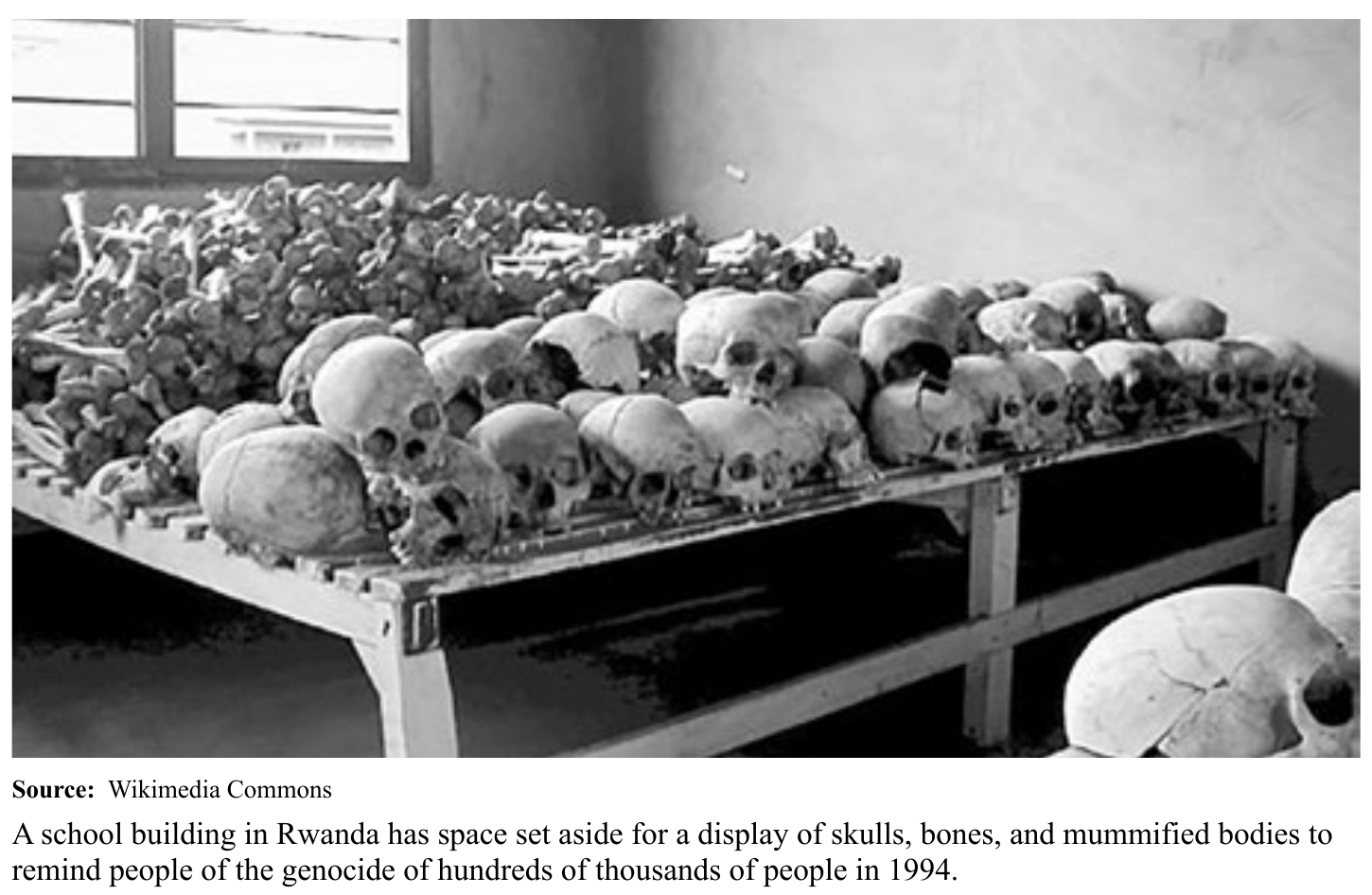
Rwanda One of the smallest countries in Africa, Rwanda was the site of one of the worst genocides in modern history. Ethnic and tribal hatred going back to the colonial era was behind the slaughter. Belgian colonizers had treated the minority Tutsis better than the majority Hutus. The latter group resented all the power that the Tutsis enjoyed. When Rwanda won independence from Belgium in 1962, the Hutu majority easily won control of the government and took revenge on the Tutsis by discriminating against them. In response, tens of thousands of Tutsis fled the country and formed a rebel army.
In 1993, Tutsi and Hutu forces in Rwanda began negotiations for a coalition government in which both ethnic groups would share power. The negotiations were cut short in 1994 when Rwanda’s president, a Hutu, was killed in an airplane crash, supposedly shot down by rebel forces. This incident lit the flames of genocide. Over the next three months or so, between 500,000 and 1 million civilians—mostly Tutsis and some moderate Hutus—were killed. Some sources estimate that casualties were even higher.
International responses ranged from insufficient to callous. United Nations peacekeepers were instructed not to use force to restore order. There were also too few peacekeepers to protect all Rwandans. Individual countries, including the United States, evacuated their personnel from the country after Belgian peacekeepers were killed. UN peacekeepers and individual nations failed to evacuate any Rwandans. The Rwandan genocide focused attention on the lack of leadership in the international community. It became clear that the United Nations needed to think seriously about its role in violent conflicts if it wanted to effectively protect human lives and human rights.
Sudan Another genocide erupted in 2003 in Darfur, a region located in western Sudan. Most of the people involved were Muslim, but some were nomadic pastoralists of Arab descent, while others were non-Arab farmers. The government of Sudan was controlled by Arab Muslims. Two Darfur rebel groups composed of non-Arabs took up arms against the Sudanese government in response to attacks from nomads. In response, the government unleashed Arab militants known as the Janjaweed (translation: “evil men on horseback”) on the region. Together with Sudanese forces, the Janjaweed attacked and destroyed hundreds of villages throughout Darfur, slaughtering more than 200,000 people, mostly non-Arab Muslim Africans. More than one million people were displaced, creating a refugee crisis that spilled into neighboring Chad. Despite negotiations, appeals, and the International Criminal Court charging Sudan’s President Omar al-Bashir with war crimes, the genocide continued.
The genocides in Bosnia, Rwanda, and Sudan became stains on the conscience of the world. International organizations and the broad global community were supposed to defend human rights after the Jewish Holocaust. Considering the millions of lives lost and human dignity shattered, the failure of the international community appeared obvious. (Connect: Write a paragraph comparing genocides in Africa during the last three decades with the Holocaust.)