Canada and the “Silent Revolution” in Quebec
Quebec is the largest of Canada’s provinces, and its history is deeply rooted in French culture. France’s North American colonial territory in the early 1700s spanned from Quebec to the Gulf of Mexico. By the late 1700s, England controlled what was called New France, beginning a cultural and political divide in Quebec. People in New France were mainly Catholic, while the English-speaking parts of Britain’s Canadian colony were mainly Protestant.
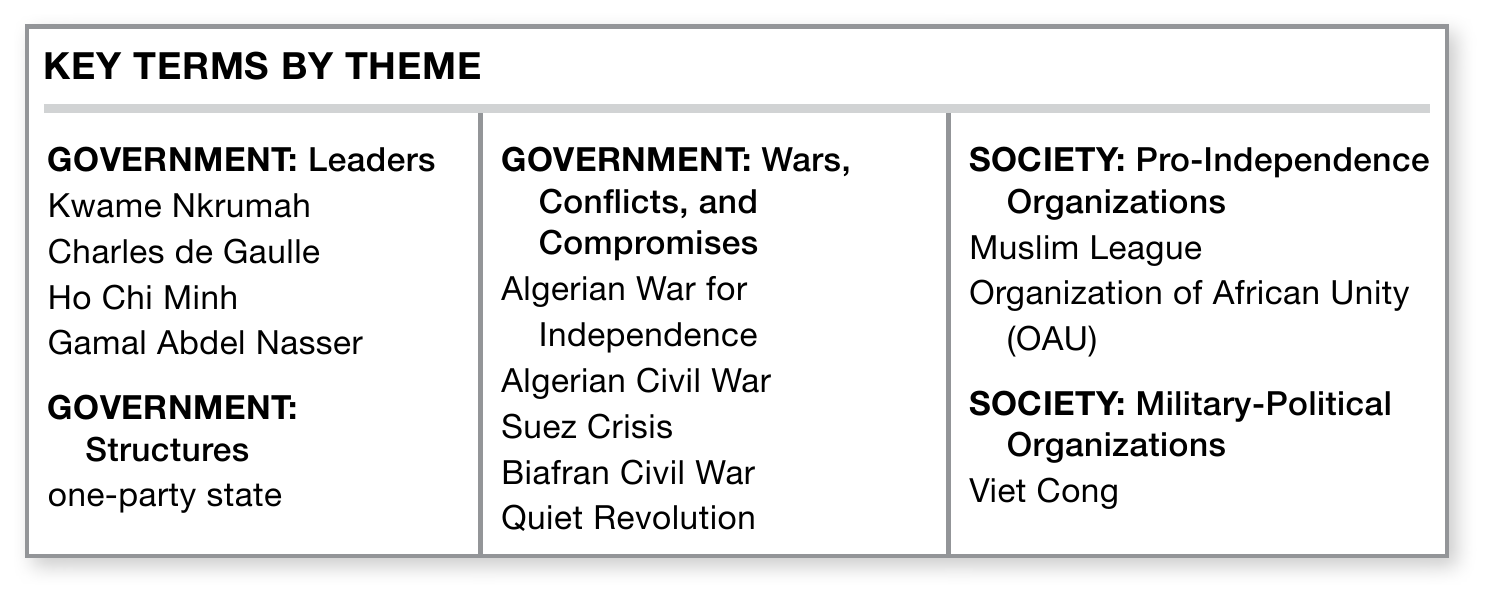
The Quebecois historically aligned themselves with France rather than England. Over the centuries, efforts to create a separate independent state have flared up—sometimes with violent results. The Quiet Revolution of the 1960s involved much political and social change in Quebec, with the Liberal Party gaining power and reforming economic policies that led to further desires for separation from the rest of British-controlled Canada. French Canadian nationalism expanded, and splinter groups adopted extreme tactics, including terrorist bombings that began in 1963. Canadian Prime Minister Pierre Trudeau, a native of Quebec, was able to preserve the country’s unity. Later, in 1995, a referendum to make Quebec an independent nation failed by a narrow margin.