Unit 9 AP Exam Practice
Document-Based Questions
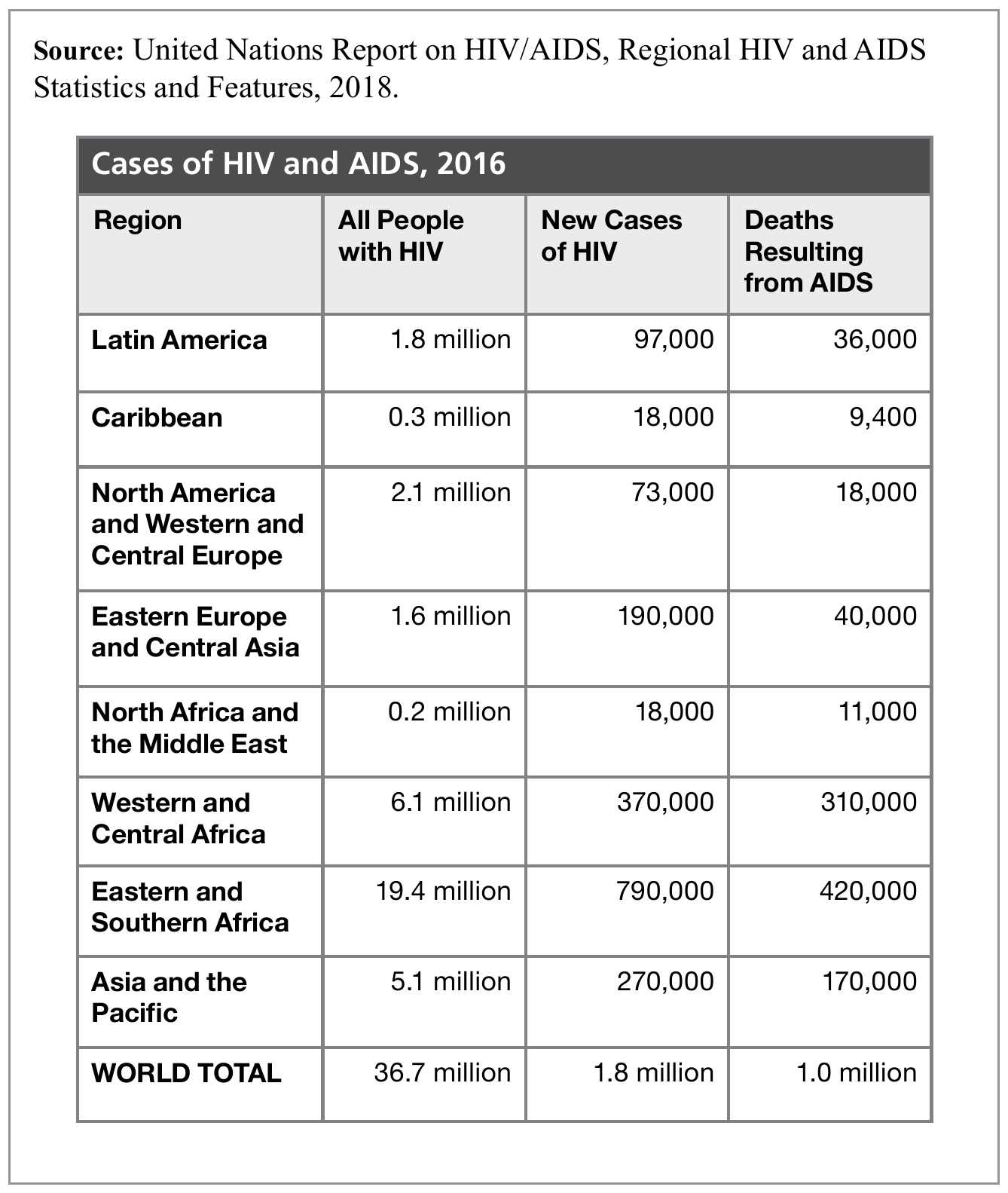
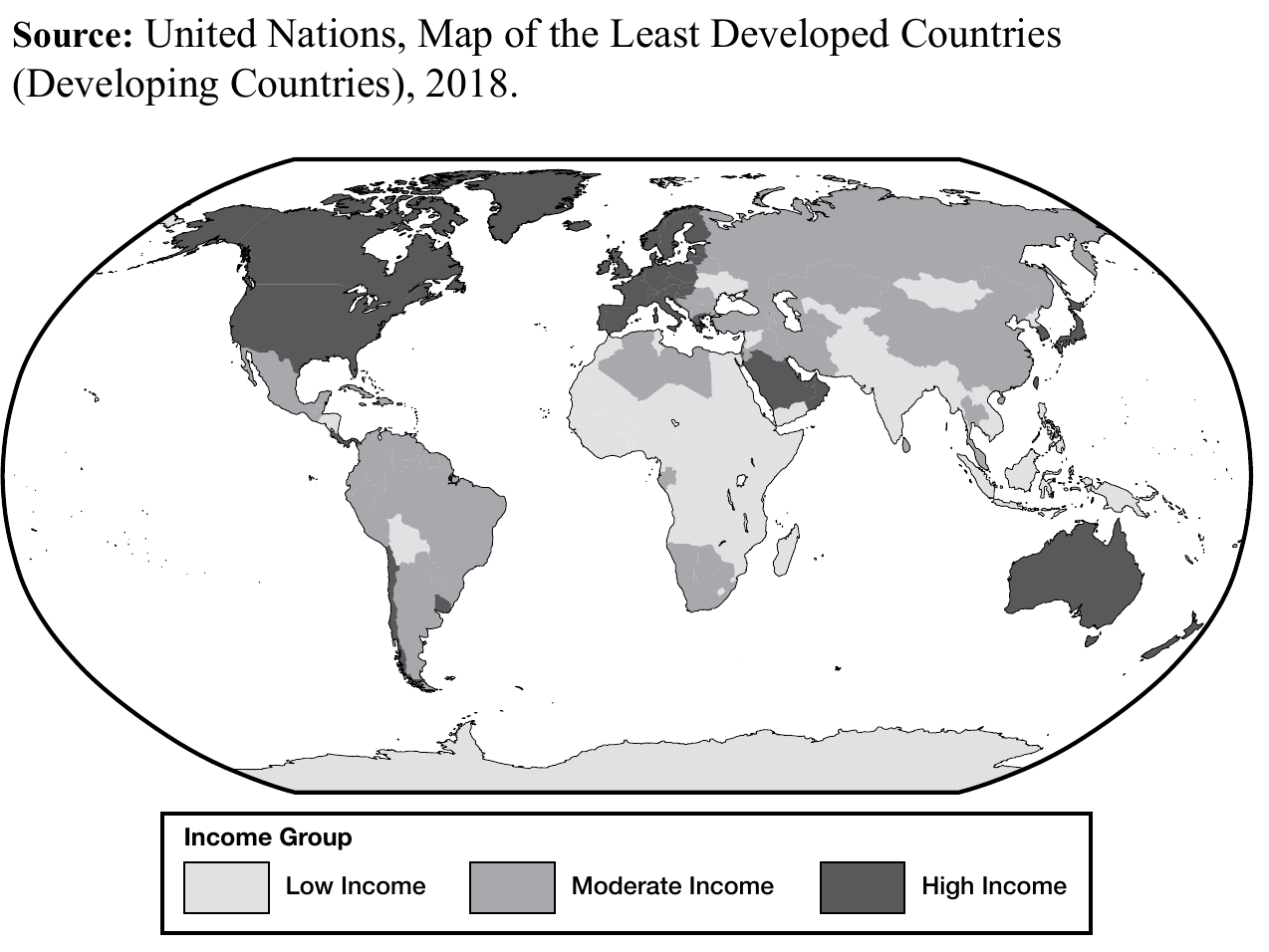
1. Develop an argument that evaluates the extent to which human health is linked to a country’s status as a developing or a developed nation.
Historical Background
Developing nations are generally described as countries with a less
developed industrial base; low levels of safe drinking water, sanitation,
and hygiene; high levels of pollution; and widespread poverty. Developed
nations are generally described as countries with advanced technological
infrastructure and developed economies; better educational opportunities;
greater wealth of the people; and higher living standards.
Document 1
Document 1
Source: UNICEF, “Vaccines Bring 7 Diseases Under Control,” 1996.
Two hundred years after the discovery of vaccine by the English physician Edward Jenner, immunization can be credited with saving approximately 9 million lives a year worldwide. . . So far only one disease, smallpox, has been eradicated by vaccines, saving approximately 5 million lives annually. . . Polio could be next. . . If the year 2000 goal of eradicating polio is achieved, the United States will be able to save the $270 million a year that is currently spent on polio vaccination. The savings for Western European countries will amount to about $200 million a year. . .In all, vaccines have brought seven major human diseases under some degree of control - smallpox, diphtheria, tetanus, yellow fever, whooping cough, polio, and measles. Most of the vaccines now in use have been available for several decades, but only in the last 15 years has protection been extended to the majority of children in the developing world. Only about a quarter were being immunized when, in the mid-1980s, UNICEF and WHO called for a new commitment to regularly reaching 80% of infants by 1990. In most nations, that goal was reached and has since been sustained - saving over 3 million young lives each year. As frequent disease is also a major cause of malnutrition, immunization is also helping to protect the normal growth of millions of children.
Document 2
Document 2
Source: Mark Fischetti, “Developing Countries Are Battling Diseases of the Rich and Poor,” Scientific American, 2016.
Life expectancy worldwide has risen for decades. But more people are living more years with debilitating [weakening] ailments, according to a new study by the Institute for Health Metrics and Evaluation in Seattle. In developed countries, the trouble comes almost entirely from noncommunicable [not transmitted directly from one person to another] conditions such as heart and lung disease and back pain—ills typically associated with lifestyle choices such as diet and exercise. In developing nations, however, the prevalence of these ailments is increasing rapidly, even as those countries continue to try to stamp out communicable diseases such as diarrhea and malaria that have plagued them for a long time. If developing nations are clever, though, they can create health policies that impede the new threats and keep reducing the old ones.
Document 3
Document 3
Source: Jane Barratt, the Secretary General of the International Federation on Aging, in the article “We are living longer than ever. But are we living better?” 2017.
For the first time in history, residents of high-, middle-, and low-income countries are likely to live to 60 years of age and beyond. Longevity [long life] is one of the greatest achievements of our modern era—the United Nations calls it one of the most significant social transformations of the 21st century. . . According to the World Health Organization’s World Report on Aging and Health, we still have a way to go. While we may be living longer, older individuals are not necessarily living healthier, more active lives. The report shines a light on the need for governments around the world to develop policies and programs to better meet the health and social care needs of citizens throughout their lives. . . Population aging is a major concern for many governments around the world, but perhaps even more so for those whose populations are projected to be among the oldest in 2050, such as Japan, South Korea, and Germany. According to a global study conducted by the Pew Research Center, achieving an adequate standard of living in old age is directly influenced by the extent to which a country’s population is expected to age healthfully. Improving quality of life and functional ability among older people must be geared toward helping them effectively manage chronic diseases and complex coexisting conditions. By their very nature, these conditions—heart disease, diabetes, and chronic obstructive pulmonary [relating to the lungs] disease, to name a few—place a burden on individuals, their families, and health systems.
Document 4
Document 4
Source: “Cholera: how African countries are failing to do even the basics,” The Conversation, a magazine based on academic research, 2017.
Each year, 1.3 to 4.0 million cases of the illness occurs around the world, leading to between 21,000 to 143,000 deaths. About two-thirds of these are in developing countries, mostly in sub-Saharan Africa. Cholera is. . . transmitted through contaminated water or food in areas with poor sanitation and lack of clean drinking water. Cholera is referred to as a disease of poverty because of the lack of social development in the areas in which it occurs. The constant threat of natural catastrophes such as flooding and man-made ones including civil unrest, make the management and prevention of cholera a huge challenge in most of Africa. Several conditions on the continent make it fertile ground for the emergence and rapid spread of cholera. These include: Inadequate access to clean water and sanitation facilities, especially in peri-urban slums, where basic infrastructure isn’t available. Camps for internally displaced persons or refugees, where minimum requirements of clean water and sanitation have not been met. . . Other humanitarian crises including flooding and earthquakes, civil unrest or war that causes disruption of water and sanitation systems. . . But generally the lack of comprehensive programs for improvement of general public health especially for vulnerable populations like refugees and informal settlement residents is a challenge. . . The increase in population, especially in urban. . . settlements, has been exponential over the last two decades posing a major challenge for public health as more people flock to the cities in search of jobs. . . On top of this a lack of political maturity in many African countries as well as greed for political power has led to civil unrest and chaos which in turn has resulted in internal displacements of huge populations. . . There are recommended vaccines that can minimize the spread of cholera. But they are rarely used as for most governments this not a priority. Vaccines can prevent up to 65% of vulnerable populations from getting cholera.
Document 5
Document 5
Document 6
Document 6
Document 7
Document 7
Source: “Why The World Ignores Diseases Of Poverty,” Huffington Post, news and opinion website and blog, 2018.
More than 1 billion people worldwide are infected with diseases of poverty. These conditions disproportionately afflict the world’s poorest, either in the developing world, or in developed countries with extreme inequality. Though well-known conditions such as HIV/AIDS and malaria are considered diseases of poverty, many of the other illnesses that primarily strike the world’s poorest are lesser-known and frequently misunderstood. The World Health Organization has designated about 20 of these conditions as “neglected tropical diseases.” This diverse array of conditions—such as leprosy, dengue, Chagas, and elephantiasis, to name a few—don’t attract the global media attention or funding that certain wide-ranging tropical diseases, such as malaria, have garnered in recent years. Neglected diseases cost developing economies billions of dollars annually and lock sufferers into a cycle of poverty that is nearly impossible to escape.
Long Essay Questions
1. From 1900 to the present, changes in transportation and communication led to a more interconnected world. Develop an argument that evaluates the extent to which these technological advances resulted in political and social changes in that era.
2. From 1900 to the present, increasing globalization has made transportation faster and easier, but it has also caused pandemics to become more widespread. Develop an argument that evaluates the extent to which the effects of the influenza pandemic of 1918–1919 were similar to, or different from, the HIV/AIDS epidemic that began in the 1980s.
3. After 1900, religious and ideological differences led to the partition of some states in Eurasia so their peoples could have independence. Develop an argument that evaluates the extent to which the partition of India in 1947 and the partition of Palestine in 1948 were similar or different.
4. After World War II, capitalist and communist powers divided up and heavily influenced the territories of Germany and Korea. Develop an argument that evaluates the extent to which the partition of Germany and the partition of Korea were similar or different between 1945 and the present.