Political Structures of West and East Africa
Kingdoms on both the western and eastern sides of Africa benefited from increased trade. The exchange of goods brought them wealth, political power, and cultural diversity. The spread of Islam added to the religious diversity of the continent, where animism and Christianity were already practiced. Four of these kingdoms were Ghana, Mali, Zimbabwe, and Ethiopia.
Ghana Nestled between the Sahara and the tropical rain forests of the West African coast, the kingdom of Ghana was not in the same location as the modern nation of Ghana. Historians believe that the kingdom had been founded during the 5th century, at least two centuries before the time of Muhammad, but Ghana reached its peak of influence from the 8th to the 11th centuries. Ghana’s rulers sold gold and ivory to Muslim traders in exchange for salt, copper, cloth, and tools. From Ghana’s capital city, Koumbi Saleh, the king ruled a centralized government aided by nobles and an army equipped with iron weapons.
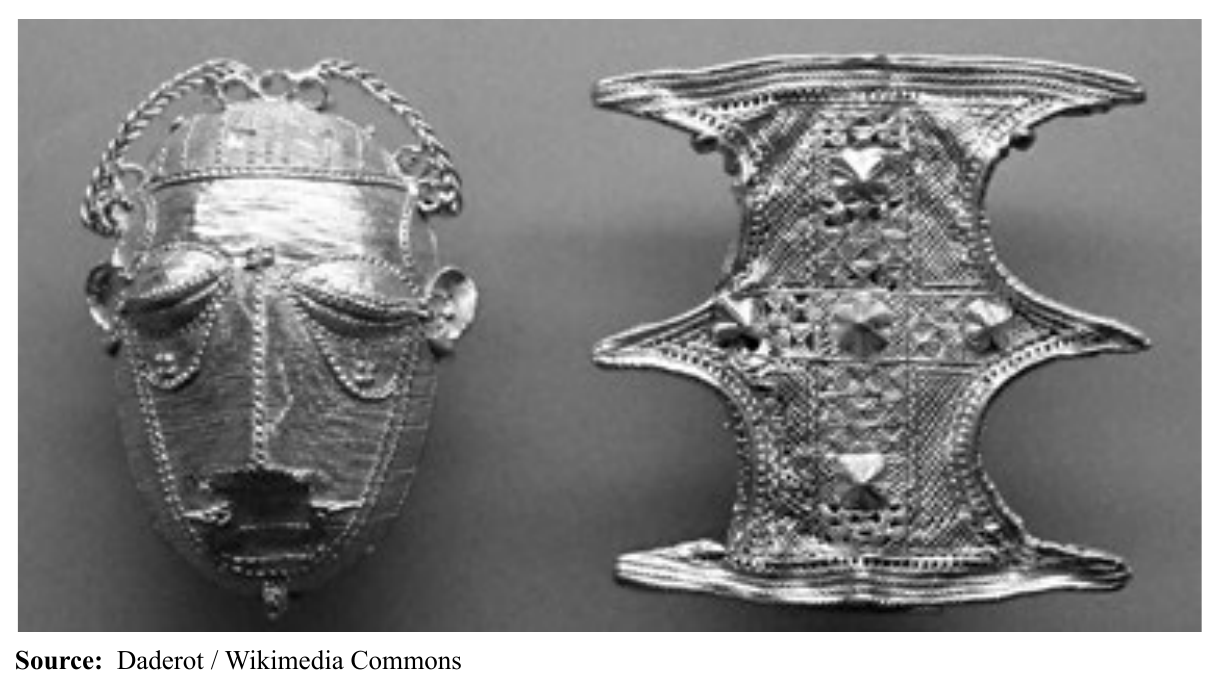
Mali By the 12th century, wars with neighboring societies had permanently weakened the Ghanaian state. In its place arose several new trading societies, the most powerful of which was Mali. You will read more about Mali in Topic 2.4. Most scholars believe that Mali’s founding ruler, Sundiata, was a Muslim and used his connections with others of his faith to establish trade relationships with North African and Arab merchants. Sundiata cultivated a thriving gold trade in Mali. Under his steady leadership, Mali’s wealth grew tremendously. His nephew, Mansa Musa, made a pilgrimage to Mecca where his lavish displays of gold left a lasting impression. (See Topic 2.4 for the later developments in West Africa, such as the growth of the city of Timbuktu and the Songhai Empire.)
Zimbabwe In East Africa, the architecture demonstrated the growing wealth of one kingdom. Though most houses had traditionally been constructed from wood, by the 9th century chiefs had begun to construct their “zimbabwes,” the Bantu word for “dwellings,” with stone. This word became the name of one of the most powerful of all the East African kingdoms between the 12th and 15th centuries—Zimbabwe. It was situated between the Zambezi and Limpopo rivers in modern-day Zimbabwe and Mozambique.
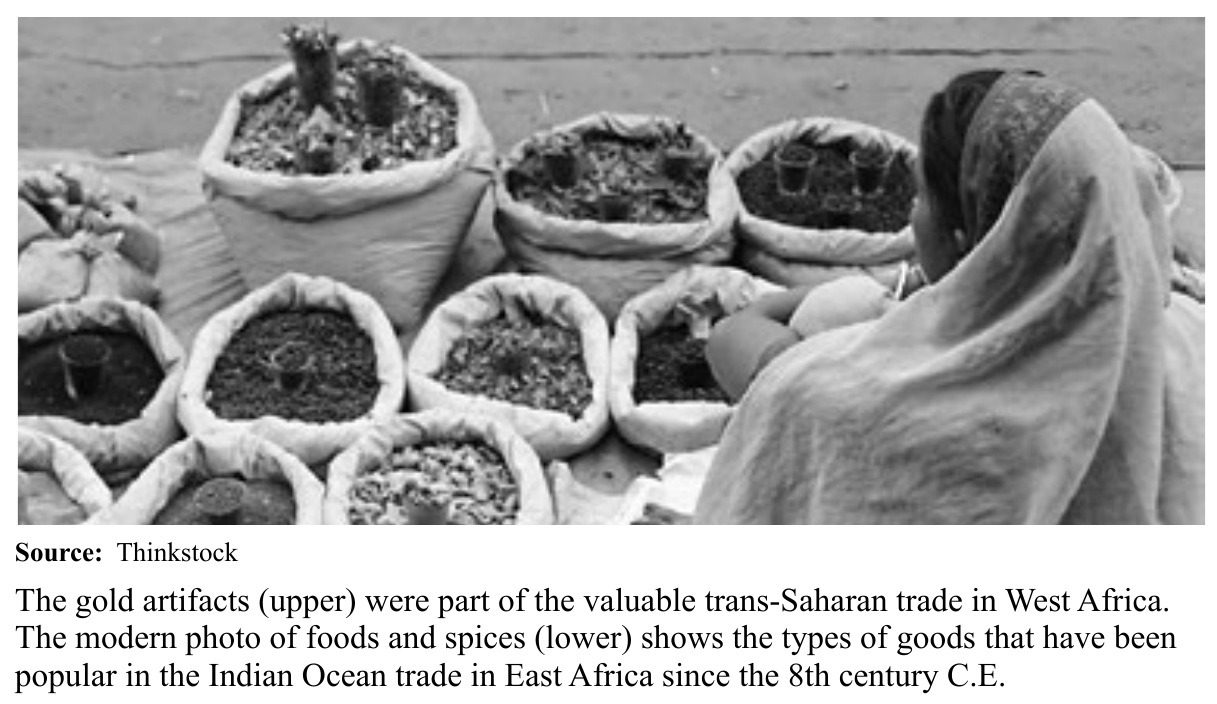
Zimbabwe built its prosperity on a mixture of agriculture, grazing, trade, and, above all, gold. Like Ghana and Mali on the other side of the continent, Zimbabwe had rich gold fields, and taxes on the transport of gold made the kingdom wealthy. While Ghana and Mali relied on land-based trade across the Sahara, Zimbabwe traded with the coastal city-states such as Mombasa, Kilwa, and Mogadishu. Through these ports, Zimbabwe was tied into the Indian Ocean trade, which connected East Africa, the Middle East, South Asia, and East Asia. In East Africa, traders blended Bantu and Arabic to develop a new language, Swahili. Today, Swahili is spoken by various groups in the African Great Lakes region as well as other parts of Southeast Africa.
The rise and decline of Zimbabwe was reflected in the defensive walls used to protect cities. By the end of the 13th century, a massive wall of stone, 30 feet tall by 15 feet thick, surrounded the capital city, which became known as the Great Zimbabwe. The stone wall was the first large one on the continent that people built without mortar. Inside the wall, most of the royal city’s buildings were made of stone. In the late 15th century, nearly 20,000 people resided within the Great Zimbabwe. However, overgrazing so damaged the surrounding environment that residents of the bustling capital city abandoned it by the end of the 1400s. The wall still stands in the modern country of Zimbabwe.
Ethiopia Christianity had spread from its origins along the east coast of the Mediterranean Sea south into Egypt and beyond. In what is today Ethiopia, the kingdom of Axum developed. It prospered by trading goods obtained from India, Arabia, the Roman Empire, and the interior of Africa. Beginning in the 7th century, the spread of Islam made the region more diverse religiously.
In the 12th century, a new Christian-led kingdom in Ethiopia emerged. Its rulers, like those of other countries, expressed their power through architecture. They ordered the creation of 11 massive churches made entirely of rock.
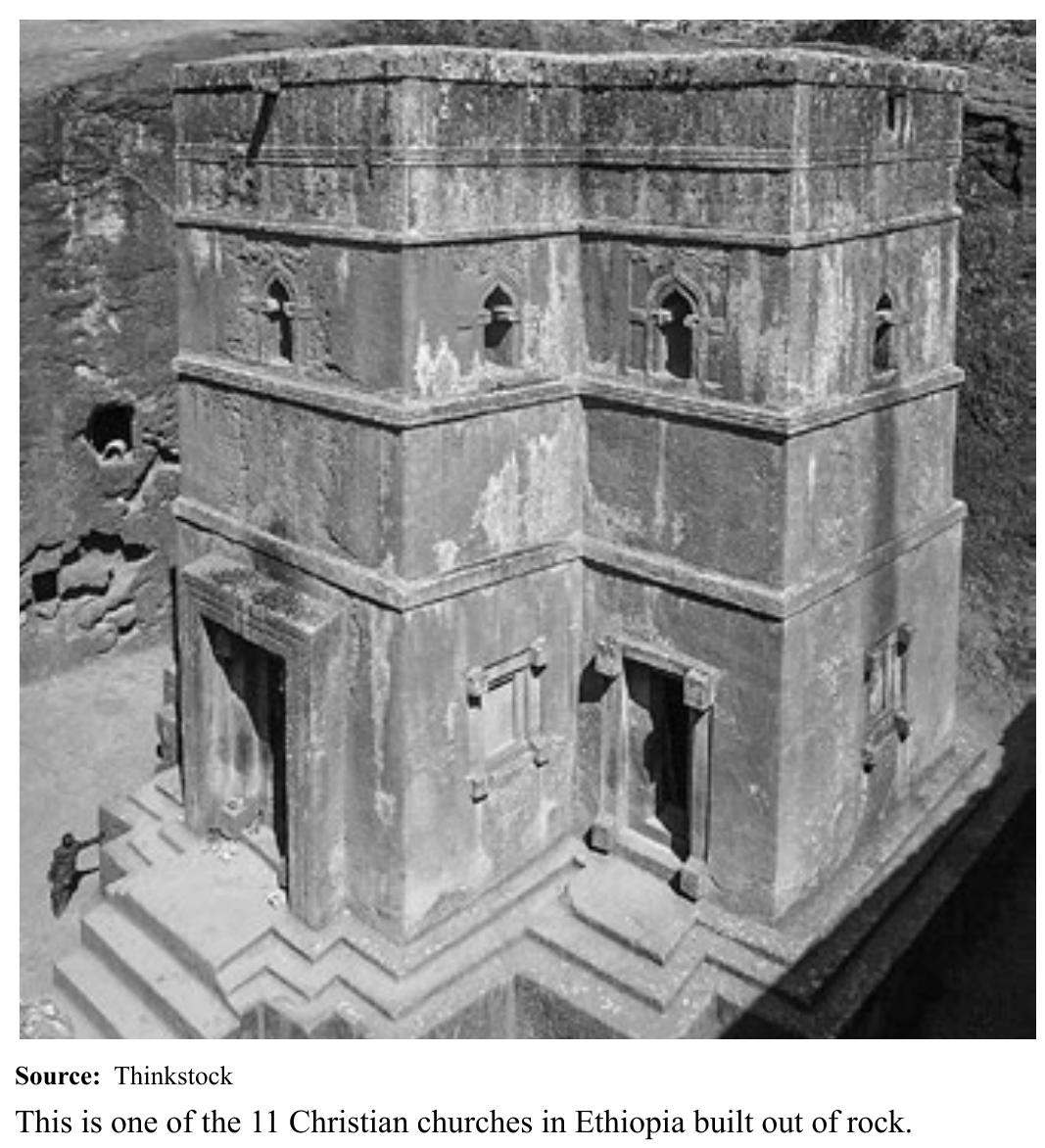
Carved rock structures had been a feature of Ethiopian religious architecture since the 2nd millennium B.C.E.
From the 12th through the 16th centuries, Ethiopia was an island of Christianity on the continent of Africa. Separated from both the Roman Catholic Church of western Europe and the Orthodox Church of eastern Europe, Ethiopian Christianity developed independently. People combined their traditional faith traditions, such as ancestor veneration and beliefs in spirits, with Christianity to create a distinct form of faith.