Japan and the Meiji Restoration
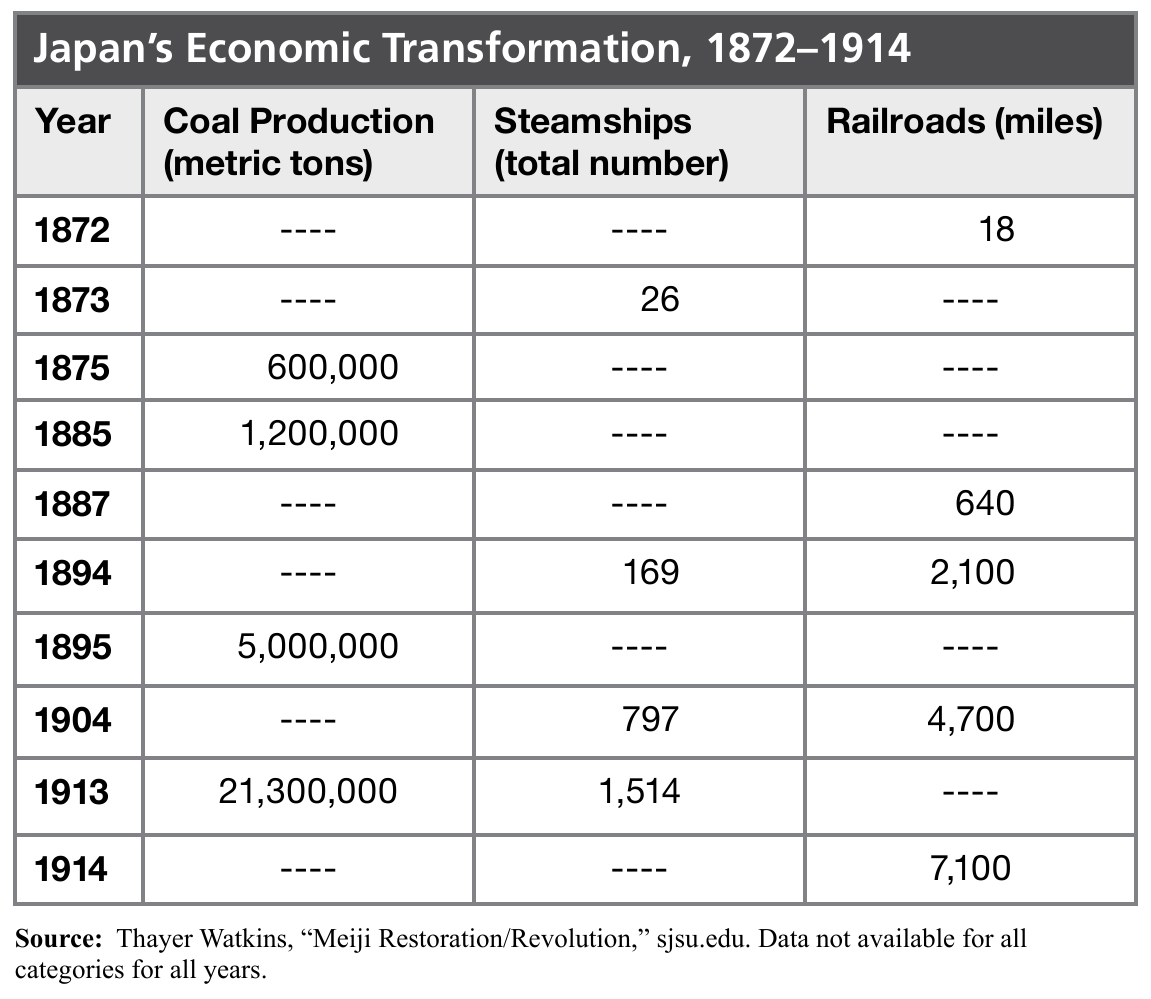
Japan’s transition to a modern, industrialized country took less than half a century to accomplish. No country made such a rapid change.
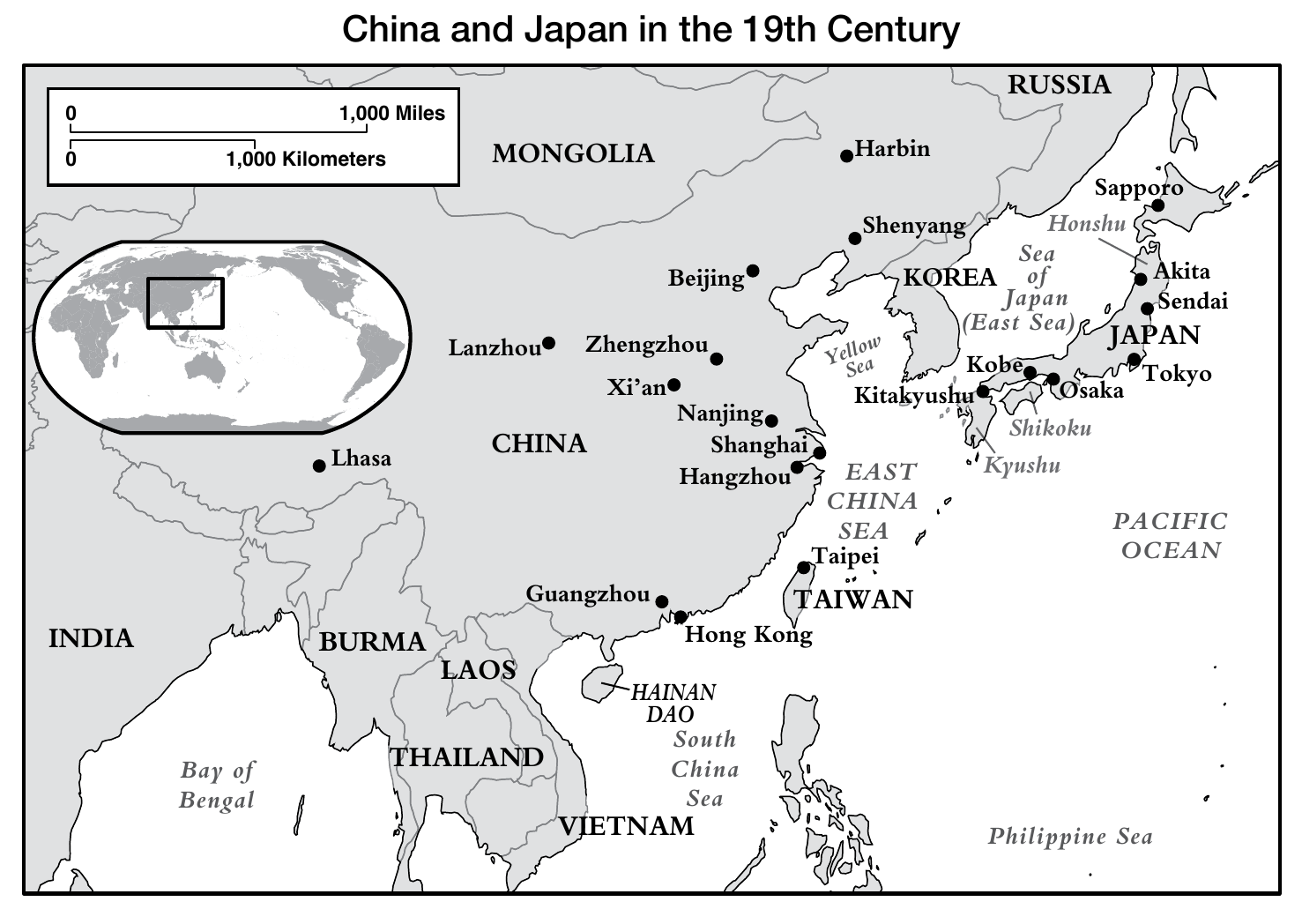
A Challenge to Isolation Between 1600 and 1854, Japan had very little contact with the rest of the world. However, the rising imperial powers in the world were not content to let Japan keep to itself. The great powers of Europe, such as Great Britain, the Netherlands, and Russia, all wanted to sell goods in Japan. Further, in the age of coal-powered ships, trading states wanted to be able to refuel in Japan as they sailed to and from China and other parts of East Asia.
Japan Confronts Foreigners In 1853, a naval squad led by Commodore Matthew Perry in 1853 sailed into Yedo and Tokyo Bay, asking for trade privileges. The next year, Perry returned with even more ships, demanding that the Japanese engage in trade with the United States. Faced with the power of the U.S. warships, the Japanese gave in to U.S. demands. Soon they yielded to similar demands by other foreign states.
The arrival of Perry, and the threat he posed, caused Japanese leaders to realize the danger they and their culture were in. They had seen how even a large, traditionally powerful country such as China had been humiliated by Westerners. They had watched as the British had gone to war to force the Chinese to accept opium imports. While some Japanese argued that the country could defend itself, many reformers feared it could not. They argued that the country should adopt enough Western technology and methods so it could protect its traditional culture. To accomplish this goal, they overthrew the shogun and restored power to the emperor in 1868, an event know as the Meiji Restoration.
Reforms by the Meiji State Japan systematically visited Europe and the United States and invited experts to Japan in order to study Western institutions. Then, Japan adopted reforms based on what it admired:
• It formally abolished feudalism in 1868 by the Charter Oath.
• It established a constitutional monarchy based on the Prussian model in which the emperor ruled through a subordinate political leader.
• It established equality before the law and abolished cruel punishments.
• It reorganized the military based on the Prussian army, building a new navy and instituting conscription.
• It created a new school system that expanded educational opportunities, particularly in technical fields.
• It built railroads and roads.
• It subsidized industrialization, particularly in the key industries of tea, silk, weaponry, shipbuilding, and a rice wine called sake.
The government financed all of these reforms with a high agricultural tax. The taxes proved a good investment because they stimulated rapid economic growth. The government’s ability to collect increased taxes also provided revenue for the bureaucracy, now centered in Tokyo.
However, in replicating the methods of Western countries, the Japanese also replicated some of industrial society’s problems. For example, accounts of abuse and exploitation of female Japanese mill workers are similar to the experiences that British female mill workers had recorded decades earlier. (Connect: Write a brief paragraph comparing Japan’s industrialization with developments in the West. See Topic 5.3.)
The Role of Private Investments While the relationship between industry and centralized government was key to modernization in Japan, private investment from overseas also became important. Once new industries were flourishing, they were sometimes sold to zaibatsu, powerful Japanese family business organizations like the conglomerates in the United States. The prospect of attracting investors encouraged innovation in technology. For example, a carpenter founded a company in 1906 called Toyoda Loom Works that made an automatic loom. The company prospered, modified its name, and grew into today’s Toyota Motor Company.