Society and the Industrial Age
Bleak, dark, and piercing cold, it was a night for the well-housed and fed to draw round the bright fire and thank God they were at home; and for
the homeless, starving wretch to lay him down and die.
—Charles Dickens, Oliver Twist (1839)
Learning Objectives
- J: Explain how industrialization caused change in existing social hierarchies and standards of living.
Industrialization affected not only governments and economies but also
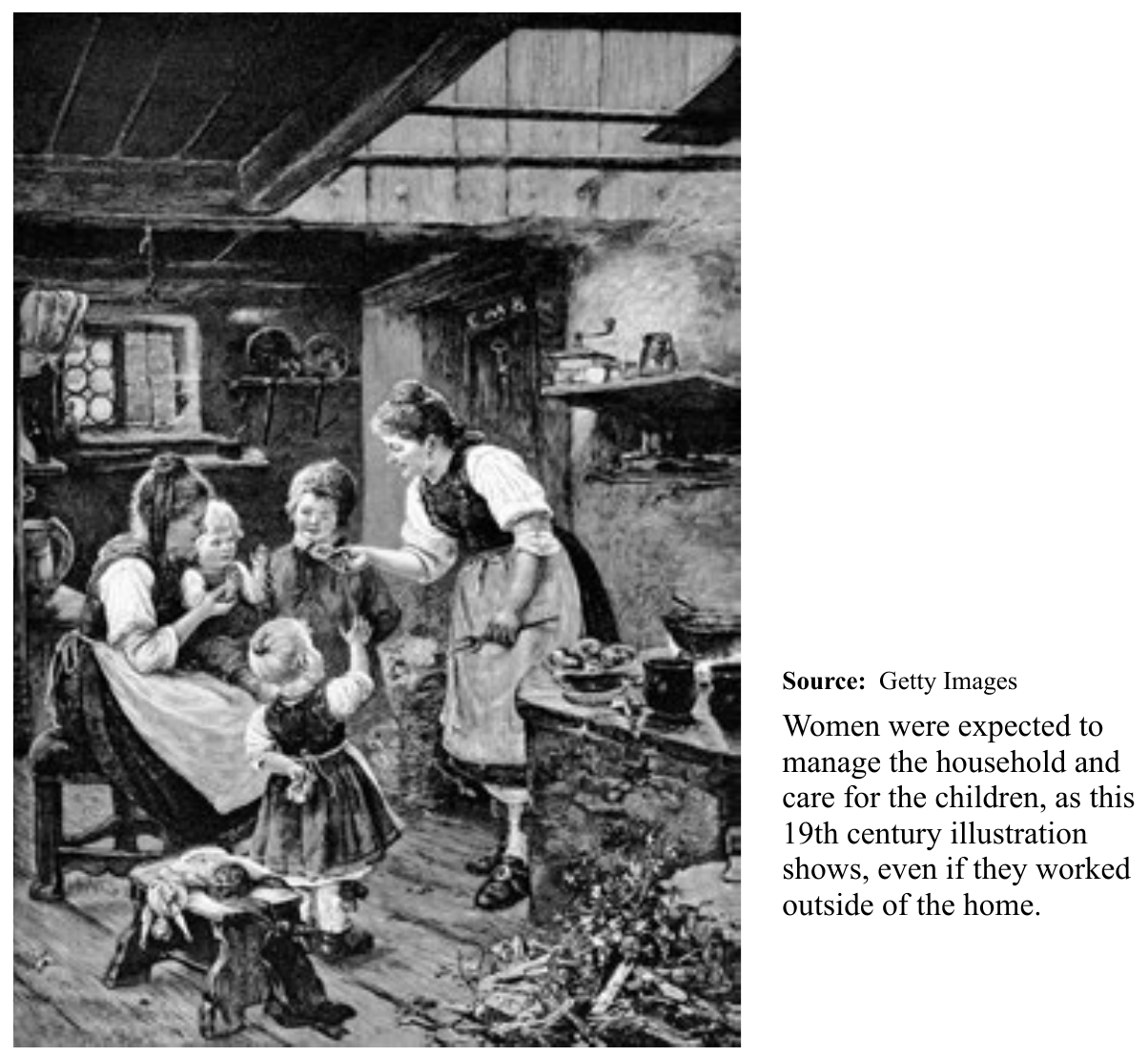
people’s everyday lives. Dickens illustrated the sharp contrasts in the industrial age between the emerging middle class, who enjoyed the benefits of the new prosperity, and the urban poor, who were ill-treated. Young children worked in factories. Women experienced substantial changes in their lifestyle. Poor women took jobs in domestic service and the textile industries, spending less time at home. Middle-class women, with no economic responsibilities, felt limited by household roles. The middle classes also started spending their free time seeking entertainment in theaters, concert halls, and sports facilities.
Think As a Historian: THINK AS A HISTORIAN: SITUATE A HISTORICAL PROCESS IN CONTEXT
Read more →
Reflect
REFLECT ON THE TOPIC ESSENTIAL QUESTION
1. In one to three paragraphs, explain how industrialization caused changes in existing social hierarchies and standards of living.
AP Exam Practice
Start Practice →