Resistance to Portugal in Africa
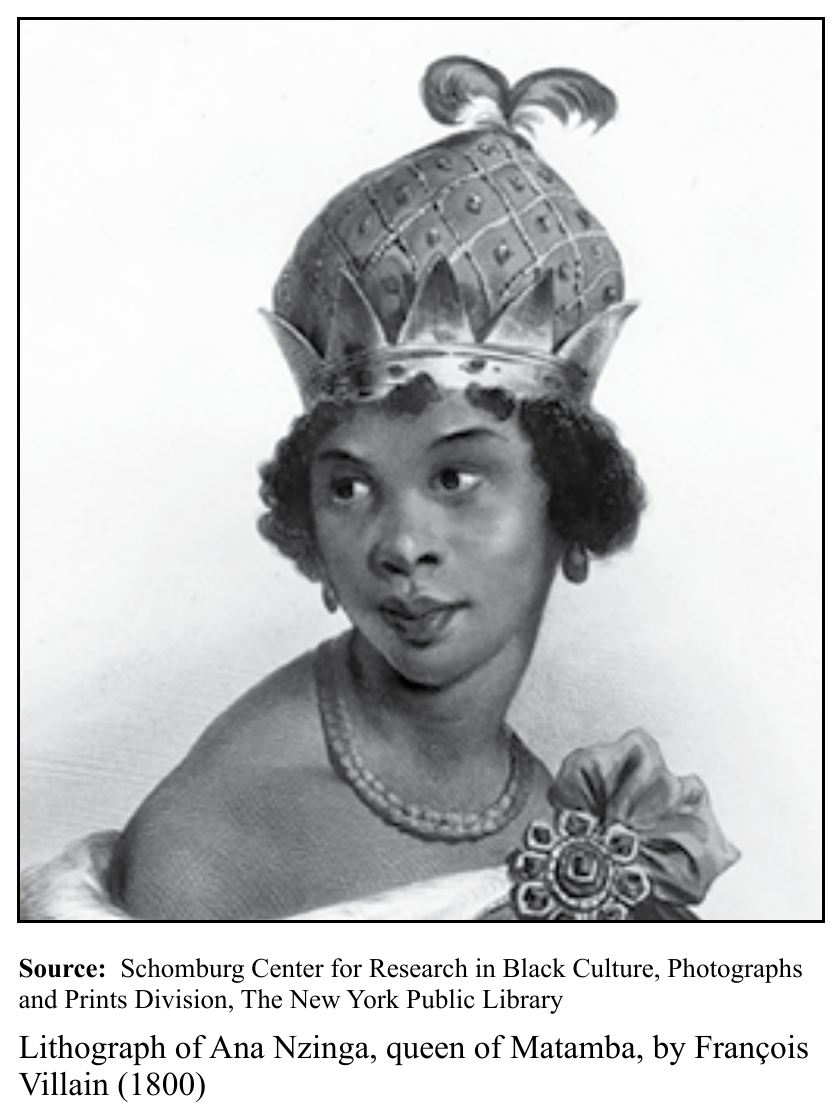
By the 17th century, the Dutch and the English had pushed the Portuguese out of South Asia. (See Topic 1.3.) The Portuguese looked to Africa, where it had carried out slave raids since the 15th century, to build a colony. In 1624, Ana Nzinga became ruler of Ndongo in south-central Africa (present-day Angola). In addition to the slave raids by Portugal, other African peoples were attacking Ndongo. In exchange for protection from neighboring powers and an end to Portugal’s raids, Nzinga became an ally of Portugal. Nzinga was baptized as Christian, with the governor of the Portuguese colony as her godfather. However, the alliance broke down. Nzinga and her people fled west, taking over the state of Matamba. She then incited a rebellion in Ndongo, allied with the Dutch, and offered freedom in Matamba to enslaved Africans. Nzinga ruled for decades, building Matamba into an economically strong state.