Communism in China
In China, the Communists and the Nationalists began fighting for control of the country in 1927. However, after the Japanese invaded, the two sides agreed to focus on fighting them instead of each other. (See Topic 7.5.)
Victory by the Communists After the defeat of the Japanese in 1945, the Chinese Civil War resumed. The Communists, led by Mao Zedong, won popular support because they redistributed land to peasants, opened schools and hospitals, and punished soldiers who mistreated civilians. Peasants saw the Communists as more nationalist and less corrupt than the Nationalists. In 1949, the Communists defeated the Nationalists and set up the People’s Republic of China. Mao ordered the nationalization of Chinese industries and created five-year plans based on the Soviet model. Like the Soviets, the Chinese plans emphasized heavy industry instead of consumer goods.
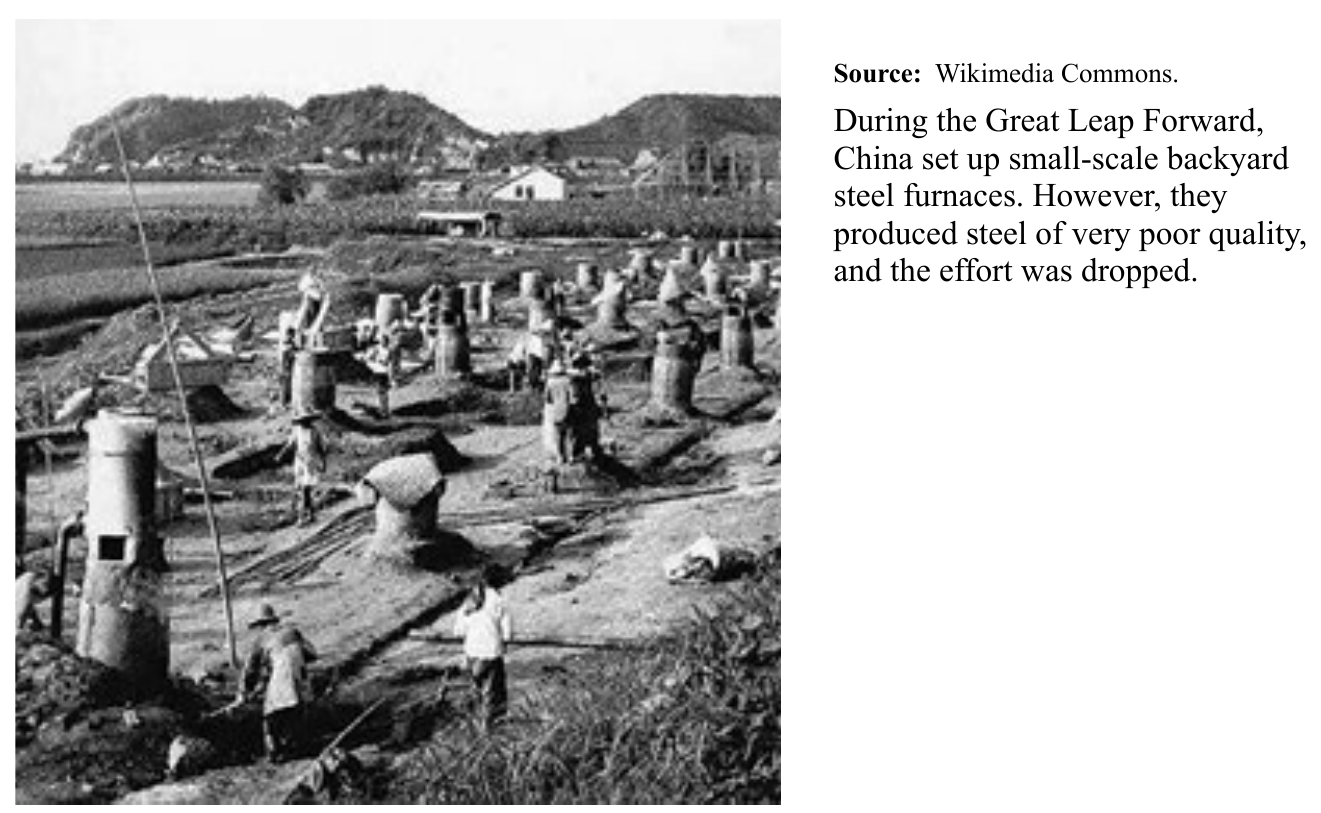
Great Leap Forward In 1958, China went through more land reform as part of the policy called the Great Leap Forward. Peasant lands were organized into communes, large agricultural communities where the state held the land, not private owners. Those who protested this policy could be sent to “reeducation camps” or killed.
Even though failing harvests caused severe food shortages, China continued to export grain to Africa and Cuba. Mao sought to convince the outside world of the success of his economic plans. Some 20 million Chinese died from starvation. By 1960, the Great Leap Forward was abandoned.
Cultural Revolution In 1966, Mao attempted to reinvigorate China’s commitment to communism, an effort called the Cultural Revolution. In practice, the Cultural Revolution silenced critics of Mao and solidified his hold on power. Its impact on China was similar to the impact of Stalin’s purges in the Soviet Union. Mao ordered the Red Guards, groups of revolutionary students, to seize government officials, teachers, and others and send them to the countryside for reeducation. Reeducation involved performing hard physical labor and attending group meetings where Red Guards pressured them to admit they had not been revolutionary enough.
Relations with the Soviets Although China and the Soviet Union were both communist states, they were often hostile to each other. From 1961 onward, the two countries skirmished over their border. They also competed for influence around the world. For example, Albania, a Soviet satellite, took advantage of the split by allying with China against the Soviet Union, thereby receiving more autonomy and additional financial aid from China.