Comparing Social and Cultural Effects
The tension and turmoil of the Cold War era created social effects for all sides involved. For example, the proxy wars cost millions of people their lives, especially in Southeast Asia. In the Vietnam war alone, two million soldiers and two million civilians died over 20 years of conflict. Bombs destroyed villages, and chemical defoliants killed anything growing on farmlands. Families were separated and displaced. Many rural villagers left for the city, where they thought they could find safety. Saigon, the capital city, tripled in size as refugees from the countryside flooded in. Most of the fighting took place in South Vietnam, so it sustained the most damage, but North Vietnam was also bombed—especially such infrastructure as railroads and highways.
Social Tensions The Cold War created suspicions as well. Americans were afraid of communist infiltration, and some people’s careers were ruined when they were unjustly accused of being communists. In the Soviet Union, people were afraid to express their beliefs openly if they disagreed with the government. They knew they could be sent away to a political prison camp. People everywhere lived under the threat of a nuclear attack. Some people built bomb shelters where they hoped they could safely weather an atomic attack.
Cultural Effects With greater personal freedom, and with help from the United States, Western Europeans experienced a cultural rebirth after World War II. Scientific research, music, art, and architecture flourished. Eastern Europe, in contrast, lacked freedom of expression. Because of the Cold War, governments actively blocked the spread of Western culture. The people of Eastern Europe did not see much in the way of cultural achievements beyond those that were government-sponsored or approved.
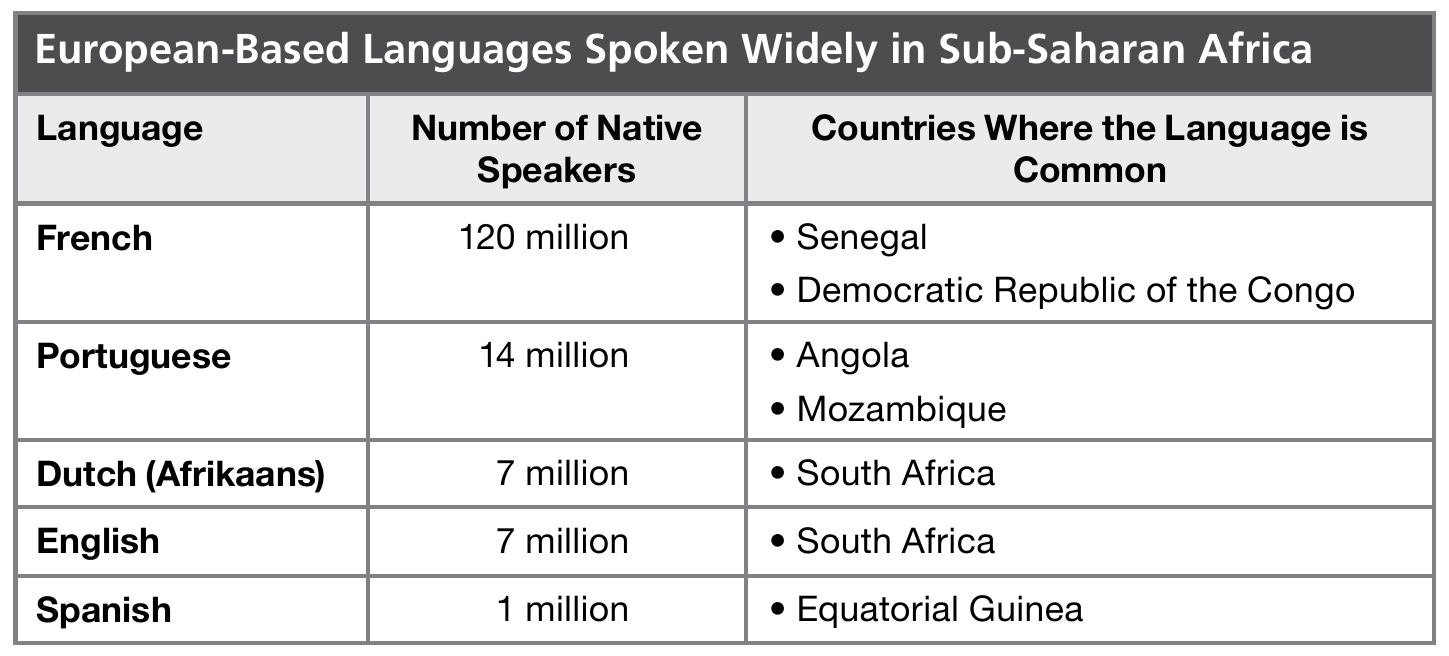
During the Cold War, many people from former colonies moved to the metropole (see Topic 8.6), furthering the blending of cultures. At the same time, the imperial powers left a legacy of culture in their former colonies, including the languages spoken, as the chart below shows.
In places where a Cold War superpower had maintained order, such as Afghanistan and Yugoslavia, violent culture clashes occurred when the superpower retreated. In Yugoslavia, for example, which had been stitched together and annexed to Serbia after World War I, ethnic tensions flared as Serbia’s ultra-nationalist president, Slobodan Milosevic, pitted one group against another to strengthen his own position after the fall of the Soviet Union left a power vacuum. Wars in the region took tens of thousands of lives and created hundreds of thousands of refugees.(Connect: Analyze the changing goals for both superpowers during the Cold War. See Topics 8.1, 8.3, and 8.8.)