Britain’s Industrial Advantages
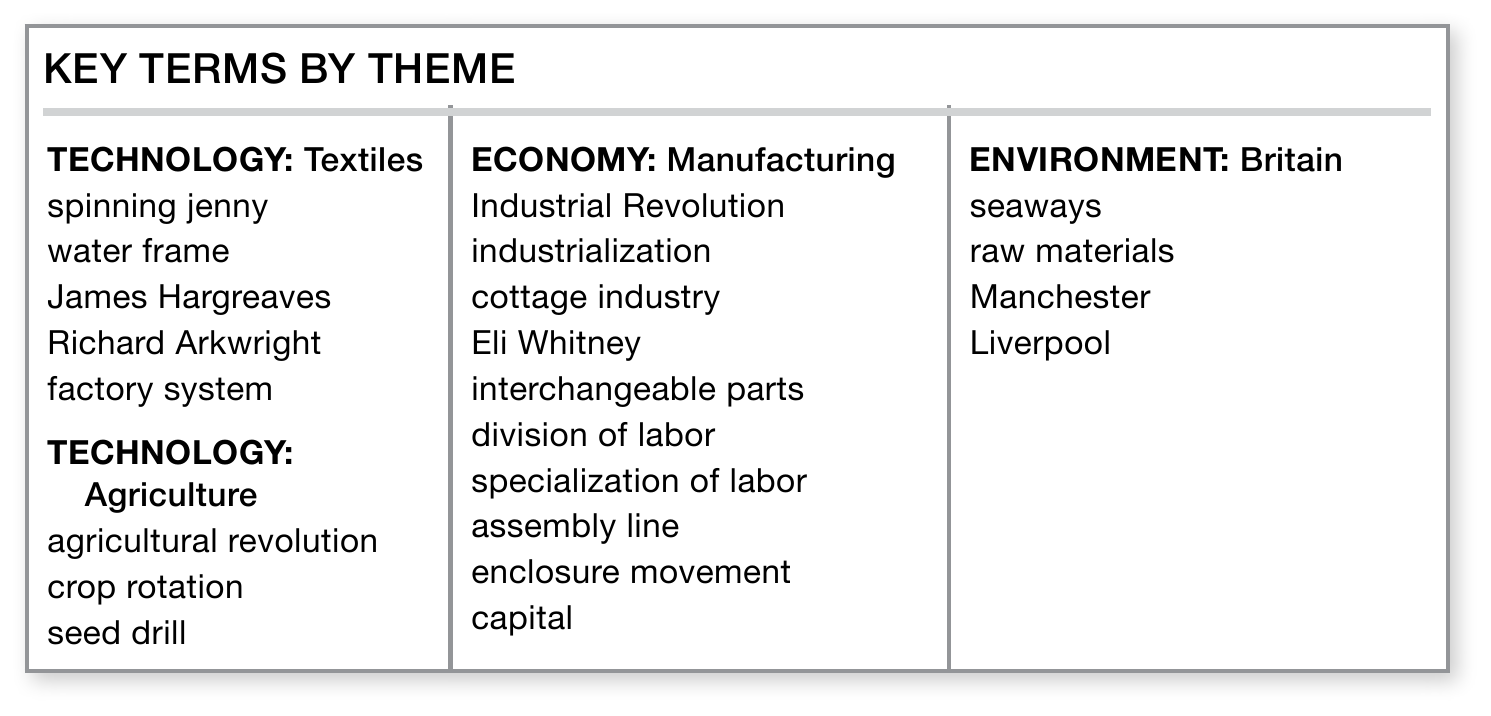
Britain had many environmental and geographic advantages that made it a leader in industrialization. Located on the Atlantic Ocean with its many seaways, the country was well placed to import raw materials and export finished goods.
Mineral Resources Britain also had the geographic luck of being located atop immense coal deposits. Coal was vital to industrialization because when burned it could power the steam engine. The burning of this fossil fuel, an energy source derived from plant and animal remains, was also essential in the process of separating iron from its ore. Iron production (and later steel production) allowed the building of larger bridges, taller buildings, and stronger ships. Coal mining became the major industry of northern and western Britain, including South Wales, Yorkshire, and Lancashire. When the United States industrialized, coal-mining areas developed in West Virginia, Pennsylvania, and Kentucky.
Resources from the Colonies As a colonizing power, Britain also had access to resources available in its colonies, including timber for ships. Largely because of the wealth they accumulated during the trans-Atlantic slave trade, enough British capitalists had excess capital (money available to invest in businesses). Without this capital, private entrepreneurs could not have created new commercial ventures.
Abundant Rivers Britain, the northeastern United States, and other regions also had a natural network of rivers supplemented by publicly funded canals and harbors. These water routes made transport of raw materials and finished products inexpensive.
Strong Fleets Britain also had the world’s strongest fleet of ships, including naval ships for defense and commercial ships for trade. These ships brought agricultural products to Britain to be used to make finished products for consumers.
Protection of Private Property A vital factor that aided industrialization in Britain was the legal protection of private property. Entrepreneurs needed the assurance that the business they created and built up would not be taken away, either by other businesspeople or by the government. Not all nations offered these legal guarantees.
Growing Population and Urbanization The increases in agricultural production caused two shifts in society. As farmers grew more food, they could support more people. As they grew it more efficiently, society needed a smaller percentage of the population working in agriculture.
This growing population in rural areas did not remain there. Migration was sometimes the best of bad options. English towns had traditionally allowed farmers to cultivate land or tend sheep on government property known as “the commons.” However, this custom ended with the enclosure movement as the government fenced off the commons to give exclusive use of it to people who paid for the privilege or who purchased the land. Many farmers became landless and destitute. The enclosure movement was thus instrumental in a wave of demographic change—forcing small farmers to move from rural areas to urban areas such as Manchester and Liverpool. The people who moved then became the workforce for the new and growing industries.