Agricultural Products
When Europeans arrived in Asia and Africa, they found mainly agricultural economies, with most people raising enough food to live on—subsistence farming—with perhaps a little left over to sell. Subsistence farming is still common throughout Sub-Saharan Africa, Southeast Asia, and parts of Latin America. Under control of imperialist powers, subsistence farmers abandoned their traditional ways and grew cash crops instead. These were crops such as tea, cotton, sugar, oil palms, rubber, and coffee that were grown for their commercial value rather than for use by those who grew them. Imperial demands for cash crops had a damaging effect on subject nations. As cash crops replaced food crops, food prices rose.
The growing European middle classes created a demand for meat. Cattle ranches in Argentina, Brazil, and Uruguay produced beef for export. Sheep herders in Australia and New Zealand exported lamb and mutton. New technology allowed meat to be shipped over long distances. Meat could be processed and canned in packing plants or shipped fresh or frozen in refrigerated steamships.
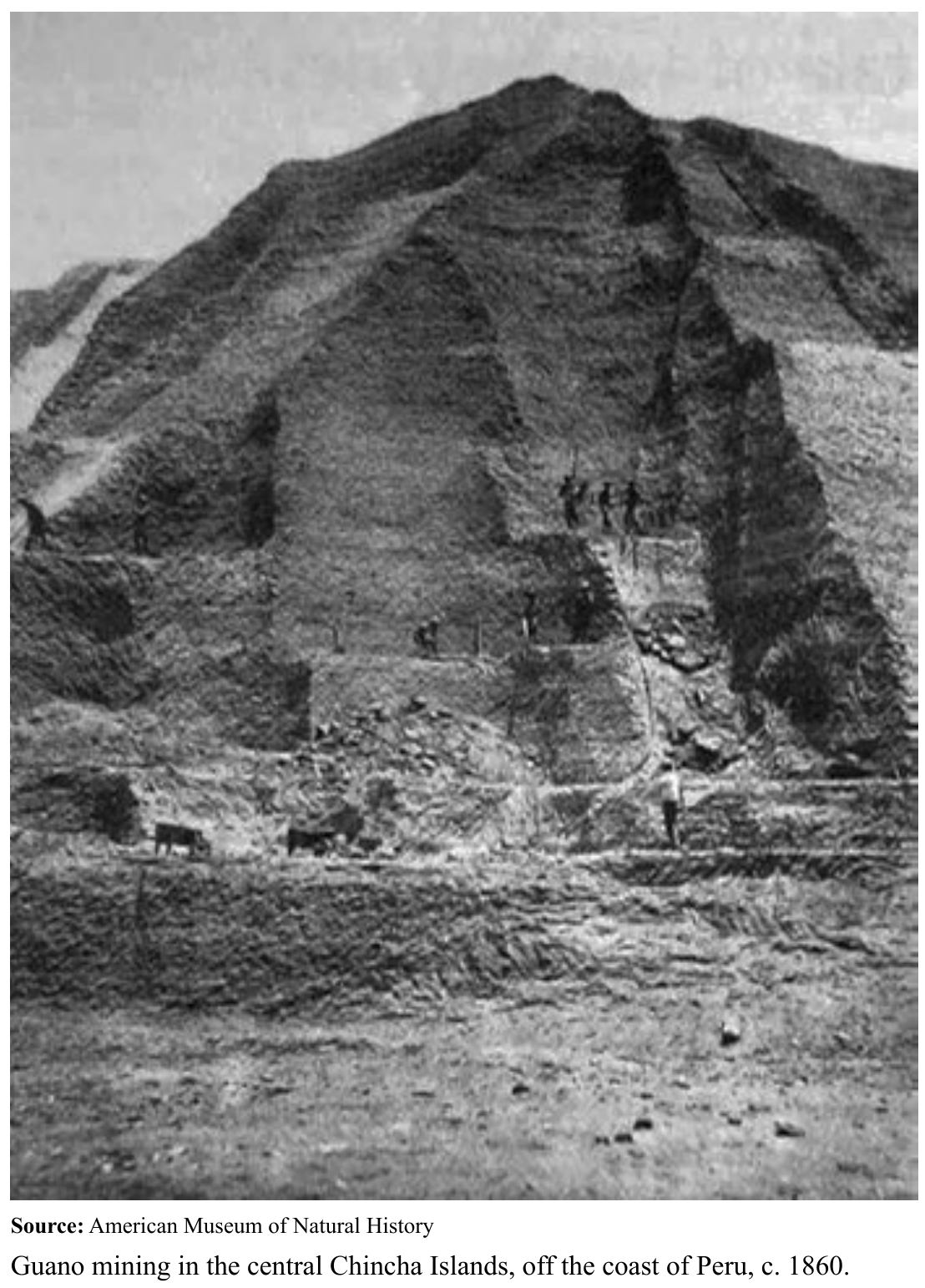
Guano, bat and seabird excrement, is rich in nitrates and phosphates. These make it an excellent natural fertilizer. Because of the dry climate in Peru and Chile, vast quantities of guano had accumulated before people began mining it in the 19th century. Between 1840 and 1880, millions of tons of guano were dug by hand and loaded onto ships for export, often by indentured Chinese or Polynesian laborers.