Topic 2 AP Exam Practice
Multiple-Choice Questions
Questions 1 to 3 refer to the passage below.
“The American continents, by the free and independent condition which they have assumed and maintain, are henceforth not to be considered as subjects for future colonization by any European powers. . . .
We should consider any attempt on their [Europeans’] part to extend their system to any portion of this hemisphere as dangerous to our peace and safety. With the existing colonies or dependencies of any European power we have not interfered and shall not interfere. But with the Governments who have declared their independence and maintain it, and whose independence we have, on great consideration and on just principles, acknowledged, we could not view any interposition for the purpose of oppressing them, or controlling in any other manner their destiny, by any European power in any other light than as the manifestation of an unfriendly disposition toward the United States.”
James Monroe, annual presidential message to Congress, 1823
1. Which statement summarizes the main idea stated in the passage?
- (A) Many former colonies of European nations in the Western Hemisphere desired a return to colonial status.
- (B) The United States intended to interfere in the administration of existing European colonies.
- (C) The European powers must respect the sovereignty of independent nations in the Western Hemisphere.
- (D) The United States must remain neutral in any attempt of a European nation to claim land in the Western Hemisphere.
2. Which event indicates that the Monroe Doctrine might have included a desire of U.S. leaders to engage in economic imperialism?
- (A) The War of 1812
- (B) The Spanish-American War
- (C) The Civil War
- (D) The Seven Years’ War
3. Which aspect of the Spanish-American War most directly demonstrated that the United States wanted to become an imperial power?
- (A) declaring war against a country in Europe
- (B) seizing territories from Mexico
- (C) helping Cuba become independent of Spain
- (D) taking control of the Philippines
Short-Answer Questions
1. Use the cartoon below to answer all parts of the question that follows.
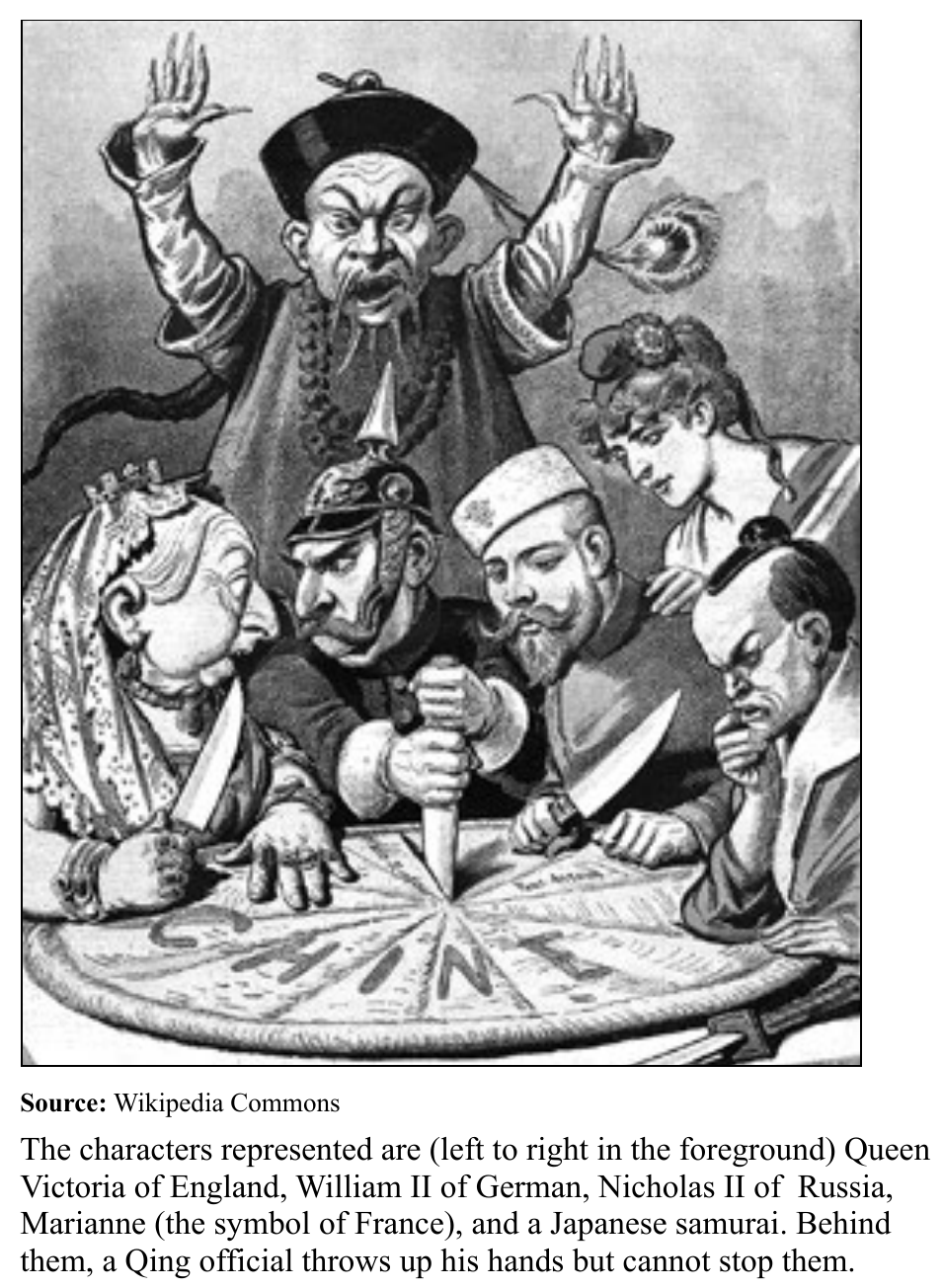
2. Answer all parts of the question that follows.