Land Reform in Latin America
Throughout Latin America, leaders saw the concentration of land ownership as a barrier to progress. Hence, as countries freed themselves from colonialism, they considered land reform. Mexico’s effort dates back to the 1930s, but much of the land reform in Latin America took place in the 1960s or later.
Venezuela In Venezuela, for example, the government redistributed some five million acres of land. Some of the land was state-owned and not previously under cultivation, while other pieces of land were seized from large landowners. The land reform, begun with a 2001 law, was not popular with the landowners who claimed that the state seized their property while it was under cultivation. Additional problems arose from illegal squatters who moved in to settle on lands that were not scheduled for land reform. Land reform efforts had political repercussions as well; those who benefitted were more willing to vote for the government instituting the reforms, while those from whom land was confiscated tended not to support the states that seized it. Land reform in Latin America varied in its details in each country, shaped partly by environmental factors, partly by a legacy from colonialism, and partly by the ideology of the rulers instituting the reforms.
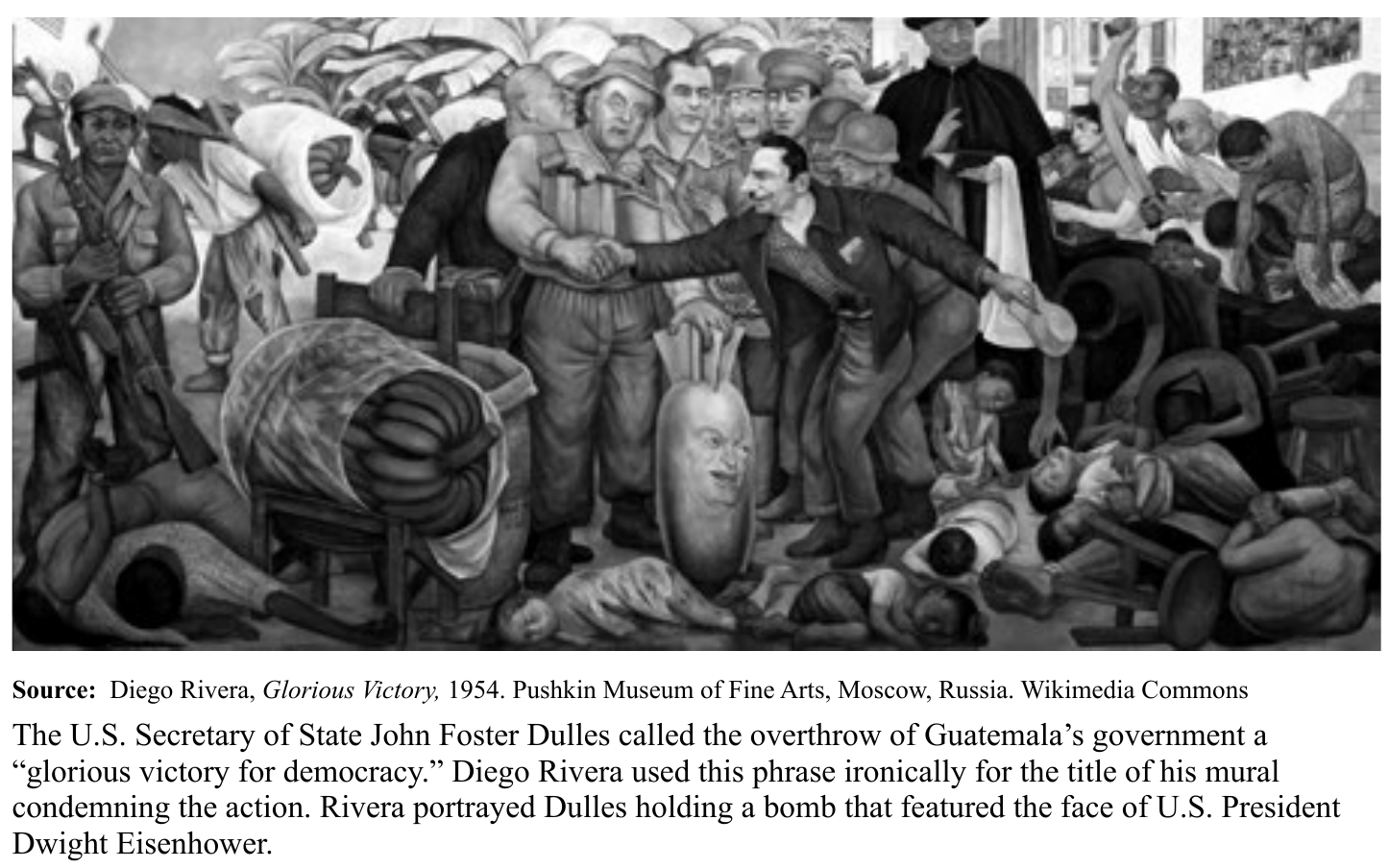
Guatemala A democratically elected government under Jacob Arbenz in the Central American country of Guatemala began efforts at land reform. Feeling threatened, the United Fruit Company lobbied the U.S. government to remove the Arbenz. In 1954, he was overthrown.