Unit 2 AP Exam Practice
Document-Based Questions
1. Evaluate the extent to which women exercised power and influence within various societies in Afro-Eurasia during the period c. 1200–c. 1450.
Document 1
Document 1
Source: Selections from The History of the World Conqueror by ‘Ala ad-Din Juvaini. In this portion, Juvaini writes of Sorqotani Beki, daughter-in-law of Genghis Khan, 13th century
After Ulugh-Noyan’s death, [the Khan] commanded that as long as he lived affairs of state should be administered in accordance to the council of his wife Sorquotani Beki…and [her] sons…[that] the army and the people, great and small, should be under the control of her command and prohibition…
…And her hand was ever open in munificence [great generosity] and benefaction [gift]…although she was a follower…of the religion of Jesus she would bestow alms and presents upon imams and shaikhs and strove also to revive the sacred observances of the faith of Mohammed. … And as the token and proof of this statement…she gave 1000 silver balish [a unit of money] …that a madrasa [college] might be built in Bokhara…
Document 2
Document 2
Source: North African traveler, Ibn Battuta, excerpt from his memoirs, Ribla (“My Travels”), on his journey to the court of Mansa Musa, sultan of Mali located in Sub-Sahara Africa, 1352 C.E.
The condition of these people is strange and their manners outlandish [unfamiliar, bizarre]…And none of them derives his genealogy from his father but, on the contrary, from his maternal uncle. A man does not pass on inheritance except to the sons of his sister to the exclusion of his own sons…With regard to their women, they are not modest in the presence of men, they do not veil themselves in spite of their perseverance [persistence] in the prayers. He who wishes to marry among them can marry, but the women do not travel with the husband, and if one of them wanted to do that, she would be prevented by her family. The women there have friends and companions amongst men outside the prohibited degrees of marriage [i.e. other than brothers, fathers, etc.]. Likewise, for the men, there are companions from amongst women outside the prohibited degrees. One of them would enter his house to find his wife with her companion and would disapprove of that conduct.
Document 3
Document 3
Source: Empress Xu (d. 1407), third wife of the Ming Emperor, Yongle (r. 1402–1424), excerpt from Instructions for the Inner Quarters, early 15th century
Being upright and modest, reserved and quiet, correct and dignified, sincere and honest: these constitute the moral nature of a woman. Being filial [of or due of a son or daughter] and respectful, human and perspicacious [insightful], loving and warm, meek and gentle: these represent the complete development of the moral nature…Of old, upright women ordered their feelings and nature based on moral principle, kept control over the workings of their mind, and honored the Way and its virtue. Therefore, they were able to complement their [husbands] in fulfilling the teachings of the Way.
If one’s virtue is not established, rarely can one be an influence for good in the family—how much less in the wider world. Therefore, the wife is one who follows her husband. The way of husband and wife is the principle of the strong and the weak…The prosperity or decline of the family, the rise and fall of the state are intimately linked to this…
Document 4
Document 4
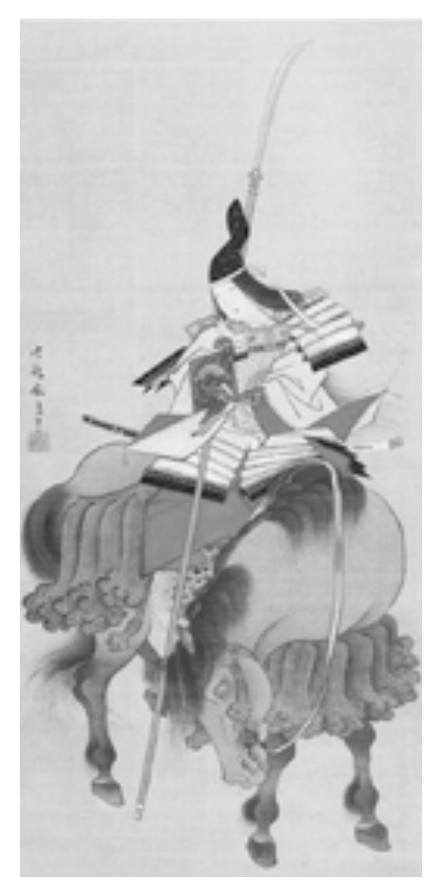
Source: Drawing of Tomoe Gozen (c. 1157–1247), a late 12th-century female samurai or onna-bugeisha, known for her bravery, archery skills, and horsemanship during the Genpei War in Japan, by Shitomi Kangetsu (1747–1797 C.E.)
Document 5
Document 5
Source: Zhou Daguan, a Chinese diplomat serving the Yuan Emperor Chengzong, excerpt from Customs of Cambodia, an account of his travels to the Angkor temple complex and the Khmer Empire, 1296–1297 C.E.
The local people who know how to trade are all women. So, when a Chinese goes to this country, the first thing he must do is take in a woman, partly with a view to profiting from her trading abilities.
Document 6
Document 6
Source: Joan of Arc, Letter to the King of England. Joan, called “The Maid,” was a young girl from the town of Domrémy in the French county of Lorraine, who felt herself to be called by God to help the French resist the English in the Hundred Years War, 1429 C.E.
King of England, render [give] account to the King of Heaven of your royal blood. Return the keys of all the good cities which you have seized, the Maid. She is sent by God to reclaim the royal blood, and is fully prepared to make peace, if you will give her satisfaction; that is, you must render justice, and pay back all you have taken.
King of England, if you do not do these things, I am the commander of the military; and in whatever place I shall find your men in France, I will make them flee the country, whether they wish to or not; and if they will not obey, the Maid will have them all killed. She comes sent by the King of Heaven, body for body, to take you out of France, and the Maid promises and certifies to you that if you do not leave France, she and her troops will raise a mighty outcry as has not been heard in France in a thousand years.
Document 7
Document 7
Source: Excerpt from the chronicles of Minhaji Siraj Juzjani, on the reign of Sultan Raziyya bint Iltutmish (r. 1236–1240), the first woman to ascend to the throne and lead the army of the Delhi Sultanate in Northern India
Sultan Raziyya—may she rest in peace—was a great sovereign, and wise, just, and beneficent, the patron of the learned, a dispenser of justice, the cherisher of her subjects, and of warlike skills, and was endowed with all the admirable attributes and qualities required of kings; but as she did not attain the destiny, in her creation, of being computed among men, of what advantage were all these excellent qualifications unto her?
Long Essay Questions
1. Some historians consider the Mongols’ military success and vast commercial empire in the 13th century as the beginning of the early modern era. Develop an argument that evaluates the extent to which the Mongol Empire was significant in larger patterns of continuity or change between 1200 and 1450.
2. Goods and ideas flowed through African and Eurasian trade networks in the period from 1200 to 1450. Develop an argument that evaluates the extent to which the various networks of exchange in that time and place were similar or different.
3. Weather patterns, foods, and disease affected exchange networks in Eurasia and Africa in the period from 1200 to 1450. Develop an argument that evaluates the extent to which various networks of exchange in Afro-Eurasia during that time affected the environment.
4. Although the primary purpose of most African and Eurasian trading networks between 1200 and 1450 was economic, ideas and art also traveled through them. Develop an argument that evaluates the extent to which trading networks in these regions between 1200 and 1450 affected the diffusion of cultural traditions.