Global Culture and Religion
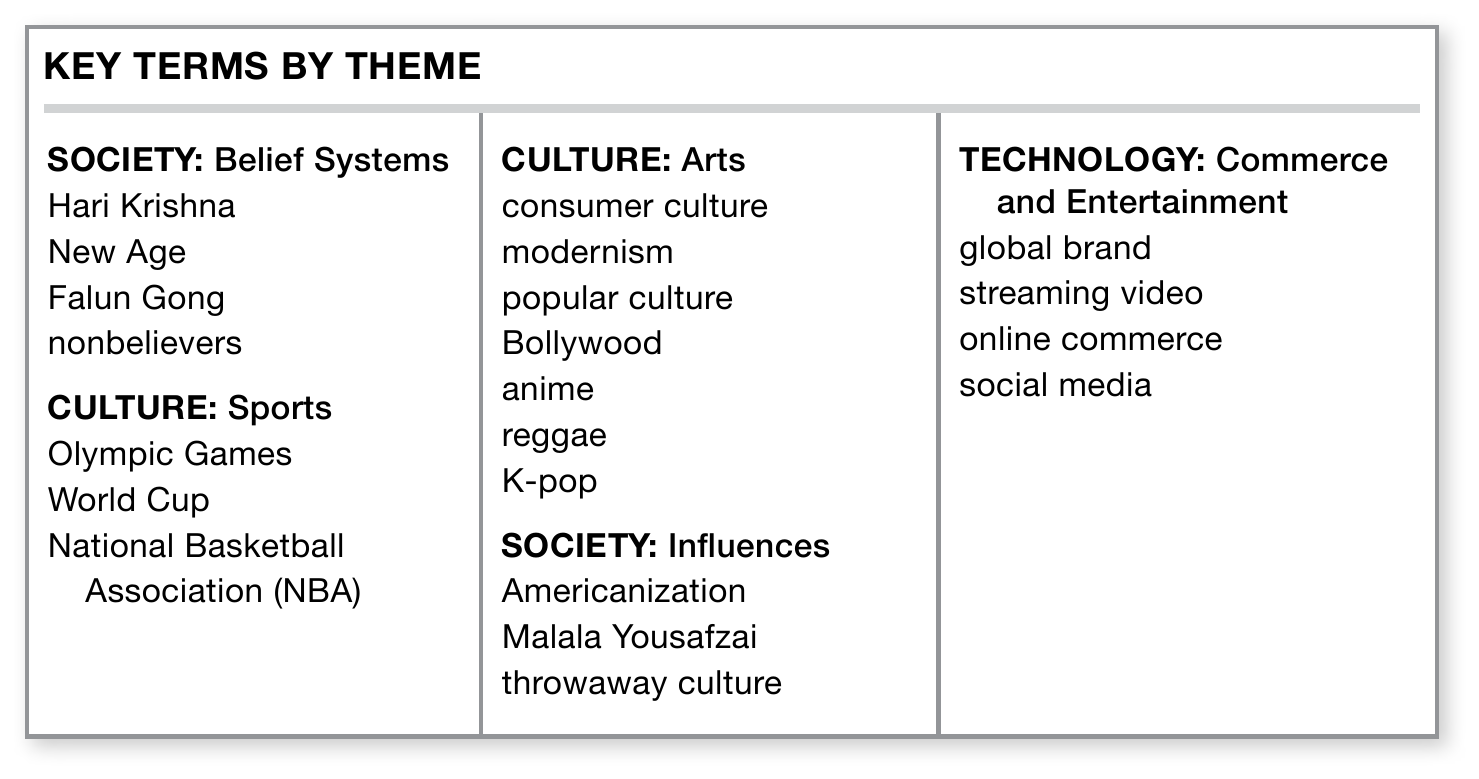
Globalization promoted new religious developments. In the 1970s, former Beatles band member George Harrison released a song containing the words of a Hindu mantra, or sacred utterance. This launched the popularity of the Hari Krishna movement, which was based on traditional Hindu scriptures. It quickly gained popularity in the United States and Europe. In what some called New Age religions, forms of Buddhism, shamanism, Sufism, and other religious traditions were revived and adapted for a largely Western audience.
In China in the 1990s, Falun Gong, a movement based on Buddhist and Daoist traditions, gained popularity. Although the communist government allowed the movement at first, Chinese authorities began to restrict it in 1999. The suppression prompted international protests against the Chinese regime for human rights abuses.
In the early 21st century, most people around the world identified with some form of religion. However, an increasing number of younger people in many countries identified as nonbelievers. They were not necessarily atheists (people who do not believe in any god) or agnostics (people who believe that it may not be possible to know if God exists). Most were simply not affiliated with any religious institution.