Topic 2 AP Exam Practice
Multiple-Choice Questions
Questions 1 to 3 refer to the image below.
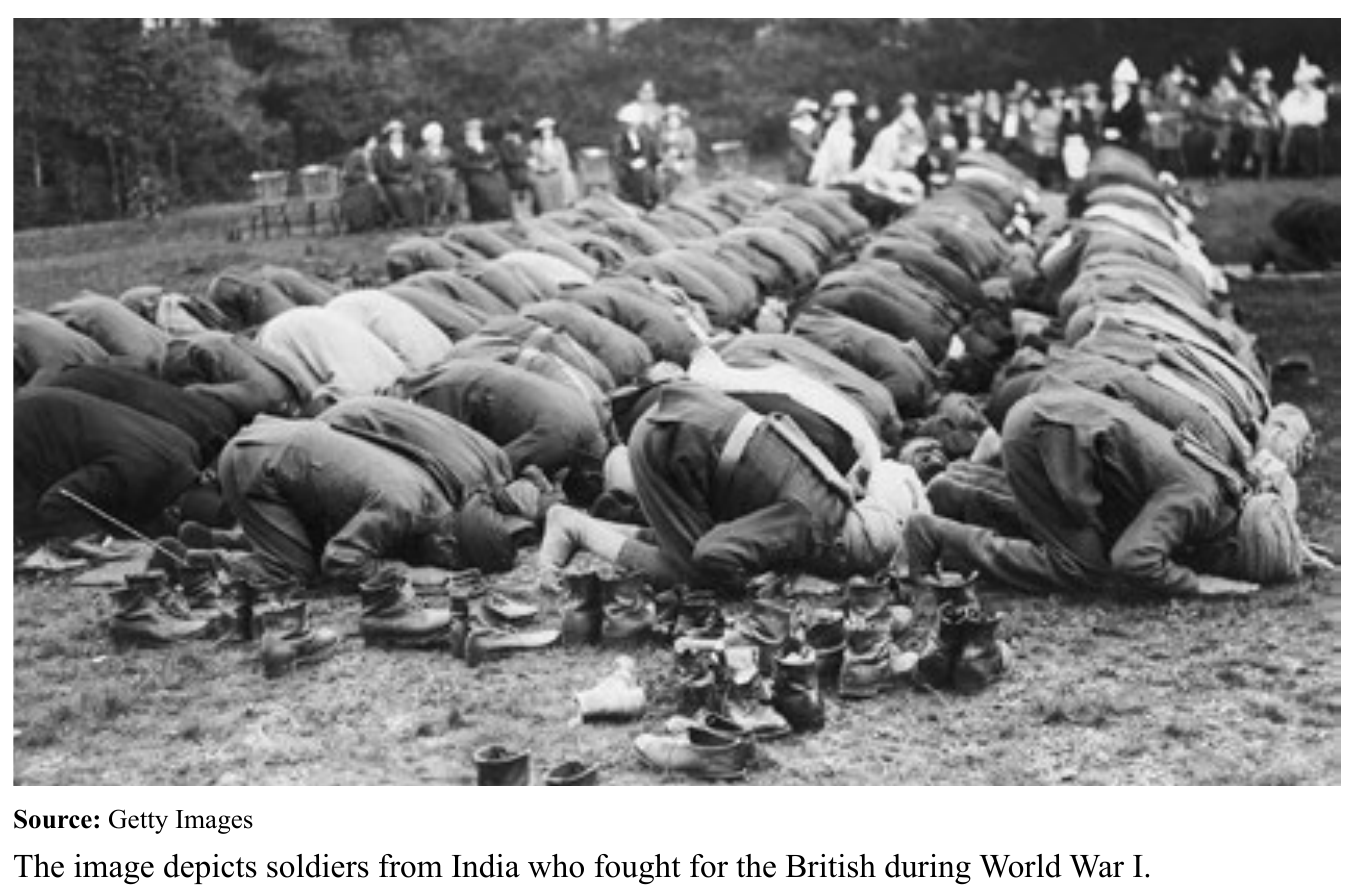
1. Which of the following causes of World War I BEST explains the image and caption shown above?
- (A) Militarism
- (B) Alliances
- (C) Imperialism
- (D) Nationalism
2. As a result of colonization, these soldiers fought for which group?
- (A) The Allies
- (B) The Triple Alliance
- (C) The Black Hand
- (D) The neutral states
3. The photo reflects that one advantage Great Britain and France had over Germany in World War I was that they
- (A) had more colonial subjects to recruit as soldiers
- (B) had a stronger sense of nationalism
- (C) were more unified by shared religious beliefs
- (D) were more willing to make alliances
Short-Answer Questions
1. Use the passage to answer all parts of the question that follows.
“Germany’s military culture developed a constellation of mutually reinforcing characteristics that enhanced tactical efficacy. Unleashed in war, however, these characteristics propelled the army to ever greater, and in the end, dysfunctional extremes of violence. . . . These interactive and self-generating characteristics . . . include:
• risk-taking;
• the dogmatic conviction that annihilation was the sole goal of war;
• resulting prescriptions for correct fighting (the offensive, concentration of force, use of reserves, hectic speed) that all greatly increased casualties;
• minutely technical planning;
• focus on the tactical and operative rather than the strategic;
• disregard of logistics and thus growing unrealism;
• the conviction (indeed requirement) of one’s qualitative superiority over one’s enemies;
• a romantic ruthlessness and actionism (exaggerated drive for action) on the part of officers in order to bridge the gap between risk and reality;
• and finally the acceptance of self-destruction (and thus willingness to destroy everyone else, as well).
Some of these qualities were expressed as doctrine, but many more were buried inside organizational routines and the unexamined expectations of the officer corps.”
Isabel V. Hull, Absolute Destruction: Military Culture and the Practices of War in Imperial Germany, 2005
2. Answer all parts of the question that follows.