UNIT 9: Globalization after 1900
Context
Understand the Context
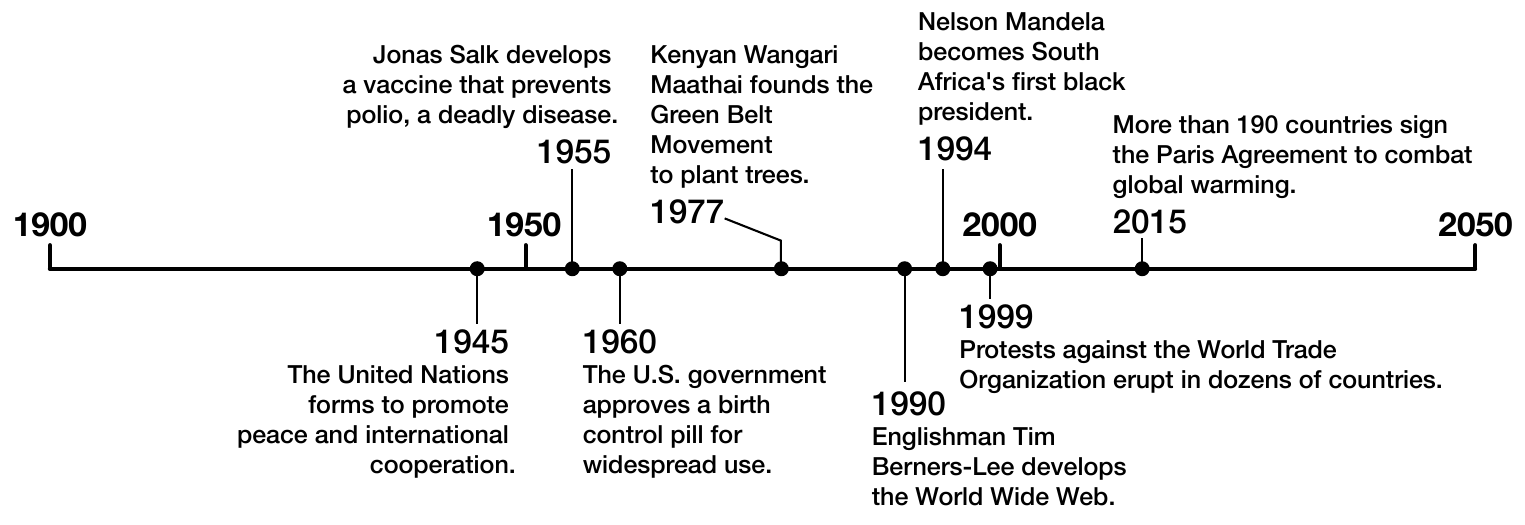
Unprecedented advancements in science and technology, from airplanes to the internet, increased globalization in the 20th century. These changes provided the setting for vast political and social change, including the spread of democracy and increased international trade.
Innovation by Necessity Science and technology exploration changed the way people in the 20th century viewed the universe and the natural world. Advancements were often a reaction to some sort of large, global problem. An increase in diseases that threatened human populations throughout the world necessitated medical advancements such as vaccines. Deforestation and a decline in the fresh water supply meant that humans had to compete over natural resources and develop environmentally friendly practices. Other conditions necessitated advancements in communication, transportation, and other global industries.
Reaction to Globalization Many states employed free-market economic policies that paved the way for emerging multinational organizations. Access to education and the political process improved as disseminating knowledge and information became easy with technology. Classrooms and political movements came to include more diverse participants, including those from various races, classes, and religions. Communication innovations also led to discussions about human rights that challenged previous forms of discrimination.
The globalization of the 20th century also led to changes in the arts and humanities, especially in the second half of the century. Arts and entertainment increasingly reflected a new, globalized world and consumer culture began to transcend borders. Countries also had to learn to work together as they never had before. The United Nations formed with stated goals not only to maintain world peace but also to facilitate international cooperation.
Topics
Advances in Technology and Exchange
4 Sections
Technological Advancements and Limitations—Disease
3 Sections
Technology and the Environment
4 Sections
Economics in the Global Age
5 Sections
Calls for Reform and Responses
6 Sections
Globalized Culture
3 Sections
Resistance to Globalization
4 Sections
Institutions Developing in a Globalized World
7 Sections
Continuity and Change in a Globalized World
2 Sections
Historical Perspectives: HISTORICAL PERSPECTIVES: WHAT HAPPENS TOMORROW?
Read more →
Write As Historian: WRITE AS A HISTORIAN: REREAD AND EvALUATE
Read more →
AP Exam Practice
Start Practice →