Economic Imperialism
Let us ask, where is your conscience? I have heard that the smoking of opium is very strictly forbidden by your country; that is because the harm caused by opium is clearly understood. Since it is not permitted to do harm to your own country, then even less should you let it be passed on to the harm of other
countries – how much less to China!
—Lin Zexu, Chinese Commissioner in Canton,
letter to British Queen Victoria, January 15, 1840
Learning Objectives
- E: Explain how various economic factors contributed to the development of the global economy from 1750 to 1900.
For centuries, India was the world’s leading supplier of finished cotton
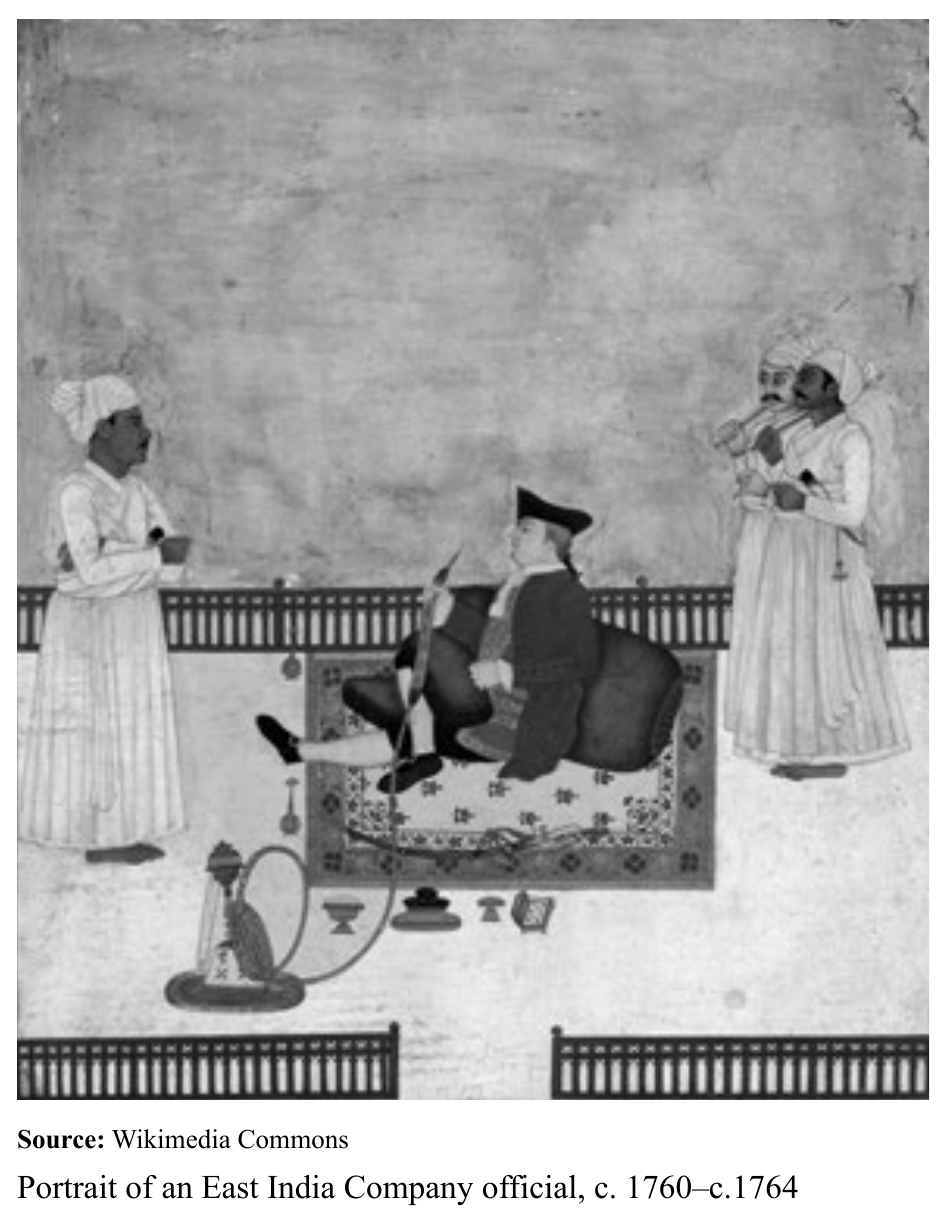
textiles. By the late 18th century, the Industrial Revolution and a new source of cotton from America had allowed Britain to flood the market with inexpensive textiles, pushing independent Indian textile artisans out of business. By the late 19th century, India was producing only raw cotton for Britain, not cotton textiles. After Britain’s textile factories processed India’s cotton, the colonial government sold some of its factory-made or “finished” textiles back to the Indian subcontinent at inflated prices.
Another critical raw material for Britain was the drug opium. The poppies from which it is obtained grew easily on South Asia’s fertile lands, and selling it to the Chinese became very profitable for Britain. The Chinese, as Lin Zexu expressed in the letter to Queen Victoria, objected to the export of opium to their country, and the conflict resulted in the first Opium War. The Chinese paid a heavy price for their attempt to curtail the opium trade and ended up losing much trading independence.
Sections
The Rise of Economic Imperialism
Economic Imperialism in Asia
Economic Imperialism in Africa
Economic Imperialism in Latin America
Economic Imperialism in Hawaii
Contextualizing Economic Imperialism
Think As a Historian: THINK AS A HISTORIAN: EXPLAIN THE CONTEXT Of ECONOMIC IMPERIALISM
Read more →
Reflect
REFLECT ON THE TOPIC ESSENTIAL QUESTION
1. In one to three paragraphs, describe the economic factors that contributed to imperialism in the global economy between 1750 and 1900.
AP Exam Practice
Start Practice →