Keeping the Peace
Since the end of World War II, the United Nations has been well known for its peacekeeping actions. Of primary importance is prevention through diplomacy. The UN sends special envoys to help resolve problems peacefully, mindful that it was formed to prevent “the scourge of war.”
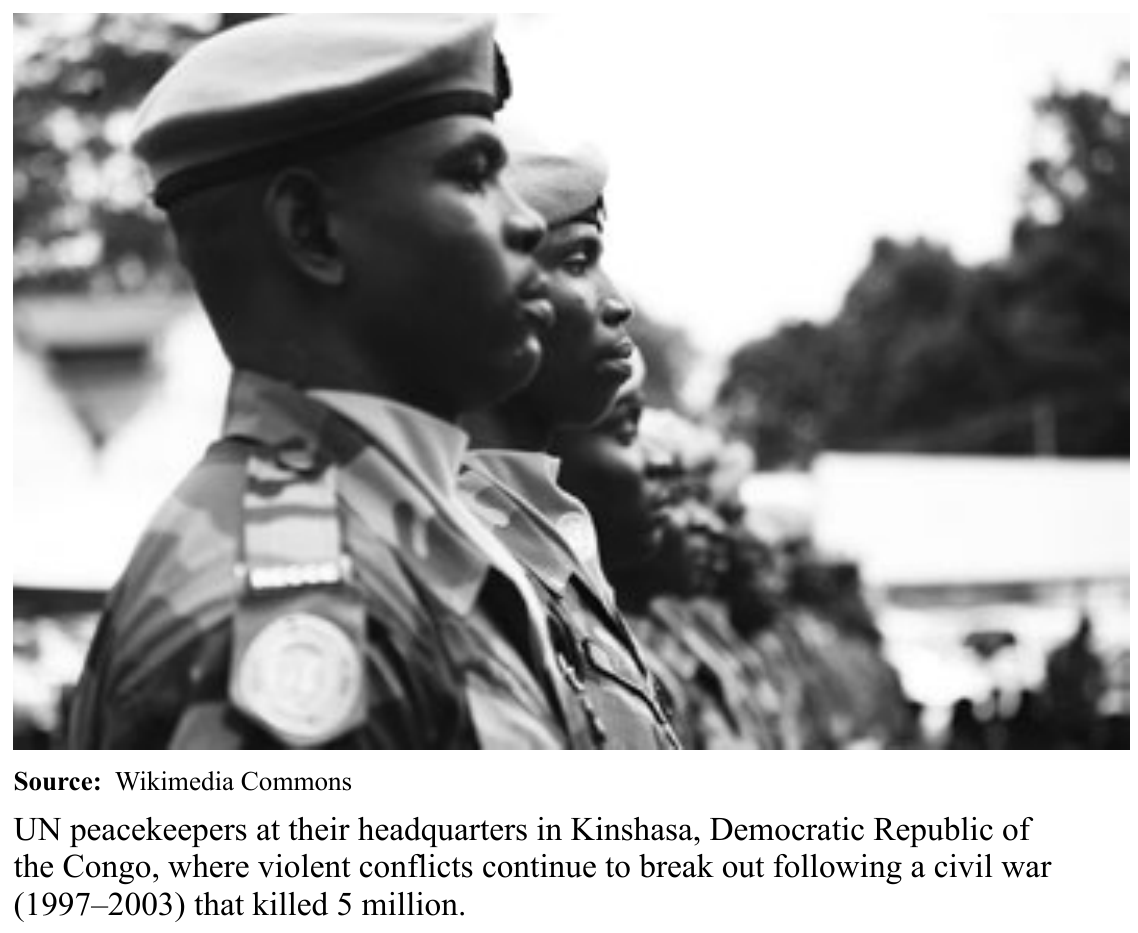
The organization has also frequently sent peacekeeping forces, consisting of civilians, police, and troops from member countries, to try to ease tensions in trouble spots. The first peacekeeping mission was related to the 1948 Arab- Israeli conflict in Palestine. After that, UN peacekeepers served in the Congo, Lebanon, East Timor, and the Balkans.
Expansion in the 1990s In 1988, the UN had only five active peacekeeping operations. By 1993, it had 28. Individual countries supplied soldiers to form UN peacekeeping forces. They came from dozens of countries—including Canada, Venezuela, Ukraine, Egypt, and Bangladesh. The soldiers were usually lightly armed and instructed to return fire only if attacked.
In the 1990s, the United Nations sent peacekeeping missions to hotspots in Africa, Central America, the Caribbean, and Southeast Asia. In Africa, UN troops kept peace while Namibia changed from a South African colony to an independent state. Peacekeeping troops helped end devastating civil wars in Mozambique, El Salvador, and Cambodia. In Haiti, they maintained peace while a democratic government replaced a military dictatorship.
Some efforts failed. In 1994, UN peacekeepers could not prevent massacres in Rwanda. In 1995, UN forces withdrew from Somalia while a civil war raged there. The struggle to bring order to Bosnia in the former Yugoslavia took years and had mixed results. As a UN officer in Bosnia observed, “It’s much easier to come in and keep peace when there’s some peace around.”
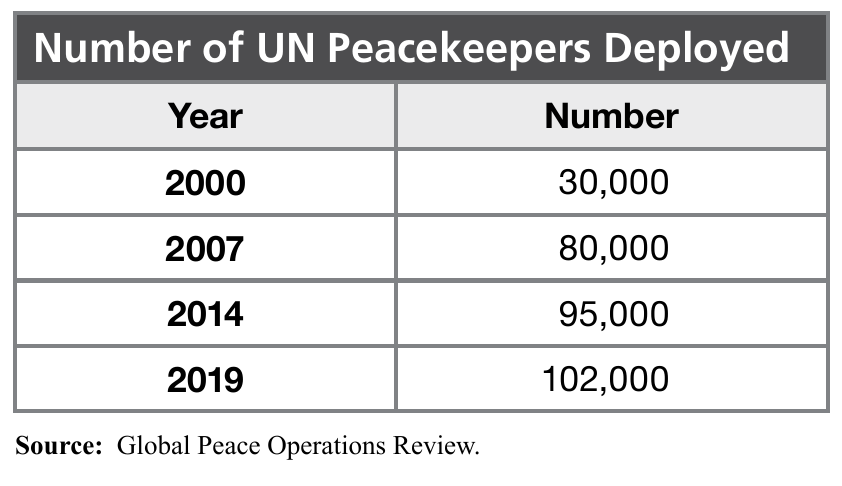
Challenges for Peacekeeping Missions One problem faced by UN peacekeepers has been their slow response. By the time countries agree on the UN mission and send forces, the war might have grown and become hard to control. A second problem happens when people expect the peacekeeping troops to stop the fighting instead of simply monitoring a truce, running free elections, and providing supplies to civilian populations. By 2019, the United Nations was involved in fewer but larger peacekeeping missions. The number of missions had dropped to 15, but the number of troops involved had increased.