Multinational Corporations
A multinational corporation is one that is legally incorporated in one country but that makes or sells goods or services in one or more other countries. The joint-stock companies of the Commercial Revolution, such as the British East India Company and Dutch East India Company (see Topic 4.5) were the earliest examples of multinational corporations. Multinational corporations were also the business means through which imperialist nations made their wealth during the age of imperialism, exploiting the resources and labor of the colonized regions for profit in home countries.
Today’s multinational corporations take advantage of both knowledge economies and more traditional manufacturing and industrial economies. They employ leading edge workers in the knowledge economy—software designers, communications specialists, and engineers—and at the same time hire low-wage workers abroad to make their products. They also have a global market in which to sell their goods and services.
To free-market supporters, multinational corporations produce the greatest gains for both developed and developing countries. For example, in the early 1990s, India opened its markets and allowed in more imports. With its highly educated, English-speaking workforce, India became a software and information technology powerhouse, drawing investments from American and European companies that wanted to outsource jobs and lower labor costs. Multinational corporations, such as Microsoft and Google, also invested in the Indian economy. The influx of corporate wealth and foreign goods created a thriving consumer culture among India’s middle class, the ranks of which swelled tremendously after 2000. In 2014, the Indian middle class was estimated to be the largest of any country in the world, with more than 350 million people.
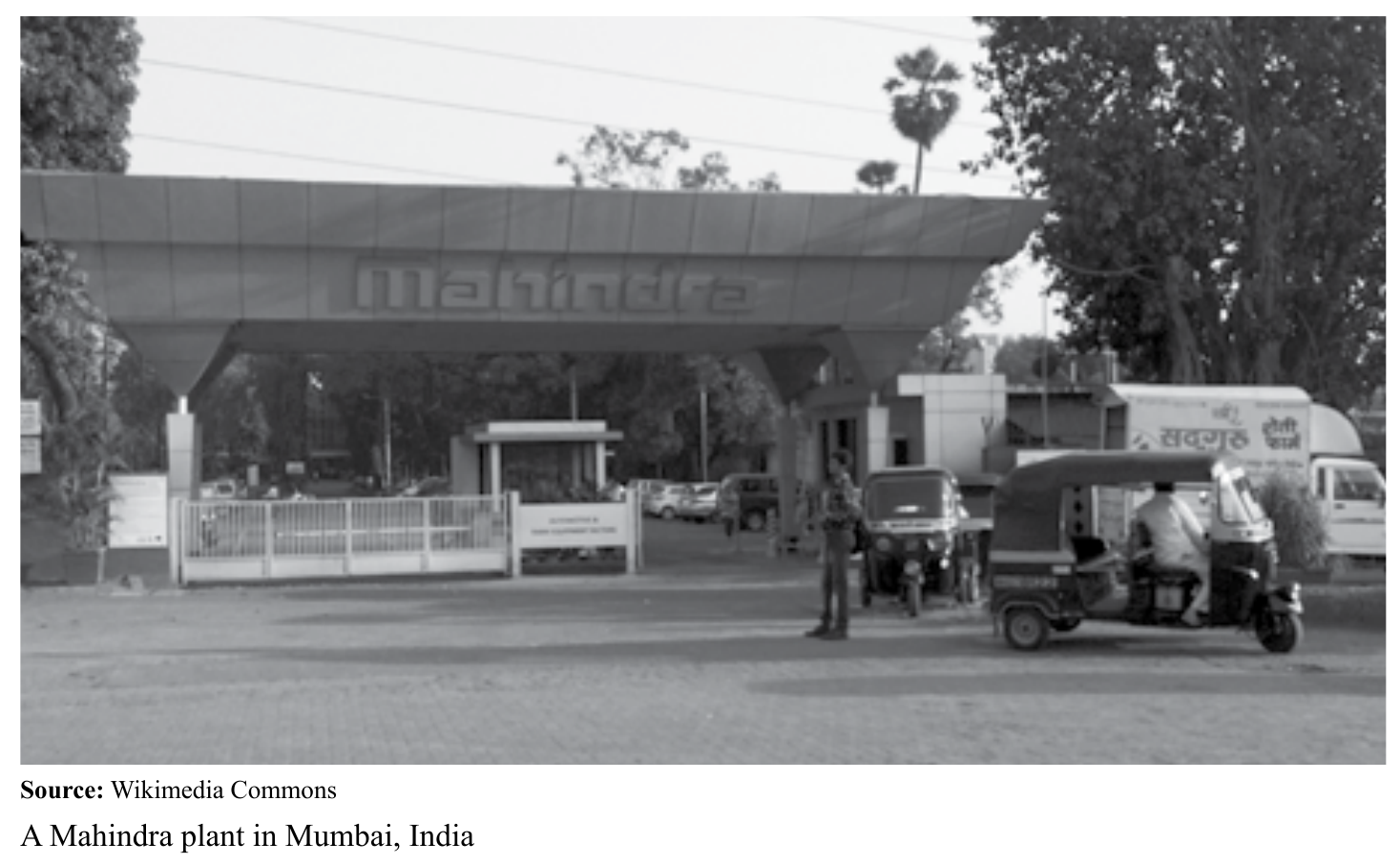
The India-based multinational corporation Mahindra & Mahindra, which produces cars, farm equipment, military vehicles, and electrical energy, is headquartered in Mumbai, India, but has operations not only throughout India but also in South Korea, China, Australia, the United States, South Africa, and other Africa nations. Some multinational corporations are criticized because they lack a strong national identity and therefore do not necessarily adhere to the ethical standards of their home country. They are also criticized for exploiting workers and establishing their operations in such a way that they avoid as many taxes as possible. Mahindra & Mahindra, in contrast, has received awards for its socially responsible corporate practices and is considered one of the most trusted businesses in India.
In contrast, Swiss-based multinational Nestlé corporation, the largest food company in the world, has been the subject of many controversies and criticisms, including purchasing cocoa for its chocolate products from suppliers who use child labor and engage in cocoa production on protected lands. It has also faced criticism for its bottled water business for its attitude toward drinking water as a product rather than a human right. At the same time, Nestlé invests in a number of research programs aimed at sustainable agriculture and training for farmers.