Topic 5 AP Exam Practice
Multiple-Choice Questions
Questions 1 to 3 refer to the map below.
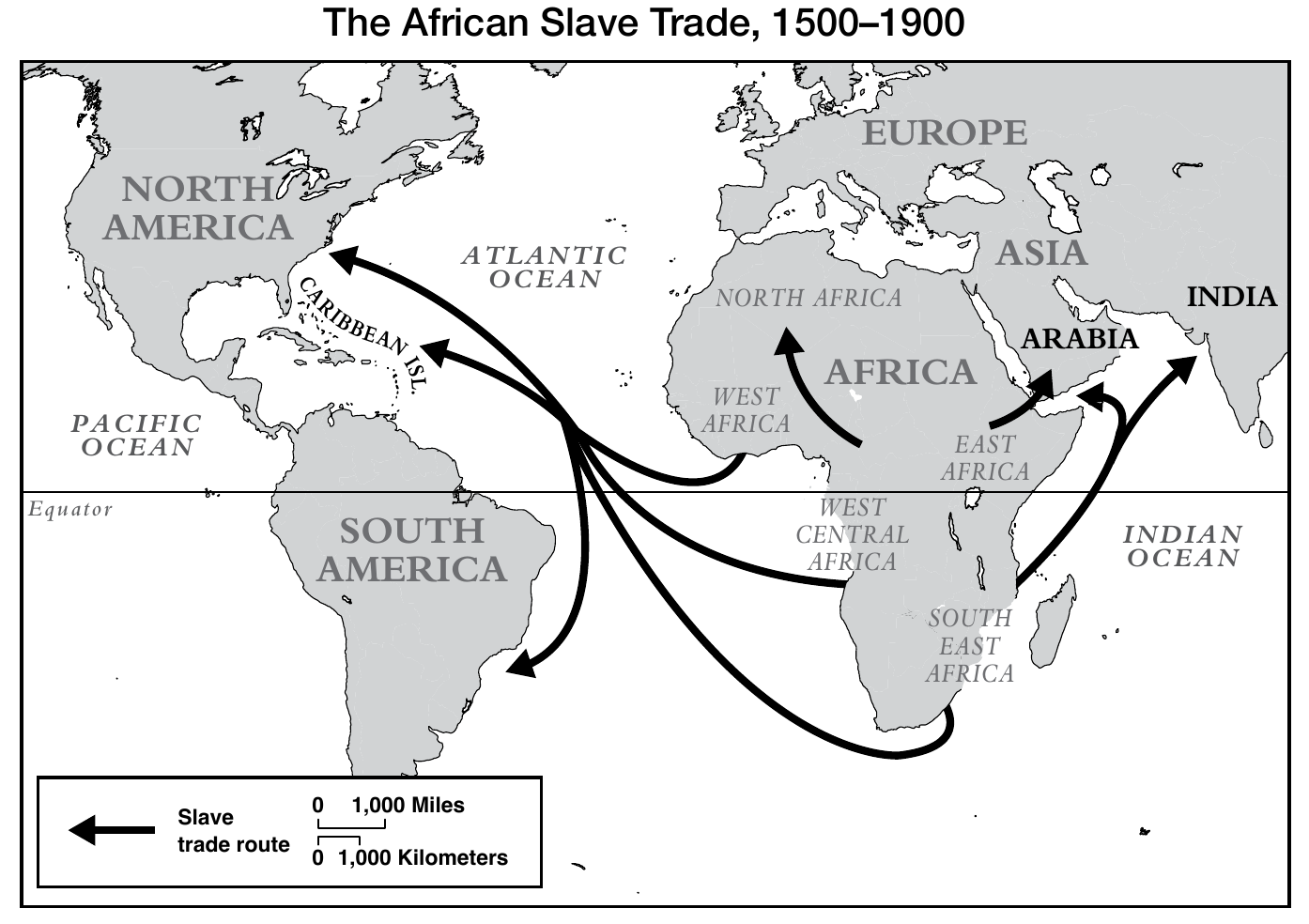
1. Of the movements shown on the map, the largest resulted from a high demand for labor to grow
- (A) sugar
- (B) cotton
- (C) rubber
- (D) tea
2. This map best supports the claim that between 1500 and 1800 Africa’s population was becoming
- (A) too large in 1500 to be supported by the technology of that time
- (B) too small in 1800 to enable the slave trade to continue
- (C) more diverse as immigrants replaced people who had been enslaved
- (D) smaller than it would have without the slave trade
3. The movements shown on the map were part of a global trend between 1500 and 1800 of
- (A) greater contact among people of different ethnic backgrounds
- (B) greater separation among people living in different continents
- (C) states becoming smaller and more homogenous
- (D) states becoming larger but more homogenous
Short-Answer Questions
1. Use the passage below to answer all parts of the question that follows.
“Vodou [Vodun] as we know it in Haiti and the Haitian diaspora today is the result of the pressures of many different cultures and ethnicities of people being uprooted from Africa and imported to Hispanola [the island that includes Haiti] during the African slave trade. Under slavery, African culture and religion was suppressed, lineages were fragmented, and people pooled their religious knowledge and out of this fragmentation became culturally unified. In addition to combining the spirits of many different African and Indian nations, pieces of Roman Catholic liturgy have been incorporated to replace lost prayers or elements; in addition images of Catholic saints are used to represent various spirits or ‘mistè’ (‘mysteries,’ actually the preferred term in Haiti), and many saints themselves are honored in Vodou in their own right. This syncretism allows Vodou to encompass the African, the Indian, and the European ancestors in a whole and complete way.”
Haitian Consulate, “Haitian Vodou,” www.haitianconsulate.org
2. Answer all parts of the question that follows.