UNIT 2: Networks of Exchange from c. 1200 to c. 1450
Context
Understand the Context
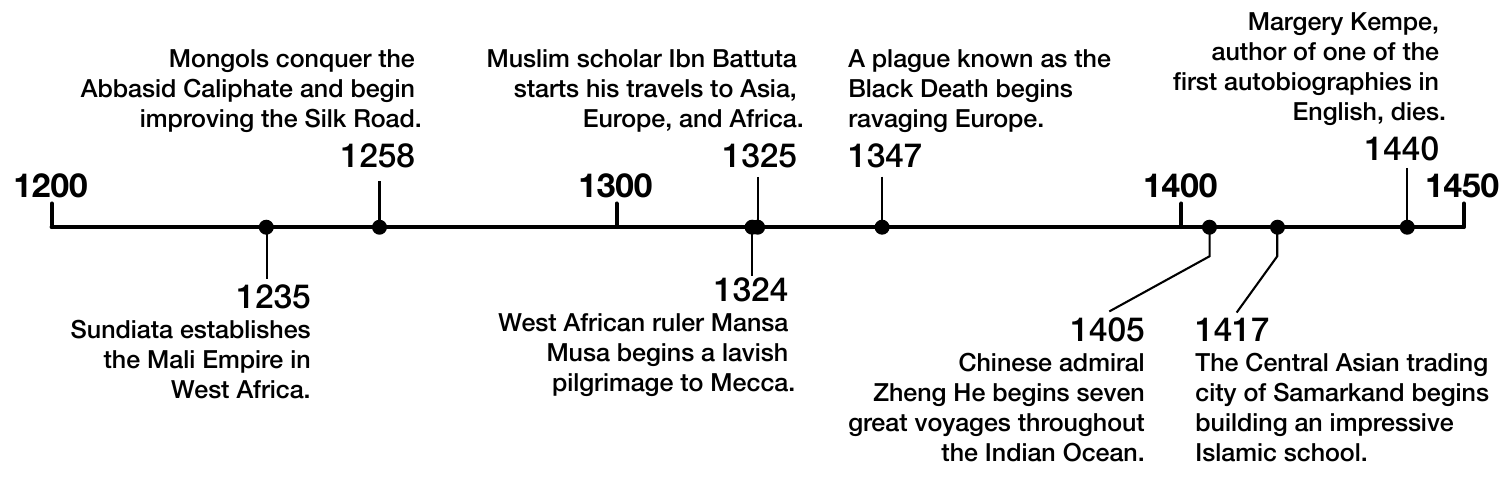
Between 1200 and 1450, economic activity along existing trade routes increased in volume and scope. Technological and commercial innovations, imperial expansion, and demand for luxury goods were key factors in the ongoing expansion of trade. Growing trade networks accelerated cultural, biological, and technological diffusion across Afro-Eurasia.
Factors that Expanded Trade Between 1200 and 1450, the rise of powerful states and empires played a critical role in increasing the volume and geographical reach of existing trade networks. The Mongol Empire promoted trade along the Silk Roads, creating a vast commercial network across Eurasia. Trade routes across the Sahara and in the Indian Ocean added both West Africa and East Africa to this network. Improvements to previously existing commercial practices, including forms of credit, facilitated larger networks of exchange. Driving this growth in trade was a growing demand for luxury goods, such as silk and porcelain from China and gold from Africa.
Consequences of Trade In the context of this growing trade, powerful new trading cities emerged scattered across Africa and Eurasia. Trade provided the setting for significant cross-cultural exchanges. As merchants and other travelers moved from place to place, they introduced religious beliefs such as Islam and developments in technology such as paper making and gunpowder to new communities. Against the backdrop of this transfer of ideas and things, came also the rapid spread of deadly diseases, most notably the bubonic plague.
Topics
Historical Perspectives: HISTORICAL PERSPECTIVES: HOW BRUTAL WAS GENGHIS KHAN?
Read more →
Write As Historian: WRITE AS A HISTORIAN: HISTORICAL THINKING SKILLS AND LONG ESSAYS
Read more →
AP Exam Practice
Start Practice →