Topic 3 AP Exam Practice
Multiple-Choice Questions
Questions 1 to 3 refer to the chart below.
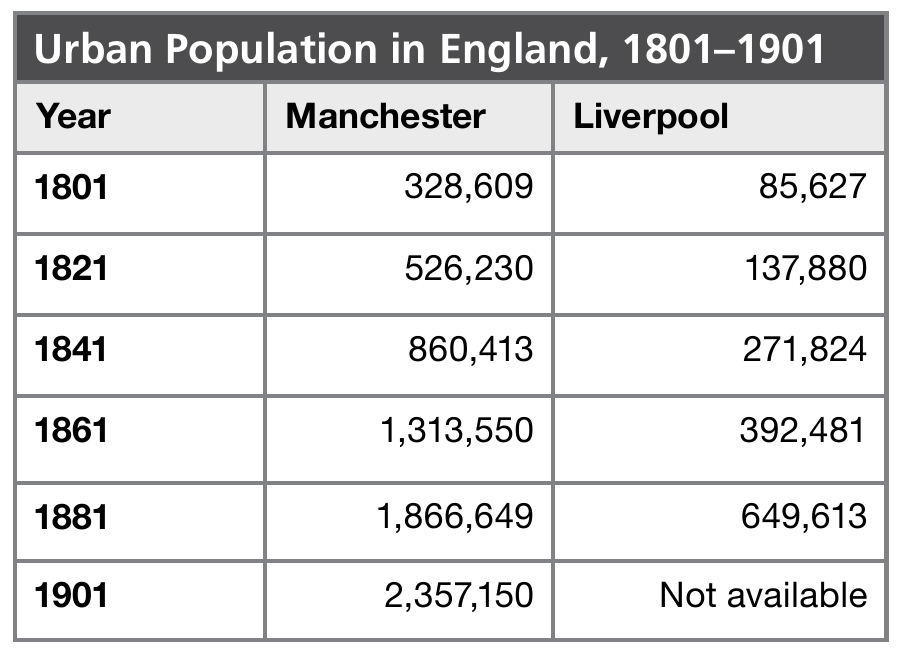
1. Which of the following changes best explains one of the main causes of the trend shown in the chart?
- (A) Increased use of cottage industries in Great Britain
- (B) Increased migration from rural to urban areas in Great Britain
- (C) Increased British demand for imports of coal
- (D) Increased British demand for imports from India and China
2. Which of the following changes explains one of the main effects of the trend shown in the chart?
- (A) Increased supply of workers for factory jobs
- (B) Increased protection for private property
- (C) Decreased support for the British fleet
- (D) Decreased reliance on the specialization of labor
3. Which was the most important part of the context in which the change shown in the chart was occurring?
- (A) The Enlightnment was influencing how Europeans thought about religion and individual rights.
- (B) The idea of nationalism was spreading from country to country throughout Europe.
- (C) The rise of maritime empires increased demand for British-made goods in other regions of the world.
- (D) The shifts in political forces created conflicts among European governments.
Short-Answer Questions
1. Use the passage below to answer all parts of the question that follows.
“The advances which gave this great economic change the name Industrial Revolution occurred in Great Britain, yet it would be contrary to the facts to regard the mechanization of industrial processes as strictly an English experience. . . . England was the leading innovator of methods for rendering raw materials more useful to man, but it by no means had a monopoly of inventions. A Frenchman, Antoine Lavoisier, discovered the chemical nature of combustion. . . . An American, Eli Whitney, invented the cotton gin. And a German, Justus von Liebig, determined the chief chemical components of plants and thus laid the basis for a chemical fertilizer industry.”
Shepard B. Clough, “The Industrial Revolution in England,” Columbia History of the World, 1972
2. Answer all parts of the question that follows.