Why Resist Globalization?
Why did people protest globalization when it made goods and services more freely available? Opponents had different reasons. Many of them centered on the idea that consumers who buy products and services with a few clicks often have no idea who creates those products and services and what the short-term and long-term costs really are. A series of scandals in different parts of the world showed some of the hazards of globalization. Working conditions are especially problematic
• Much of the chocolate that consumers bought in the early 21st century had its origins in child labor in West Africa. The largest chocolate companies missed deadlines in 2005, 2008, and 2010 to make sure their suppliers did not use child laborers. In 2015, the U.S. Department of Labor estimated that more than 2 million children took part in dangerous labor in the cocoa-growing regions of the world.
• Working conditions in Western nations could also be harsh. In 2019, employees of Amazon’s warehouses described such intense pressure to fulfill orders that workers risked being fired if they took a bathroom break. At the time, Amazon employed more than 600,000 people and another 100,000 at holiday time, though not all of them worked in warehouses.
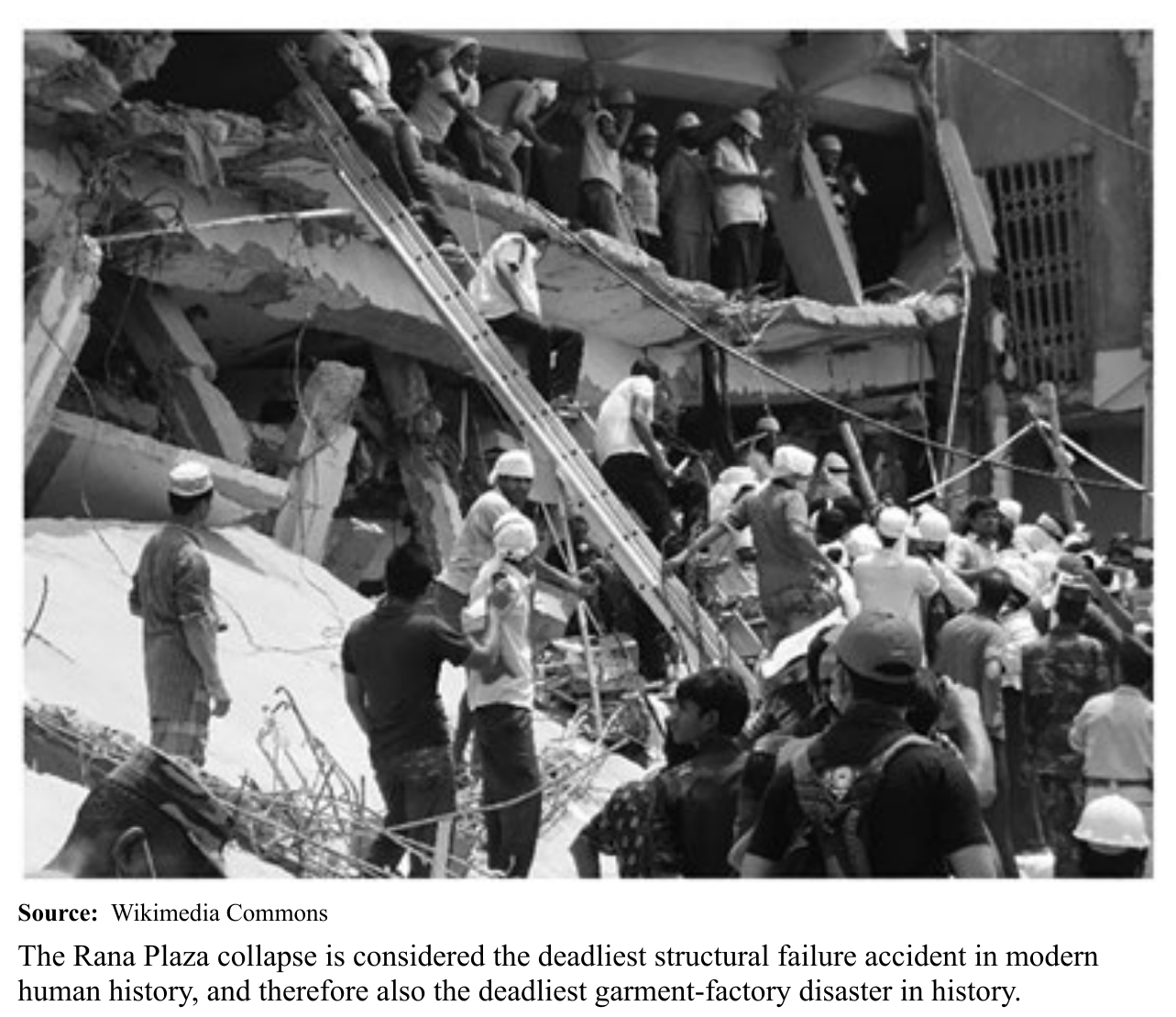
• In 2013, the collapse of the Rana Plaza factory, an eight-story building in Dhaka, Bangladesh, shocked the world. More than 1,000 people died and another 2,500 suffered injuries. Most of the dead and injured were female garment workers who made clothing for Western companies. Muhammad Yunus, a Bangladeshi who won the Nobel Prize for Peace, called the disaster “a symbol of our failure as a nation.” He suggested that companies worldwide set an international minimum wage.
Environmental Damage Critics of globalization pointed out that the fuel involved in shipping products vast distances increased the amount of greenhouse gases in the environment, thus worsening the climate emergency. Also, in the early 21st century, Brazil cut down thousands of square miles of rainforest each year to make way for cattle farms. The meat was one of the country’s most valuable exports.
Proponents of globalization argue that it can help the environment. They point out that Costa Rica and other nations have developed ecotourism industries that make profits while showing off the country’s natural wonders.
Threats to National Sovereignty Many liberal groups believe that globalization often harms children, workers, and the environment. However, many conservative groups also distrust globalization.
In 2016, 52 percent of British voters agreed to leave the European Union, an international political and economic organization of 28 countries. This British exit was nicknamed Brexit. Britain was a founding member of the EU in 1993, but conservative British politicians argued that the EU interfered with Britain’s right to govern itself. Many Brexit proponents contended that the EU required Britain to accept too many immigrants.
Negotiations to leave the EU broke down when British prime minister Theresa May was unable to craft a deal that was acceptable to her own political party, let alone to the other 27 nations in the EU. May resigned in 2019. Brexit critics believed that leaving the EU would be economically disastrous for Britain, an island nation that depended on imports.