UNIT 3: Land-Based Empires
Context
Understand the Context
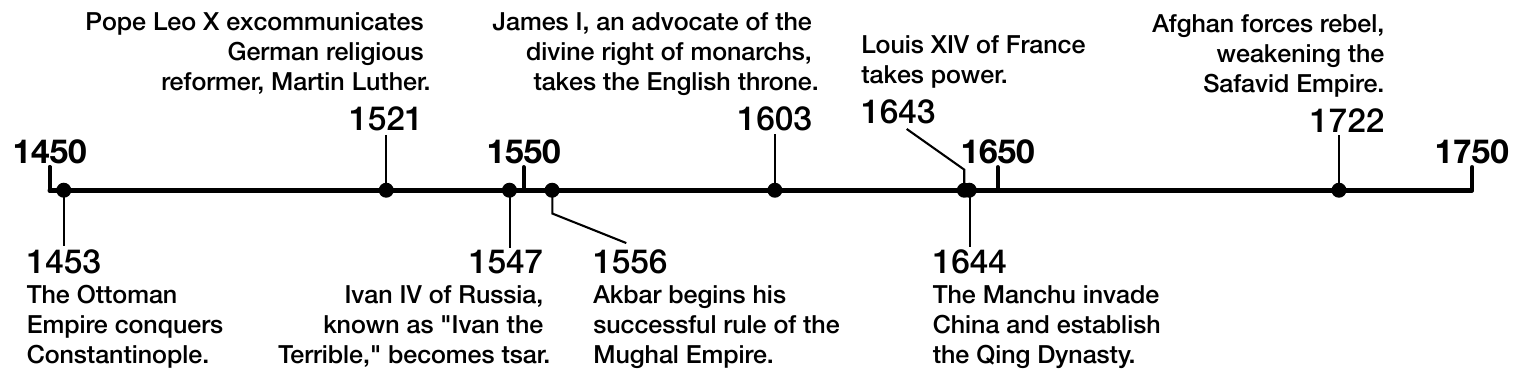
Great land-based empires existed before 1450 and after 1750. However, between these years, several of history’s greatest land-based empires reached their peak of wealth and influence. Among these were the Songhai in West Africa; the Safavids based in Persia; the Mughals in northern India; the Ottomans in the Middle East, Eastern Europe, and Northern Africa; and the Manchus in eastern Asia. They were multiethnic states that had direct political control over large regions and overland trade routes.
Expansion Since these empires measured their power in land, they frequently warred against neighbors over territory. The Manchus, who established the Qing Dynasty in China in 1644, were very successful in this. By 1911, they had tripled the amount of land they controlled.
Centralization Land-based empires
this period prospered by
in consolidating their power in a central government. They employed bureaucratic elites to enforce laws and military professionals to provide defense. To pay for the bureaucrats and soldiers, they collected tributes from weaker states and taxes from their citizens. To demonstrate their wealth and power, they constructed great palaces, religious buildings, and shrines.
Belief Systems Land-based empires were often closely tied with particular religious faiths. As a result, political and religious conflicts were intertwined. In Europe, Roman Catholics and Protestants fought wars in which millions of people died. In Asia, the Safavids, who were Shi’a Muslims, and the Mughals, who were Sunni Muslims, were often at war.
After 1750 Many land-based empires began declining in power in the 18th century. The increasing importance of ethnic identities for individuals, ocean routes for trade, and economic relationships among businesses undermined the unity and influence that land-based empires initially developed.
Topics
Historical Perspectives: HISTORICAL PERSPECTIVES: WHY DID THE ISLAMIC GUNPOWDER EMPIRES RISE AND DECLINE?
Read more →
Write As Historian: WRITE AS A HISTORIAN: ANALYZE THE QUESTION
Read more →
AP Exam Practice
Start Practice →