Topic 6 AP Exam Practice
Multiple-Choice Questions
Questions 1–3 refer to the chart below.
Average Air Temperatures
In Eastern Europe, 850–1950
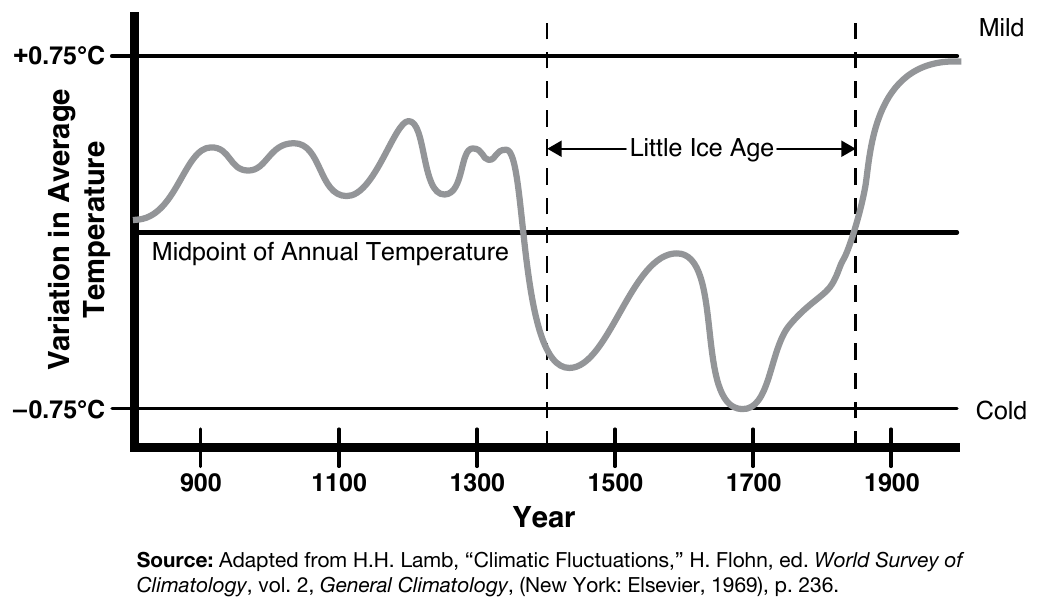
1. Which trend followed the temperature pattern shown in the graph?
- (A) The centralization of political power
- (B) The rate of growth in the urban population
- (C) The use of systems of coerced labor
- (D) The spread of Christianity in Europe
2. Which statement accurately reflects an effect of the temperature pattern shown in the graph?
- (A) The Little Ice Age caused shortages of food and reduced the amount of agricultural surplus available for trade.
- (B) One result of the Little Ice Age was that Vikings from Scandinavia began raiding coasts along England and France.
- (C) As climates in Spain cooled, Ferdinand and Isabella financed the voyages of Christopher Columbus in search of land for cash crops.
- (D) As a result of the pollution from the growth of industry in Western Europe, temperatures began to rise as the ozone became depleted.
3. A historian would most likely use the chart to research which of the following developments in the period 1450–1750?
- (A) The decline of Norse colonies in Greenland
- (B) Native American transfer from dependence on agriculture to hunting
- (C) European civil unrest and weakened economies
- (D) A surge in witch trials on both sides of the Atlantic
Short-Answer Questions
1. Use the passage below to answer all parts of the question that follows.
“With these pieces of paper they can buy anything and pay for anything. And I can tell you that the papers that reckon as ten bezants [a quantity of money] do not weigh one. . . .There is no one who does not visit a bath-house at least three times a week and take a bath—in winter every day, if he can manage it. Every man of rank or means has his own bathroom in his house. . . .
Here too the inhabitants worship Mahomet [Muhammad] and are subject to the Great Khan. It has villages and towns in plenty. . . . There are rivers here in which are found stones called jasper and chalcedony [quartz crystals] in plenty. There is no lack of the means of life. Cotton is plentiful. The inhabitants live by trade and industry.”
Marco Polo, The Travels of Marco Polo, c. 1300
2. Answer all parts of the question that follows.