Political and Economic Elites in the Americas
Social structures in the Americas changed drastically during this period because of the arrival of Europeans, the importation of African slave labor, and outbreaks of disease that killed tens of millions. The combination of European settlers, imported Africans, and the conquered indigenous populations led to the development of a new social hierarchy based on race and ancestry. Skin color became a signifier of power and status in many parts of the Americas and, in fact, in all European colonies. Racial and ethnic background defined social status in a formal way in the Spanish and Portuguese empires in the Western Hemisphere for centuries following the Europeans’ arrival.
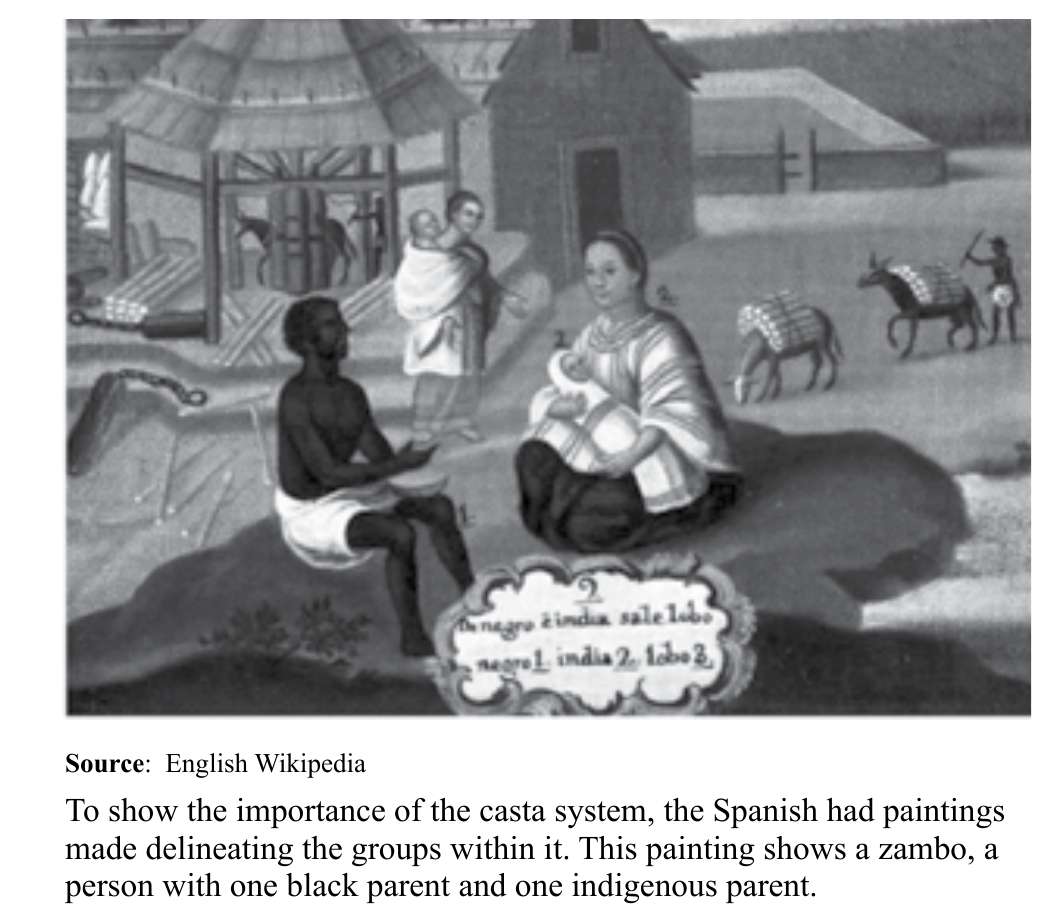
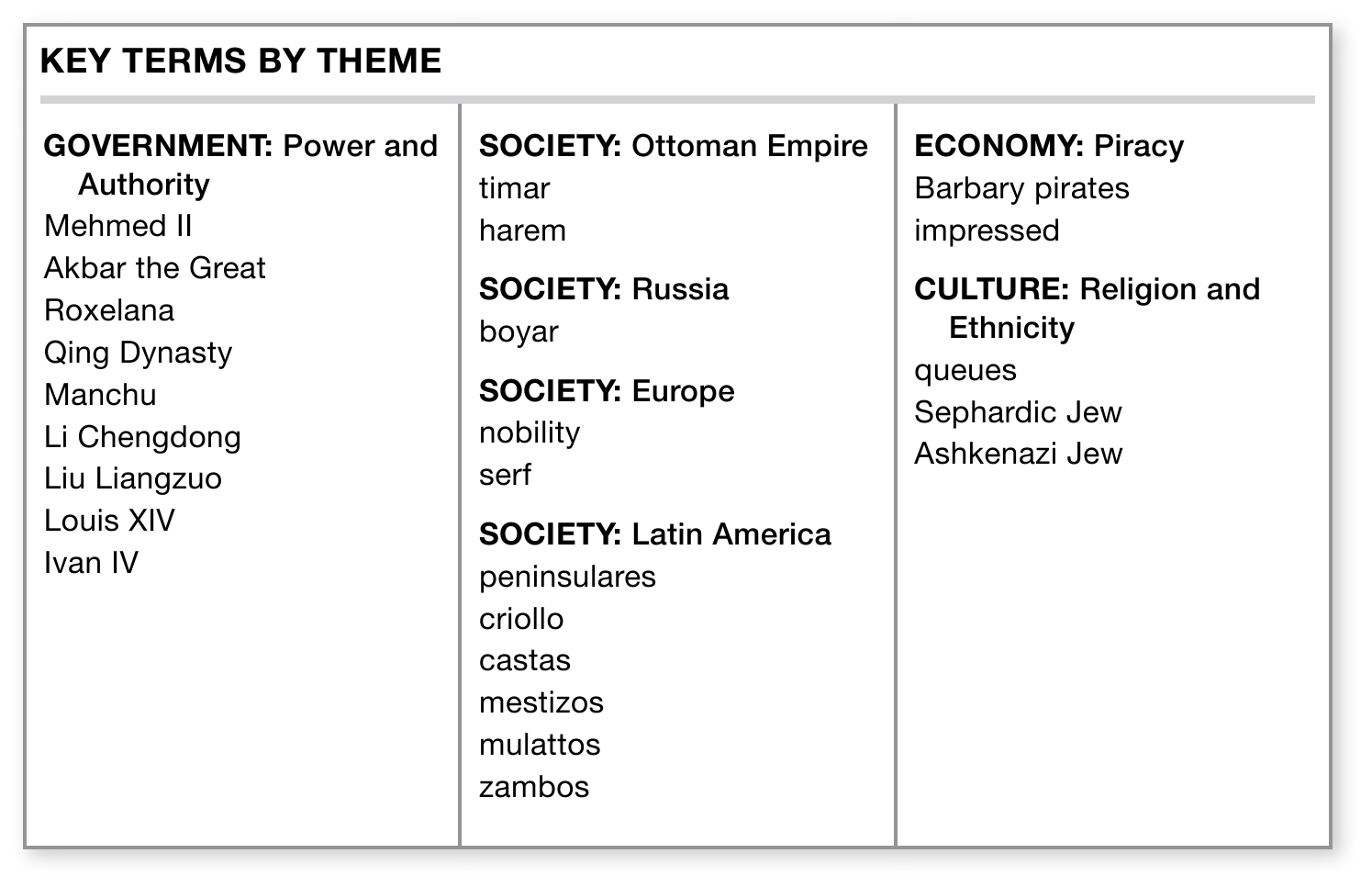
The Casta System in Latin America At the top of the social pyramid in Latin America stood the peninsulares, those who were born on the Iberian peninsula. Next down the pyramid were the criollos, those of European ancestry who were born in the Americas. Below these two groups were the castas, people of mixed-race ancestry. At the top of this group were mestizos, those of mixed European and indigenous ancestry, followed by mulattoes, those of mixed European and African ancestry, and zambos, those of mixed indigenous and African ancestry. Indigenous peoples and enslaved Africans made up the bottom of the hierarchy.
People were assigned to their levels at baptism and could not move up except by intermarriage. People in the bottom layers of the hierarchy had to pay higher taxes and tributes, even though they could often least afford them.