Centralized Bureaucracy
Controlling a large area with such diverse populations required land-based empires to establish an organized and centralized bureaucracy. Recruiting bureaucratic elites took several forms. In the Ming and Manchu dynasties of China, the civil service examination system was used to assess the abilities of the members of the scholar-gentry who wished to enter government service. In the Ottoman Empire, the devshirme system provided the sultan with a ready- made pool of civil servants strictly loyal to him, while in the Safavid Empire, the shah would enlist a class of bureaucrats from the Persian population of the empire, known as “the men of the pen.”
In the Songhai Empire, the mansa, a Mandika word meaning “sultan,” employed bureaucrats from the scholarly class educated in the schools, or madrasas, of Timbuktu. While the Incas did not use a dedicated scholarly class to rule their empire as the Ming and Manchus did, they did organize their empire into a federal system of provinces headed by nobles loyal to the emperor. Further, these nobles oversaw a very organized political structure that was divided on the basis of a decimal system.
Despite its many similarities to other land empires, the Aztec Empire was less centralized and bureaucratic than the other land empires. The Aztec created a tributary empire and had little to no direct control over the territory within the region of Mesoamerica. It kept control over this region through force, fear, and intimidation rather than through a centralized bureaucracy.
Taxation Some form of taxation or revenue collection was necessary to support the bureaucracy and military of the land-based empires of this period. Taxation took many forms in these empires:
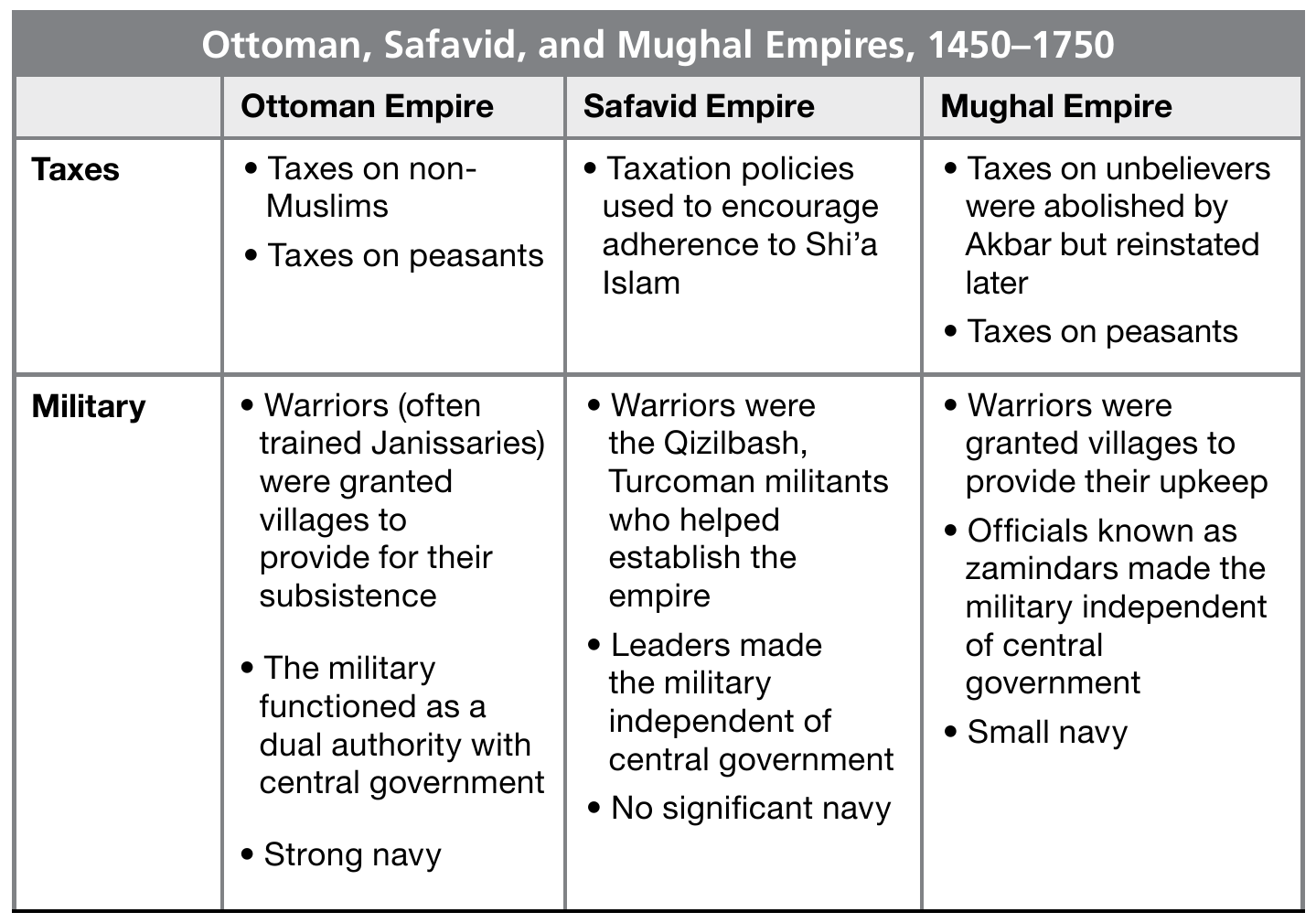
• Mughal zamindar tax collection: Mughal emperors appointed tax officers or zamindars to collect taxes from the peasant class based on land and production.
• Ottoman tax farming: Rather than employing government tax collectors, the Ottoman sultans appointed “tax farmers” to pay an annual fixed sum of money for an area to the central government and then recoup the outlay by collecting money or salable goods from the residents of the area. Many Janissaries were paid their salaries in this manner by collecting more money than they paid out to the central government.
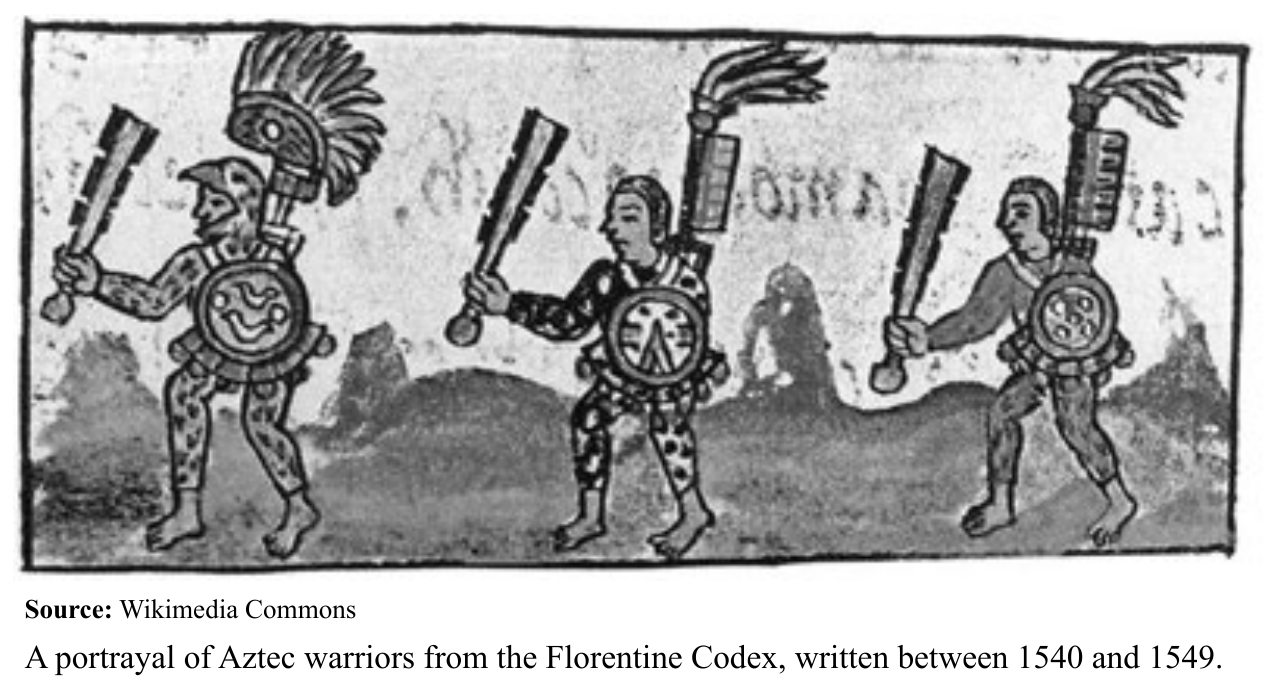
• Aztec tribute lists: As the Aztecs (or Mexica) formed a tributary empire, the main source of revenue that supported the Aztec noble class and military came from yearly offerings or tributes from the surrounding areas. The lists included whichever local product was made or valued but could also include a demand for people, many of whom became human sacrifices in Aztec religious rituals.
• Ming collection of “hard currency:” The Ming Empire, like its predecessors, issued paper currency as a means to facilitate trade and tax collection; however the use of paper money led to rampant counterfeiting and hyperinflation. The Ming then ordered that all taxes should be paid in the form of rice, and later silver coins, known as “hard currency.”