The Mandate System
Arab rebels of the former Ottoman Empire were especially insulted by the results of the peace conference. They had been promised self-rule if they fought with the Allies. Instead, the Allies forgot all of their promises and, through the League of Nations, established a mandate system to rule the colonies and territories of the Central Powers. Article 22 of the League of Nations charter stated that colonized people in Africa and Asia required “tutelage” from more “advanced” nations in order to survive. Thus, the Allied countries—including France, Great Britain, and Japan—were able to increase their imperial holdings through a new form of colonization. For example, Cameroon, which had been a German colony, was divided and transferred to France and Britain as separate mandates. Japan seized the German-held islands of the Western Pacific.
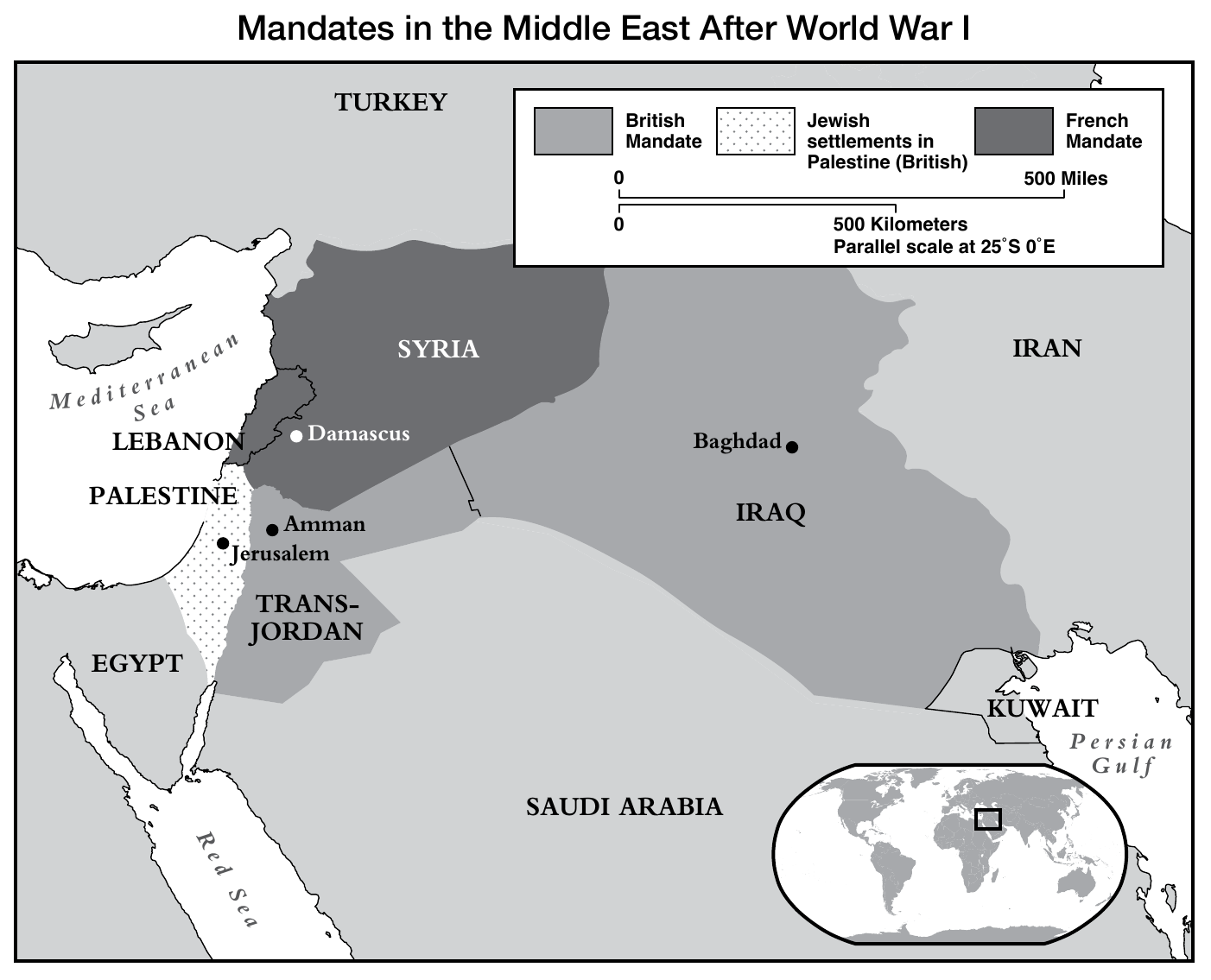
The Middle East experienced enormous upheaval because of the fall of the Ottoman Empire. Palestine, Transjordan, Lebanon, Syria, and Iraq all became League of Nations mandates. These Arab states were not yet sovereign lands but virtual colonies of Great Britain and France. This infuriated the Arabs who lived in these lands and set the stage for a nationalist movement known as Pan-Arabism—an ideology that called for the unification of all lands in North Africa and the Middle East.
Another source of conflict arose in 1917, when the British government issued the Balfour Declaration, which stated that Palestine should become a permanent home for the Jews of Europe. Those who supported a Jewish homeland were known as Zionists. After the Allied victory in the Great War, European Jews moved in droves to Palestine, which Britain controlled.