Topic 7 AP Exam Practice
Multiple-Choice Questions
Questions 1 to 3 refer to the cartoon below.
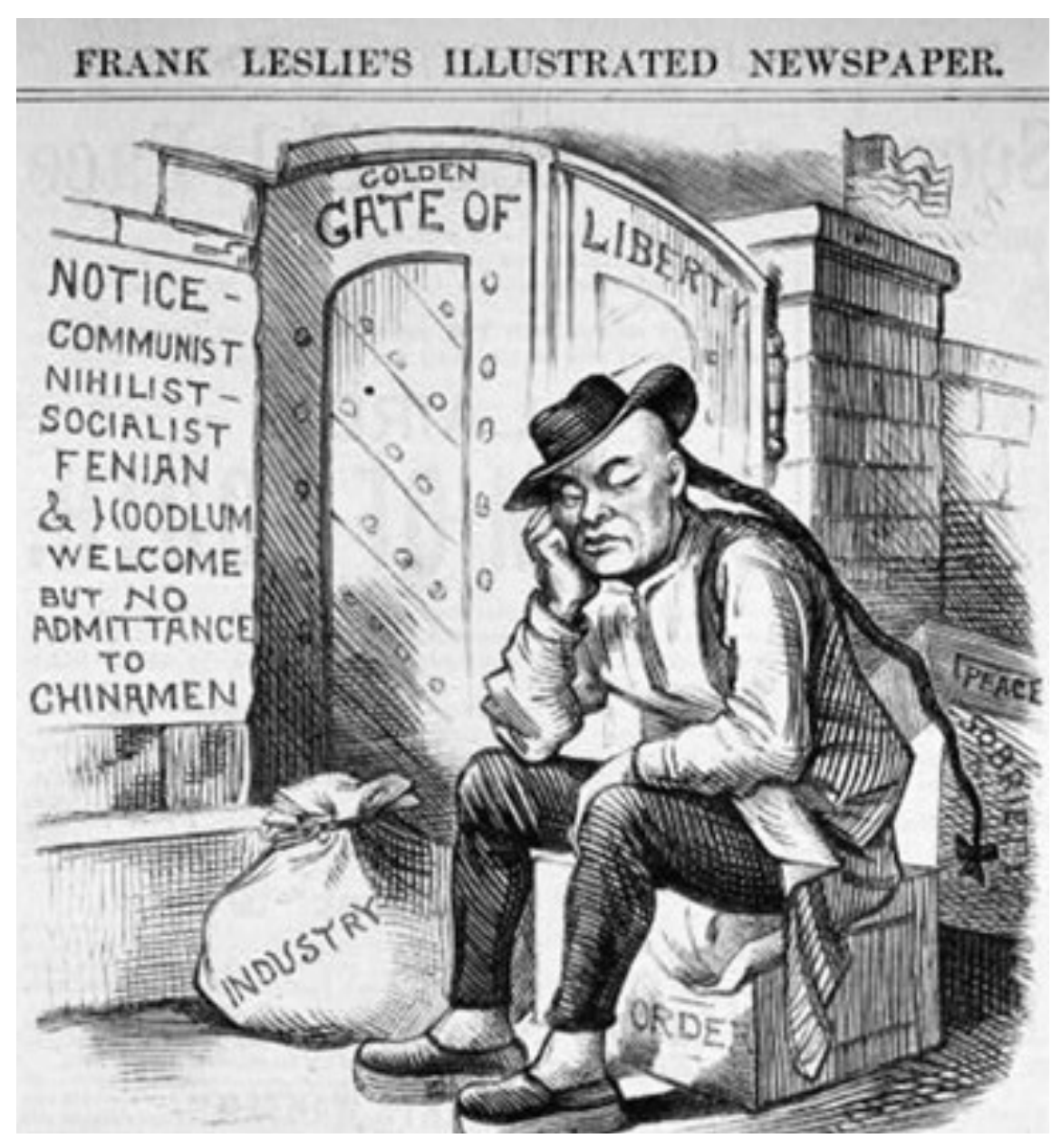
1. An American who agreed with the above cartoon would most disagree with
- (A) the installation of the Statue of Liberty in New York Harbor
- (B) the elevation of the territory of Hawaii to statehood status
- (C) the admission of Puerto Rico as an American territory
- (D) the Chinese Exclusion Act
2. The point of view of this cartoonist was that he
- (A) recognized the contributions East Asians made to industrial development in the United States
- (B) was promoting the ideals of the nativist movement
- (C) saw East Asians as political radicals and criminals
- (D) wanted to discourage Irish and Italian immigration to the United States
3. By the end of the 19th century, the United States had passed laws that
- (A) restricted most immigration from all countries
- (B) prevented Chinese from entering the United States
- (C) discriminated only against Japanese immigrants
- (D) deported American citizens with Asian ancestry
Short-Answer Questions
1. Use the map below to answer all parts of the question that follows.
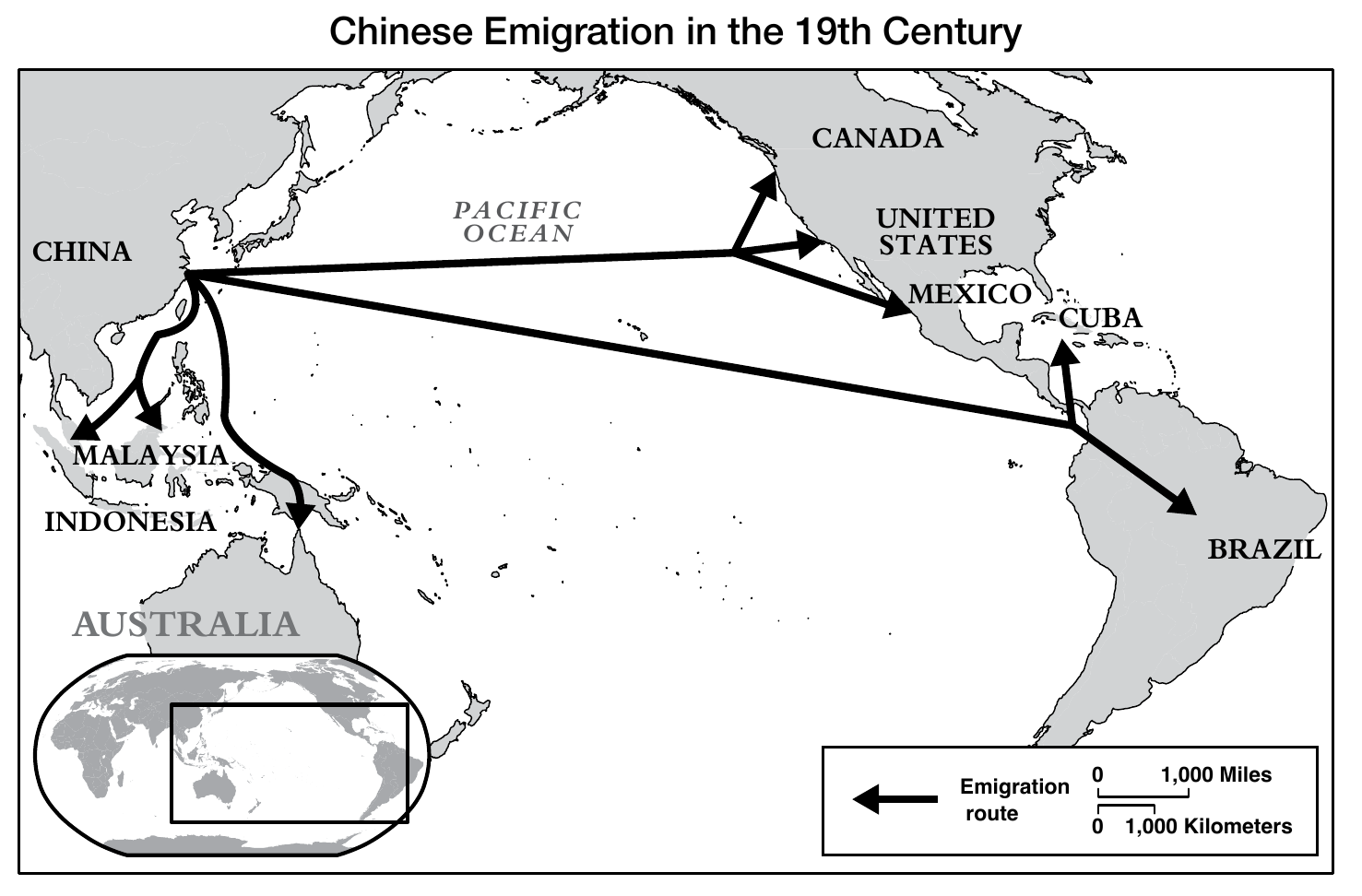
(A)(A) Describe ONE cause of Chinese migration during the 19th century.
(B)(B) Explain ONE effect of Chinese migration on a country other than China during the 19th century.
(C)(C) Explain ONE effect of migration during the 19th century on the families of people who remained at home.
2. Answer all parts of the following question.
(A)(A) Explain ONE way in which migrations in the period 1750–1900 impacted social structures.
(B)(B) Explain ONE way in which migrants incorporated their cultures into new environments in the period 1750–1900.
(C)(C) Explain ONE reason why states regulated the increased flow of immigrants in the period 1750–1900.