Topic 6 AP Exam Practice
Multiple-Choice Questions
Questions 1 to 3 refer to the map below.
e
a
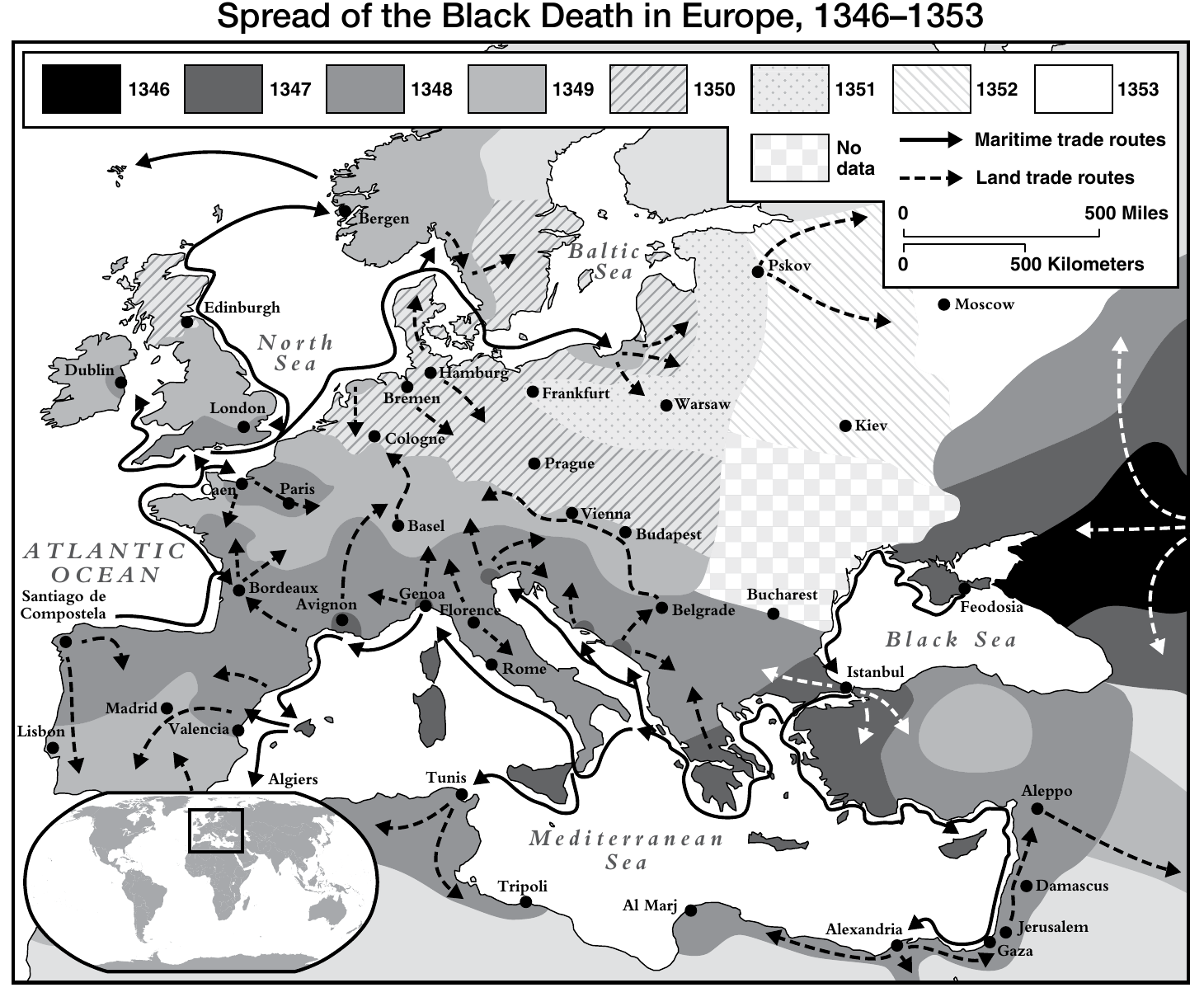
1. Which explanation for the cause of the rapid spread of the Black Death is best supported by this map?
- (A) The migrations of Central Asians into eastern Europe
- (B) The spread of rodents through trade
- (C) Pollution caused by growing concentrations of people in cities
- (D) Poverty among Europeans resulting from feudalism
2. One significant long-term impact of the Black Death was
- (A) the end of the Indian Ocean as a viable trade network
- (B) the decline of the feudal system in Europe
- (C) the increased use of camels in the Silk Roads trade
- (D) the rise of the Ottoman Turks
3. Which of the following statements does the map support most clearly?
- (A) Muscovy traded extensively with Western Europe.
- (B) Africa never experienced the Black Death.
- (C) The Black Death entered Western Europe through the Mediterranean Sea.
- (D) The strain of the Black Death that moved along the Indian Ocean was not fatal.
Short-Answer Questions
1. Use the passages below to answer all parts of the question that follows.
• Moroccan historian Ibn Khaldun wrote about the black plague outbreak this way: “Civilization both in the East and the West was visited by a destructive plague which devastated nations and caused populations to vanish. It swallowed up many of the good things of civilization and wiped them out. . . . Civilization decreased with the decrease of mankind. Cities and buildings were laid waste, roads and way signs were obliterated, settlements and mansions became empty, dynasties and tribes grew weak. The entire inhabited world changed.”
• In The Travels of Ibn Battuta, the great traveler noted that as of 1345, “the number that died daily in Damascus [Syria] had been two thousand,” but the people were able to defeat the plague through prayer.
• An Italian lawyer, Gabriele de Mussis, recorded: “The whole army was affected by a disease which overran the Tartars [Mongols] and killed thousands upon thousands every day.” He [charges] that the Mongol leader “ordered corpses to be placed in catapults and lobbed into the city in hopes that the intolerable stench would kill everyone inside.”
• A French churchman, Gilles li Muisis, notes that a “calamitous disease befell the Tartar army, and the mortality was so great and widespread that scarcely one in twenty of them remained alive.” However, he depicts the Mongol survivors as surprised when the Christians in Kaffa also came down with the disease.
Excerpts from https://www.thoughtco.com/ black-death-in-asia-bubonic-plague-195144
2. Answer all parts of the question that follows.