South Asia and Southeast Asia
After the fall of the Gupta empire in 550, South Asia was riddled by disunity and fighting. Despite this decentralization, Hinduism and the caste system kept southern India unified and relatively stable. Northern India, however, suffered a series of invasions and weak confederations. One of those invasions brought Islam to the region in 711.
Despite a period of divisions and conflict, South Asian trade flourished. As people better understood the pattern of the monsoon winds, India’s location made it the hub of Indian Ocean trade. Silks and porcelain from East Asia, spices from southeast Asia, horses from the Middle East, and enslaved people and ivory from Africa were all traded in India.
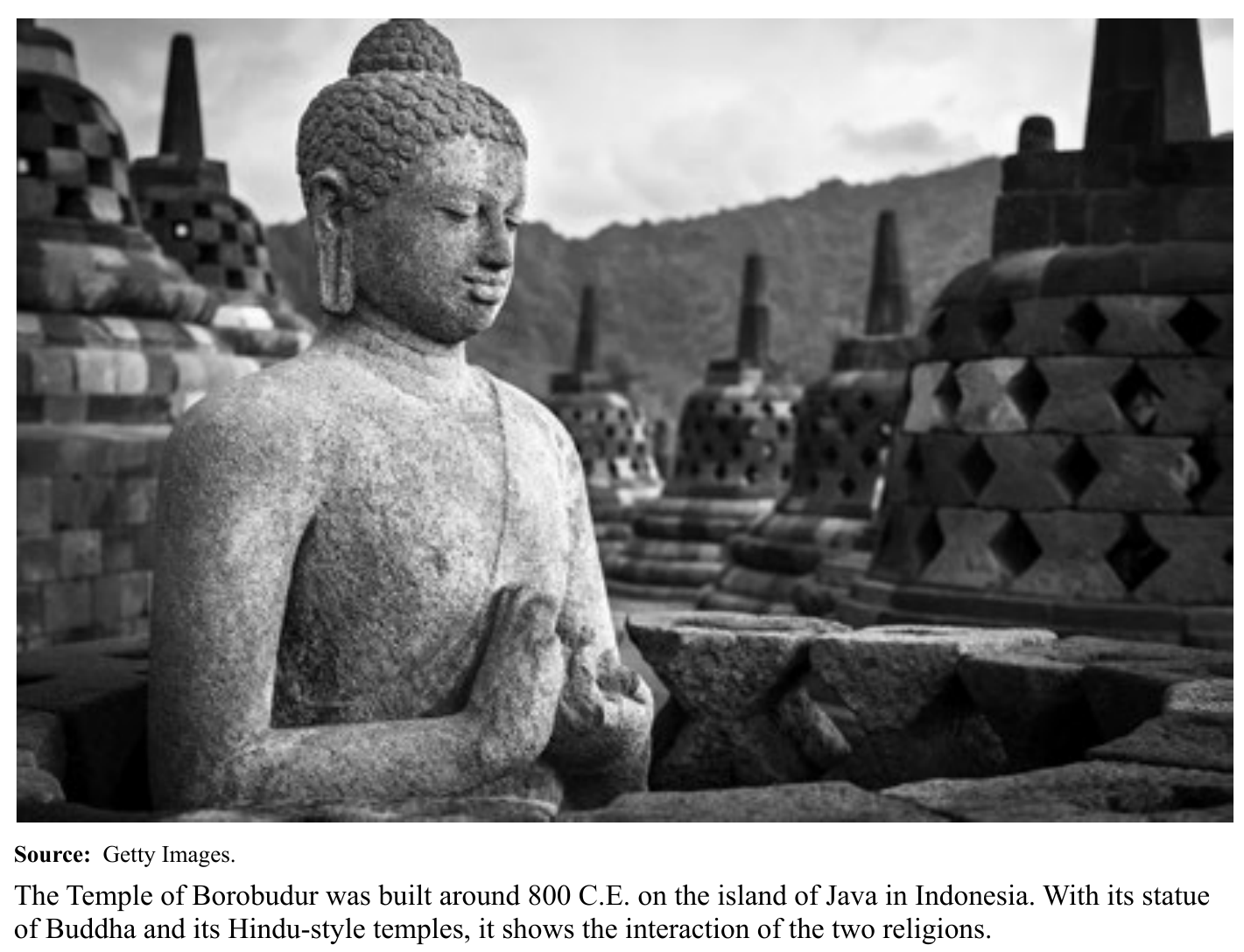
Religion and trade dominated South Asia’s influence on Southeast Asia. Buddhists and Hindus used trade networks to spread their religions’ teachings. Islam also significantly influenced Southeast Asia at this time. Muslim merchants, though often not consciously missionaries, spread their faith by settling in new regions with their families. Islam soon became the dominant religion in the Spice Islands and the Malay peninsula.