The Roots of Globalization and Anti-Globalization
Globalization affected the relationships among and within nations. After World War II, several organizations contributed to the growth of a global economy. The General Agreement on Tariffs and Trade (GATT), the European Economic Union, Mercosur (in South America), and the Association of Southeast Asian Nations (ASEAN) all formed between 1947 and the early 1990s. These organizations were meant to help economies and expand prosperity. Falling tariff rates eased the movement of goods across national borders.
In 1995, the World Trade Organization (WTO) took over GATT’s operations. The WTO makes rules for more than 90 percent of international trade. The rules and its closed board meetings led people to believe that the WTO did not care for their welfare. (Connect: Compare the economic practices of the 17th century to globalization in the 20th and 21st centuries. See Topic 4.5.)
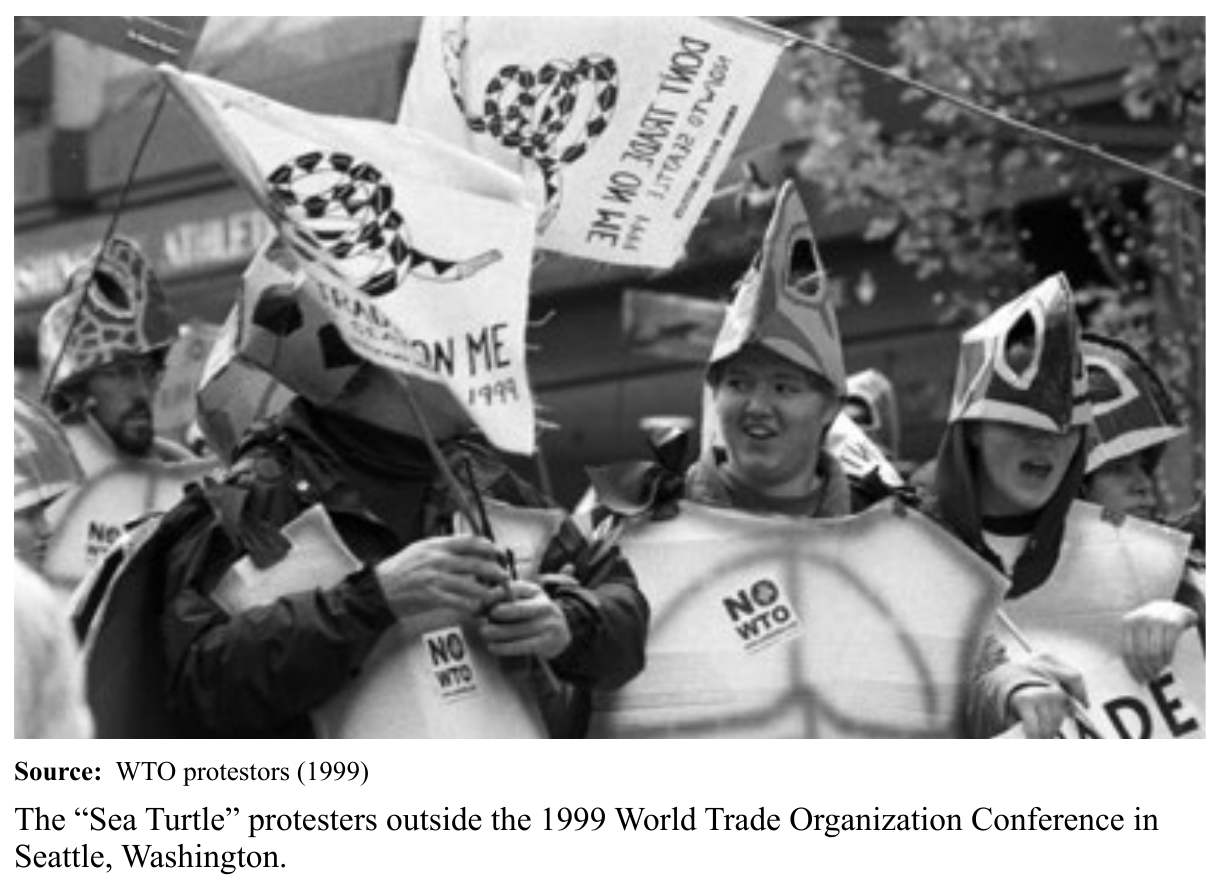
The “Battle of Seattle” In 1999, protests erupted at a WTO conference in Seattle. The WTO had planned a round of trade negotiations for the new millennium. Then more than 40,000 protesters arrived. Special interest groups, including labor unions, family farmers, student groups, and environmentalists shut down the WTO’s meeting and drew global attention to the issues of the new global economy. Anti-WTO demonstrations took place in dozens of other countries as well.
Many people consider the Seattle protests to be the beginning of the anti- globalization movement. They were also one of the first social movements to be coordinated through the internet. However, the WTO itself remained powerful. China joined in 2001, increasing the group’s territorial and economic reach.