Topic 3 AP Exam Practice
Multiple-Choice Questions
Questions 1 to 3 refer to the images below.
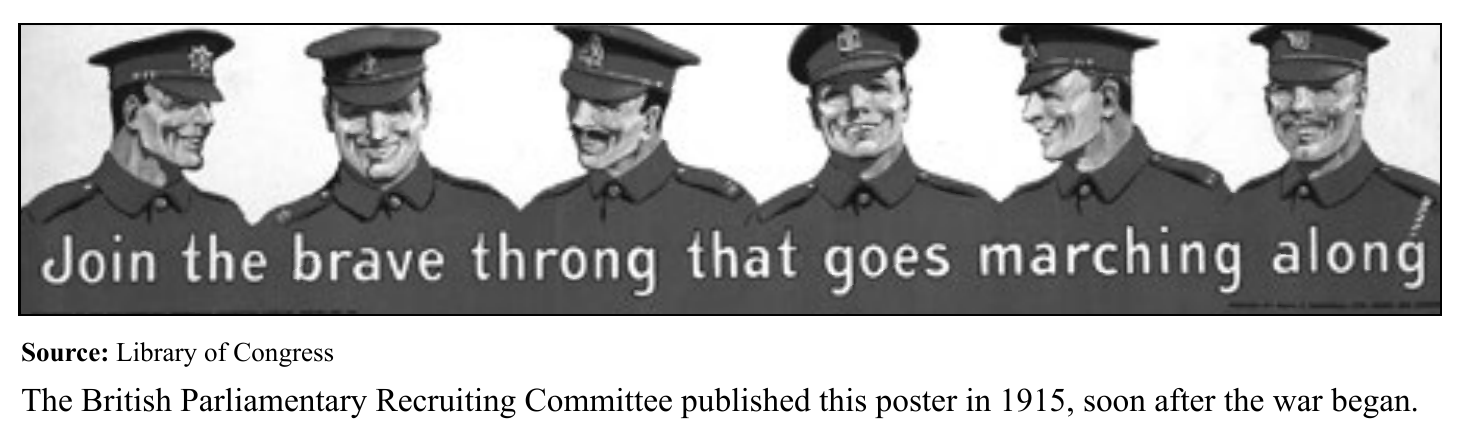
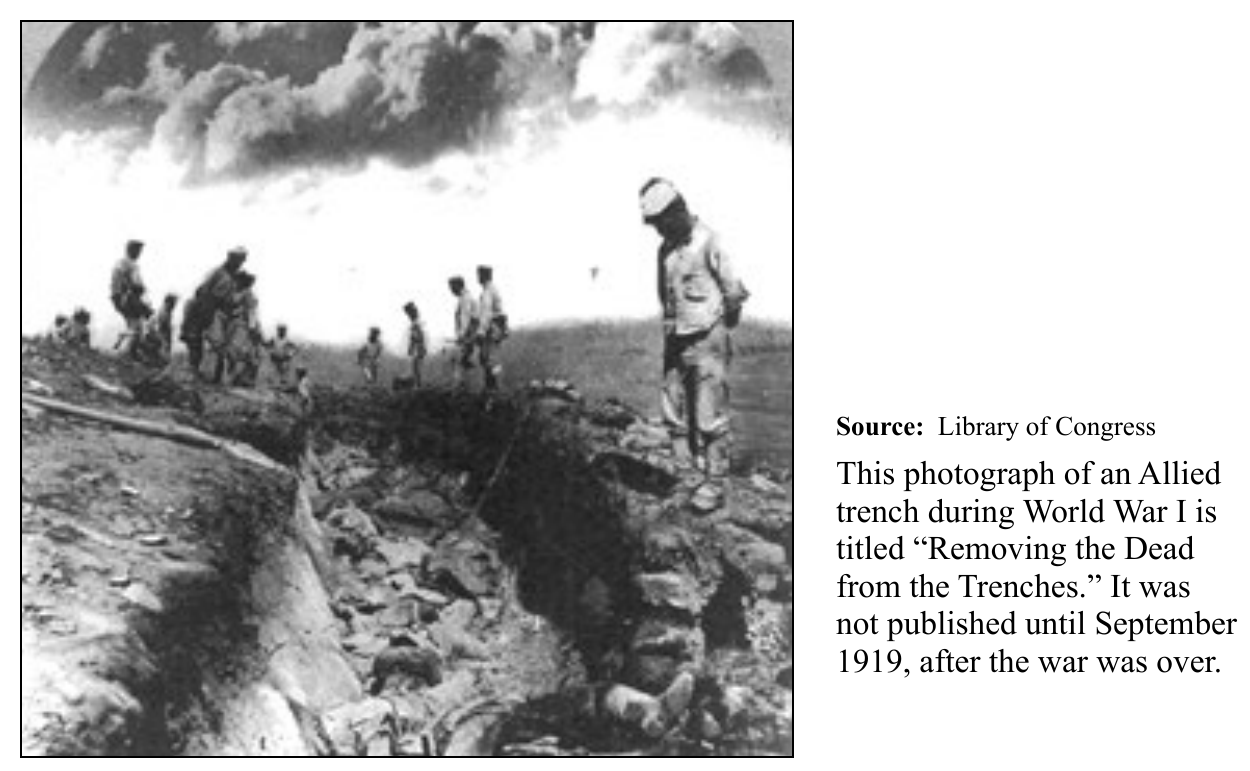
1. Comparing the World War I poster from Great Britain and the photo of the trenches supports the interpretation that the British government wanted
- (A) to persuade civilians of the seriousness of the war
- (B) to recruit soldiers by appealing to their fear of the enemy
- (C) to emphasize the positive side of military service
- (D) to portray military service as realistically as possible
2. Images such as the photo above supported the claim that World War I was a war that was
- (A) made more deadly by new technology
- (B) decided by a handful of victories in large battles
- (C) caused by the economic rather than political forces
- (D) fought on behalf of the princple of self-determination
3. Taken together, the two images demonstrated which of the following trends that occurred during World War I?
- (A) Britain’s powerful role on the global stage declined.
- (B) People became more realistic about the costs of war.
- (C) The mass casualties from the conflict broke down class barriers.
- (D) The role of women changed during the war.
Short-Answer Questions
1. Use the passage below to answer all parts of the question that follows.
“If you could hear at every jolt, the blood Come gargling from the froth-corrupted lungs, Obscene as cancer, bitter as the cud Of vile, incurable sores on innocent tongues,— My friend, you would not tell with such high zest To children ardent for some desperate glory, The old Lie: Dulce et decorum est Pro patria mori.” [“It is sweet and noble to die for one’s country.”]
Wilfred Owen, “Dulce et Decorum Est,” 1920
2. Answer all parts of the question that follows.